News Headline
JioStar’s entertainment boss tells Asia: India’s billion imaginations are now open for business
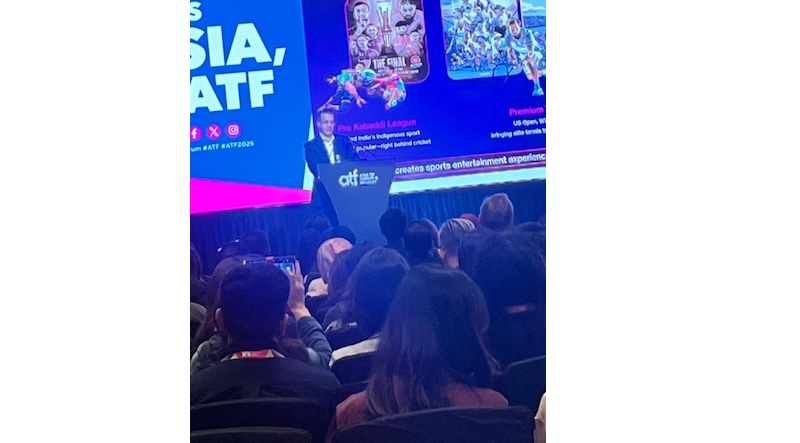
SINGAPORE: India isn’t just making content anymore. It’s becoming the content factory the world can’t ignore—and JioStar entertainment chief executive Kevin Vaz arrived in Singapore to make sure everyone got the memo.
At the Asia TV Forum & Market 2025, Vaz served up a keynote stuffed with eye-watering numbers and even bigger ambitions. His thesis? India’s 1.4 billion people—median age a sprightly 29—represent the planet’s most digitally ravenous audience, rewriting the rules on how stories get made, sold and binged.
The production stats alone are dizzying: 200,000 hours of telly annually, 1,800 films, over 400 web series, all pumped out across 22 official languages and 1,500-plus dialects. Add 900 million television viewers, 900 million internet users, and 85 million connected TV households, and you’ve got a media market where platforms aren’t just converging—they’re colliding at warp speed.
JioStar, the Reliance-Disney lovechild, is riding this wave like a seasoned surfer. On traditional telly, it commands a thumping 35 per cent market share with over 90 channels in ten languages, pulling in 760 million monthly viewers and bagging five of the country’s top ten shows. On digital, JioHotstar has racked up more than one billion app installs and 400 million monthly active users. Between broadcast and streaming, JioStar now reaches 99 per cent of India’s connected TV audience. That’s not a foothold—that’s a stranglehold.
Vaz rattled through the content playbook with gusto: women-led dramas sparking dinner-table debates, youth-skewing reality fare, beefed-up kids’ programming, and a sports portfolio he brazenly called “undisputed.” (With cricket rights in the bag, he’s not exactly bluffing.)
But the real action is in what’s next. JioStar is piling into AI-powered content creation, micro-format innovation—bite-sized dramas for the TikTok generation—and punting Indian IP to global buyers. Vaz’s endgame isn’t just shipping shows. It’s building what he calls a “global imagination ecosystem,” where data, culture and tech mash up to reinvent storytelling itself.
In other words: India’s content industry has grown up, gone digital, and wants a seat at the global top table. JioStar reckons it’s got the audience, the infrastructure and the swagger to claim it. And judging by Vaz’s Singapore pitch, they’re not asking permission.

Awards
Hamdard honours changemakers at Abdul Hameed awards
NEW DELHI: Hamdard Laboratories gathered a cross-section of India’s achievers in New Delhi on Friday, handing out the Hakeem Abdul Hameed Excellence Awards to figures who have left their mark across healthcare, education, sport, public service and the arts.
The ceremony, attended by minister of state for defence Sanjay Seth and senior officials from the ministry of Ayush, celebrated individuals whose work blends professional success with a sense of public purpose. It was as much a roll call of achievement as it was a reminder that influence is not measured only in profits or podiums, but in people reached and lives improved.
Among the headline awardees was Alakh Pandey, founder and chief executive of PhysicsWallah, recognised for turning affordable digital learning into a mass movement. On the sporting front, Arjuna Awardee and kabaddi player Sakshi Puniya was honoured for her contribution to the game and for pushing women’s participation onto bigger stages.
The cultural spotlight fell on veteran lyricist and poet Santosh Anand, whose songs have echoed across generations of Hindi cinema. At 97, Anand accepted the honour with characteristic humility, reflecting on a life shaped by perseverance and hope.
Healthcare honours spanned both modern and traditional systems. Manoj N. Nesari was recognised for strengthening Ayurveda’s place in national and global health frameworks. Padma shri Mohammed Abdul Waheed was honoured for his research-backed work in Unani medicine, while padma shri Mohsin Wali received recognition for his long-standing contribution to patient-centred care.
Education and social development also featured prominently. Padma shri Zahir Ishaq Kazi was honoured for decades of work in education, while former Meghalaya superintendent of Police T. C. Chacko was recognised for public service. Goonj founder Anshu Gupta received an award for his dignity-centred rural development initiatives, and the Hunar Shakti Foundation was honoured for empowering women and young girls through skill development.
The Lifetime Achievement Award went to former IAS officer Shailaja Chandra for her long career in public healthcare and governance, particularly in the traditional systems under Ayush.
Speaking at the event, Hamdard chairman Abdul Majeed said the awards were a tribute to those who combine excellence with empathy. “These awardees reflect Hakeem Sahib’s belief that healthcare, education and public service must ultimately serve humanity,” he said.
Minister Seth struck a forward-looking note, saying India’s young population gives the country a unique opportunity to become a global destination for learning, health and wellness by 2047.
The ceremony also featured the trailer launch of Unani Ki Kahaani, an upcoming documentary starring actor Jim Sarbh, set to premiere on Discovery on 11 February.
Instituted in memory of Unani scholar and educationist Hakeem Abdul Hameed, the awards have grown into a national platform that celebrates those building a more inclusive and resilient India. For one evening at least, the spotlight was not just on success, but on service with substance.