Gaming
Delhi Comics alive as sans assemble for a supercharged Comic Con Fest

MUMBAI: If Delhi felt a little more animated this weekend, it’s because the capital stepped straight into panel-to-pavement fantasy as Delhi Comic Con burst open its gates, transforming NSIC Exhibition Grounds into a full-blown pop-culture cosmos. Presented by Maruti Suzuki Arena, powered by Crunchyroll, and held in association with Android, the three-day fest kicked off on 5 December with a fan frenzy worthy of its superhero scale.
From the moment the doors opened, the energy on Day 1 only levelled up. Fans poured in with friends, families, and fully armed fandom spirit debating plotlines, racing to book stalls stacked with manga and comics, and queuing up to meet creators they’ve admired for years. Comic Con’s signature chaos, the good kind was back in force.
International guest Chloé Hollings, the iconic voice behind Overwatch’s Widowmaker, drew massive crowds as she spoke about her journey across games, theatre, and film, from Valerian to Wolverine to Wolfenstein: Youngblood. Her presence sparked non-stop buzz, selfies, and a deep dive into the craft of voice acting.
Indian publishing powerhouses and homegrown creators held court too. Fans flocked to meet Savio Mascarenhas from Amar Chitra Katha, Indusverse’s Alok Sharma, Yali Dreams Creations’ Asvin Srivatsangam, Prasad Bhat of GraphiCurry, and Vivek Goel from Holy Cow Entertainment. The aisles thrummed with sketches, signings, and spontaneous storytelling.
The festival also spotlighted rising stars shaping India’s next wave of pop culture from 19-year-old Vaishnavi Phogat, already juggling two Webtoon series, to Marvel creator Tadam Gyadu’s India-infused narratives, to illustrator Alaina Vinayak’s bold work as Axis Williams. Their sessions showed how young creators are rewriting what Indian fantasy, art, and comics can look like.
Day 1’s sessions kept the crowd hopping between worlds Amar Chitra Katha spotlights, Radio Mirchi showcases, creator deep-dives like The Lost Gods and The Creatorverse, and a Community Spotlight featuring The Tier Wars. Music and comedy turned the evening into a full-fledged party: the Hope Beatbox Crew thumped out rhythms, Street Pulse ft. K!llSwitch turned up the volume, and Inder Sahani left fans laughing through punchlines.
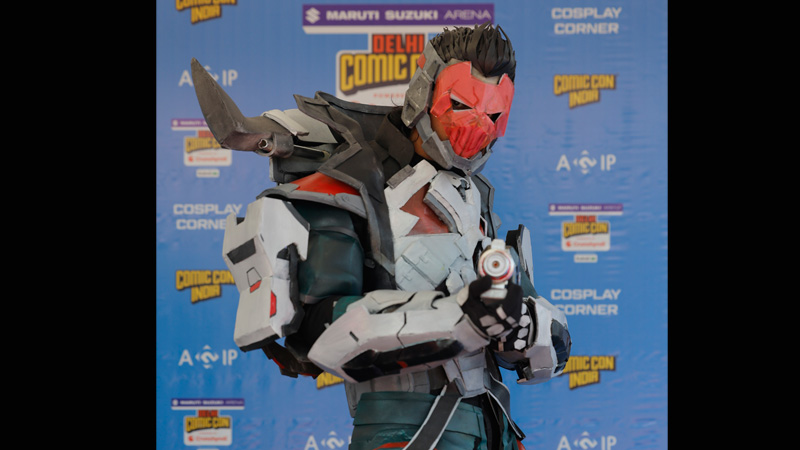
Of course, no Comic Con is complete without its costume-clad icons, and Delhi’s cosplayers delivered. Wolverine, Loki, Zoro, Denji, Black Panther, Evangelion, a Ringwraith or two the grounds became a living storyboard of fandom favourites brought to life with painstaking craft.
Gaming zones ensured that controllers clicked as loudly as cameras. Competitive and casual gamers battled it out across VR setups, reflex challenges by Maruti Suzuki Arena, Crunchyroll’s anime-fuelled immersion zone, Android’s BGMI Panfest, the Lenovo Legion arena, and the Avatar: Fire & Ash Experience Zone. Kinderjoy even turned a corner into Gotham City, complete with kid-friendly heroics.
The joy was everywhere in sketchbooks, in queues, in the shared smiles of parents introducing their children to the comics they grew up with. “Delhi is where Comic Con India began more than a decade ago,” said Shefali Johnson, CEO of Comic Con India. “Seeing generations connect over the stories they love is what Comic Con truly stands for magic, storytelling, and shared experiences.”
If Day 1 was electric, Day 2 promises a power boost, a special Amar Chitra Katha showcase, a mind-bending performance by magician Karan Singh, and a high-voltage set by Nigerian-born rapper Yung Sammy, who’s rewriting India’s hip-hop landscape.
Delhi Comic Con is back louder, brighter, geekier and for fans, it’s nothing short of super.