Brands
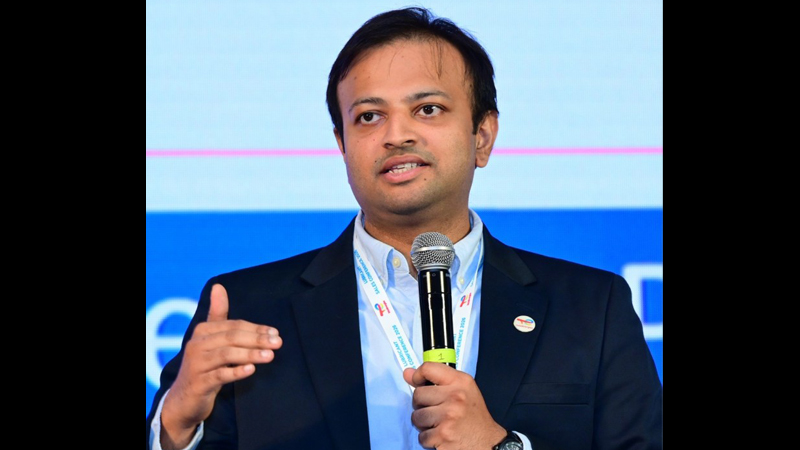
Mohit Rane named head of marketing and communication at TotalEnergies
MUMBAI: Mohit Rane has stepped into a bigger spotlight at TotalEnergies, taking on the role of head of marketing and communication for India. The promotion marks a key moment for both Rane and the energy major, as it sharpens its brand voice in a market racing towards transition and transformation.
In his expanded role, Rane will steer marketing and communications across India, with a clear mandate. Build the brand, deepen stakeholder engagement and lend momentum to TotalEnergies’ clean energy ambitions and business growth plans. In short, he is now the custodian of how the company tells its story in one of its most important markets.
Rane is no stranger to the organisation. Over the past two years, he has worn multiple hats at TotalEnergies, moving from Strategy and Business Development to leading the Clean Cooking Project, before landing this top marketing role in January 2026. Each stint added a new layer, from commercial strategy to on-ground impact, making his elevation a natural next step.
Before joining TotalEnergies, Rane spent over 13 years at Bharat Petroleum Corporation Limited, where he rose through the ranks across operations, engineering, sales, marketing and corporate strategy. The journey took him from refinery floors and regional offices to the company’s headquarters, giving him a rare, end to end view of India’s energy ecosystem.
He began his career with Larsen and Toubro as a project trainee, laying the technical foundation that continues to inform his business decisions today.
With a blend of engineering roots, strategic thinking and marketing muscle, Rane now finds himself at the crossroads of brand building and energy transition. For TotalEnergies India, the message is clear. The story ahead will be sharper, louder and told with purpose.

Brands
UK’s OnlyFans seeks US investor at $3bn valuation after owner’s death
The adult video platform is seeking stability after the death of its billionaire owner
LONDON: OnlyFans is looking for a new partner. The London-based adult video platform is in advanced talks to sell a minority stake of less than 20 per cent to Architect Capital, a San Francisco-based investment firm, in a deal that would value the business at more than $3bn (£2.2bn).
The move is driven by an urgent need for stability. Leonid Radvinsky, the Ukrainian-American billionaire who owned OnlyFans, died of cancer last month at the age of 43, leaving the future of one of Britain’s most profitable privately held businesses suddenly uncertain.
The choice of Architect Capital is not arbitrary. The firm has deep expertise in financial services, which aligns neatly with OnlyFans’ ambitions to offer banking products to its creators, many of whom have long struggled to access basic financial services because of the nature of their work.
The numbers behind OnlyFans are, by any measure, staggering. The platform posted revenues of $1.4bn in the year to 30th November 2024, with a pre-tax profit of $684m, up four per cent on the prior year. Payments to creators totalled $7.2bn over the same period, a rise of nearly ten per cent. Radvinsky personally collected $701m in dividends from the business in 2024 alone, on top of more than $1bn in such payments he had already received. The platform, run through its parent company Felix International, hosts 4.6m creator accounts, with performers keeping 80 per cent of subscription proceeds and the platform pocketing the remaining 20 per cent. It has 377m fan accounts in total.
The current minority stake talks represent a notable scaling back of ambitions. In January, OnlyFans was reported to be in discussions with Architect about selling a majority stake of 60 per cent. Before that, the company had explored a sale to a consortium led by Forest Road Company, a Los Angeles-based investment firm. Neither deal materialised.
OnlyFans has built an enormously lucrative business on content that mainstream finance has long refused to touch. Now, with its owner gone and a $3bn valuation on the table, it is looking for the kind of respectable institutional backing that might finally persuade the banks to take its calls.