News Broadcasting
Media at par with mothers as source of sex education: Study


LONDON: The media is at par with mothers as a source of love and sex education as 66 per cent of young people say they learn about relationships from their mothers.
On the other hand, 66 per cent of young people also say that the media are a useful or very useful ‘way to find out about, love, sex and relationships’ according to a study published on 10 November by the Advertising Standards Authority, British Board of Film Classification, BBC, Broadcasting Standards Commission and Independent Television Commission.
The report is based on the research project Young People, Media and Personal Relationships, by Professor David Buckingham and Dr Sara Bragg of the Institute of Education, London University.

It is the first study to focus on how young people (aged 10-14) interpret and respond to the sexual content they encounter on mainstream television, while considering other media exposure. It confirms that children prefer to learn about sex and relationships from media such as teenage magazines and soap operas.
This was primarily because these media are a less embarrassing way to learn about relationships, more informative, more attuned to their needs and concerns. Sex education in school is criticised by children for being too didactic and too narrowly focused compared with the media in its approach.
The study finds that children are highly literate, aware of the television production process and do not necessarily trust what they see in the media. Several children recognised that ‘sex sells’, and can be used to build audiences. Soap operas are most effective when they are not seen to be preaching but telling a credible story and encouraging viewers to make their own judgements.
Other key findings of the research include:
* Children make judgements about sex in the context of their own morality and place a strong emphasis on trust, fidelity and mutual respect in debates about sex and relationships in relation to media.
* Young people are able to make judgements about what they do and do not like seeing on television.
* Younger children do not necessarily always understand sexual references or connotations, particularly where they are in the form of comic innuendo or ‘suggestion’.
* There are some differences between the responses of boys and girls to media images. Girls are more ready to discuss sex in relation to media images than boys are.
* Family viewing can provide positive opportunities for the discussion of such issues as the majority of young viewers consume media in the company of others.
* Children (and parents) are aware of regulatory systems such as the Watershed and the film classification system, and use these as additional sources of information.
* Children are also enthusiastic about other media sources of learning such as radio, books, leaflets and advertisements. 60 per cent thought that books and leaflets are useful, 20 per cent that the radio is and 34 per cent that posters and advertisements are useful.
Speaking on behalf of the sponsors BSC research director Andrea Millwood Hargrave said, “This study shows that children are savvy and ‘literate’ consumers, who are able to interpret and make judgements about sexual content in the media. They are not blank sheets on whom messages – either ‘moral’ or irresponsible – can be imprinted. But equally the media should be aware that they do in practice play an important role, in helping many children develop their understanding and judgement in this field. That places a premium on their being accurate and honest.”





News Broadcasting
Kamlesh Singh receives Haldi Ghati Award from MMCF
India Today Group editor honoured for three decades of journalism at Udaipur ceremony.
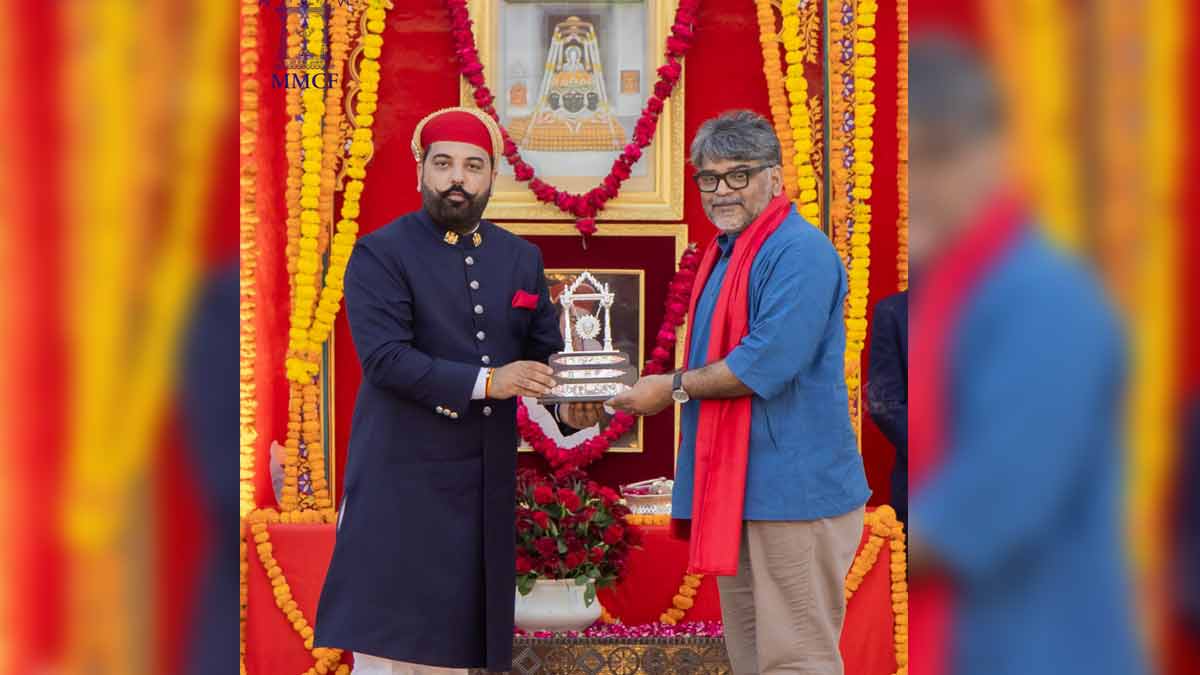
MUMBAI- Kamlesh Singh just turned a lifetime of sharp words into a shiny shield because when journalism wakes up a society, even the Maharana of Mewar wants to pin a medal on it.
The Maharana of Mewar Charitable Foundation (MMCF) conferred its prestigious Haldi Ghati Award on Kamlesh Singh, a senior editor at the India Today Group, during a ceremony in Udaipur on 15 March 2026. The national award, instituted in 1981-82, recognises “work of permanent value that initiates an awakening in society through the medium of journalism.”
Singh, who leads several editorial initiatives including Aaj Tak Radio, the Teen Taal community and The Lallantop, was presented the honour by Lakshyaraj Singh Mewar, Managing Trustee of MMCF. The citation highlighted his three decades of contributions to Indian media, innovations in digital journalism, mentoring young reporters, and his popular podcast persona “Tau” on Teen Taal, which fosters thoughtful public discourse.
The Haldi Ghati Award, named after the historic Battle of Haldighati symbolising valour and resilience, is one of four national awards given annually by MMCF. Past recipients include Tavleen Singh, Piyush Pandey and Raj Chengappa.
Other honourees this year included Padma Vibhushan Pt Hari Prasad Chaurasia, Vedamurti Devvrat Rekhe, Treeman of India Marimuthu Yoganathan, Vir Chakra Capt Rizwan Malik, and US-based researcher Molly Emma Aitken, who received the Colonel James Tod Award for contributions to understanding Mewar’s spirit and values.
In an era where headlines often shout louder than substance, the MMCF quietly reminded everyone that real journalism isn’t about noise, it’s about the quiet, persistent work that stirs society awake, one thoughtful story at a time.







