Drama Series
“‘Kyunki…’ was a trend set by Balaji Telefilms and then all the other production houses followed the same trend” : Rajesh Joshi

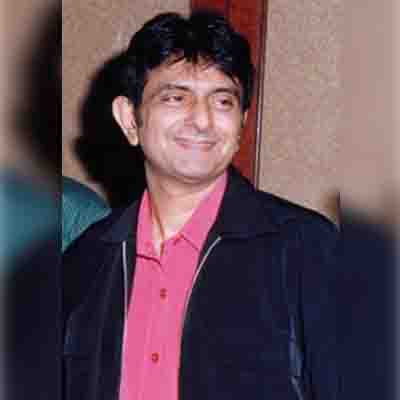
Jack of all trades and a master too… that's what sums up actor, director and scriptwriter Rajesh Joshi. Recognised mostly for his short role as Chirag's secretary Pinku in the popular daily soap Kyunki Saas Bhi Kabhi Bahu Thi (which is penned by him), Joshi has been involved with theater since the last 25 years or so.
After spending 10 years working as a chartered accountant with a company called N.J. Pharmaceuticals Ltd, Joshi decided in March 1999 to leave the job and plunge into directing plays.
Serials happened for him after meeting Ekta Kapoor and hence began his stint as a scriptwriter starting with the serial Koshish Ek Aasha (Zee). After that came Koi Apna Sa (Zee), Kkusum (Sony), Smriti (Channel Nine Gold), Kasautii Zindagii Kay (Star Plus) and Shenai (Doordarshan). For now Joshi is giving his undivided attention to Kyunki Saas Bhi Kabhi Bahu Thi.
Joshi gives indiantelevision.com's Hetal Adesara a sneak peek into a serial writers' world and his reasons for writing only one soap; that too at a time when most people are writing nineteen to a dozen. Excerpts:
|
You've been an actor and a director, and now you're totally involved with writing. How and when did you get bitten by the writing bug? At that time I was directing a play and then I thought over his offer and thought to myself – Why not try something which is totally new? That's when I met Ekta Kapoor for the first time and had a long discussion on daily soaps. My first daily soap was Koshish Ek Aasha. After that Ekta came with a new idea called Amma which is now one of the most popular serials on air but only with a different name – Kyunki Saas Bhi Kabhi Bahu Thi. |
||
|
What are the essential qualities required to be a good writer? I don't know if there are any particular qualities that a person should have to become a writer. Every writer has different qualities in them and they work according to their own perceptions and thinking. |
||
|
What kind of adjustments does a writer have to make in order to write for TV serials? Another adjustment is locations. Sometimes a location is available and sometimes it is not. These small things call for a major rework on our behalf and that is frustrating. |
||
|
Amarr Upadhyay was brought back in Kyunki after popular demand. Obviously it was not in the script… |
||
|
||
|
Is there channel interference in a writer's arena? It is known that plots change with TRPs. So, how does it affect you? |
||
|
How do you go about writing on an everyday basis? |
||
|
||
|
People usually crib about the 'saas-bahu' serials on TV but these are the serials that are still watched by millions of women and these serials and their characters are the ones who bag the top awards. What do you think is the reason behind this? Addiction is the other aspect. People are used to watching it by now. Of course we try to give the audience different stuff all the time but sometimes it is not possible. Also characterisation plays a major role like Tulsi, Ba, Savita. These are strong and powerful actors who are liked by the audience. |
||
|
What in your opinion is lacking in television today? Kyunki… was a trend set by Balaji Telefilms and then all the other production houses followed the same trend. Good product is not necessarily yielded by other production houses. As a result, television as a whole is getting affected. New ideas have to come about. One example of a good trend setting serial is Aatish Kapadia's Khichdi. They have their own set of rules and creativity which is different from the rest. |
||
|
||
|
How significant are TRP ratings for you – do they influence what you write or how you write? |
||
|
Supposing your show is getting low TRPs, you as a writer will have to spruce up things in order to build up viewership. Right? |
||
|
Is writing satisfying in terms of remuneration? |
||
|
What are the problems you faced as a writer in this industry? How do you deal with them? A writer is the original creator of the serial and so he does command respect and it is given to him also. On the whole as a writer I haven't faced any problems till now. |
||
|
At the end of the day are you happy with what you see on television in terms of what you have written? Do you feel the director is doing justice to what you have written? Then the screenplay goes to the dialogue writer who pens down the dialogues. Then that copy goes to the director who interprets in his own way. The matter of interpretation differs from person to person. So when we see the final output and compare it to original screenplay, we definitely find it different in terms of the creativity and expression. When we give an episode, we know that it is not going to come exactly as we had visualised it. But sometimes it does happen our screenplay is portrayed in a much better way by actors like Smriti, Apara and Sudhaji. |
||
|
Why is there a difference between screenplay writing and dialogue writing? Can't the screenplay writers pen the dialogues too? Secondly there are certain departments here, the people who writes the dialogues are experts in their field. |
||
|
||
|
Have you come across a situation where you've felt stagnated in your thought process? How have you come out of it? By stopping the work. Sometimes stagnation affects our work but sometimes it doesn't. Suppose we start out with making a bank of 20 episodes, it may happen that after writing 10 episodes we get stuck. In such a situation we don't go ahead with writing just for the heck of it. So it means that if such a mental block comes up you have the luxury of time to think without it affecting the shooting of the serial… At that time what did you do? Did you compromise on the quality of writing? |
||
|
||
|
Are you planning to write for any other serials too? How far do you see 'Kyunki…' going? The serial has already taken a 20 year leap… what next? |