GECs
Sony-SAB talks not at valuation stage


MUMBAI: Sony Entertainment Television India appears reluctant to pursue the acquisition of SAB TV, belying reports in the media which have indicated otherwise. The talks between the two companies never reached a valuation stage.
“For us, it is still a choice of whether to make or to buy. We are, in fact, questioning the need of a flanking channel itself,” Sony Entertainment Television India chief executive officer Kunal Dasgupta tells indiantelevision.com. Media reports of Sony’s buying into SAB have reasoned that the network is looking for a flanking channel for its flagship SET.
The concept has failed to work in India is Dasgupta’s contention. “Zee Telefilm’s EL TV effort didn’t succeed. Star Utsav has also not caught fire. We will see how the market evolves before deciding on anything,” says Dasgupta.

When asked whether Sony was at an advanced stage of discussions with SAB, Dasgupta says: “We haven’t reached the stage where we have done an internal valuation of the company.”
For Dasgupta, the priority this year is to get Sony TV to some position of dominance. “Advertising on re-run channels is going to be poor. In matured TV markets, such channels are mainly subscription-driven. When you pay for what you watch, that’s the time to launch a flanking channel,” said Dasgupta.
With Zee and Star having plans in the southern regional language market, what would be Sony’s strategy? “We will plan when we feel that the market is right. There are no movies available for acquisition in these markets. There are also too many players. We will have to wait for consolidation,” says Dasgupta.
Is Sony prepared to buy out any existing players? “We do not want to buy early and spend too much money. We will wait for the right time and decide what we are to do,” he says.
The immediate focus is not to get a flanking channel or move into the regional language markets, but to get Sony TV up. “Getting channels for other audiences are long term plans. There is no point in creating more vessels to lose money,” says Dasgupta.
Isn’t Sony TV slipping in audiences after having climbed up the rating charts in the first half of the year? “In metros, we are actually doing better. Our programme positioning being youthful and aspirational.”
How will the launch of StarOne affect Sony TV, particularly as it is aimed at the younger aspirational audiences? “They may end up cannibalising their own audiences,” is all Dasgupta is willing to offer.






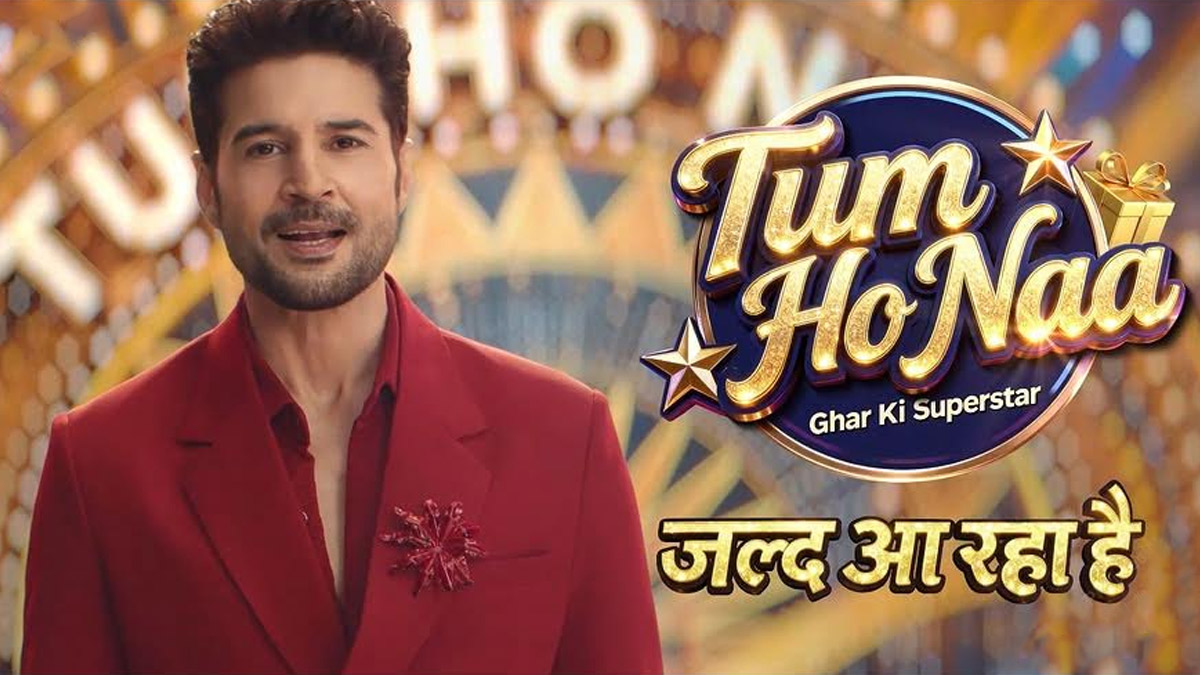
MUMBAI: Lights, camera… connection because this time, the game isn’t just about winning, it’s about who’s with you. Sony Pictures Networks India is gearing up to launch a new reality game show, Tum Ho Naa, expanding its unscripted slate with a format that promises both emotion and engagement.
The show will premiere soon on Sony Entertainment Television and stream on Sony LIV, with Rajeev Khandelwal stepping in as host. Known for his measured screen presence and selective choices, Khandelwal’s return to television adds a layer of familiarity and credibility to the upcoming format.
While specific details of the gameplay remain under wraps, the positioning suggests a reality format that leans as much on emotional resonance as it does on competition, an increasingly popular blend in Indian television, where audiences are gravitating towards content that offers both stakes and storytelling.
Khandelwal, reflecting on his return, noted that his choices have often been guided by instinct rather than convention, describing Tum Ho Naa as a project that feels “close to the heart”. His association also signals Sony’s continued focus on anchoring new formats with recognisable faces who bring both relatability and depth.
The launch comes at a time when broadcasters are doubling down on original non-fiction formats to drive appointment viewing, even as digital platforms expand parallel reach. By placing the show across both linear television and OTT, Sony appears to be aiming for a dual-audience strategy capturing traditional viewers while engaging digital-first consumers.
As the countdown to premiere begins, Tum Ho Naa positions itself not just as another game show, but as a reminder that sometimes, the biggest prize on screen isn’t the jackpot, it’s the journey shared along the way.







