MAM
Bharti announces roadmap for retail venture

MUMBAI: Bharti Retail (Pvt.) Limited, a wholly owned subsidiary of Bharti Enterprises announced the strategic roadmap for its retail operations.
The Company has planned an investment of $ US 2 to 2.5 billion by 2015. Bharti Retail has pan-India operational plans and is looking at approximately 10 million square feet of retail experience across cities.
The company also plans to employ 60,000 including ex-servicemen, women and youth.

Bharti Retail plans to launch its retail outlets in two formats- hypermarkets and supermarkets. It is also looking at partnering with existing local store owners across India through a franchise model for the small store format.
Bharti Retail will store all food and grocery categories, fresh fruits and vegetables, meat and poultry, dairy products, staples, FMCG and processed foods, electronics and appliances, clothing and footwear, furniture and furnishing, and other household articles.
Bharti Enterprises joint managing director Rajan Bharti Mittal said, “After revolutionizing the Indian telecom sector, retail will be the next big focus area for Bharti. Organised retail, which currently accounts for only 3% of the total market, has tremendous growth potential in the fast expanding Indian economy. The sector will also offer enormous direct and indirect employment opportunities while attracting huge investments.”
Bharti’s retail chain also promises to provide ready outlets to the relatively ‘unknown’ brands of small manufacturers, which are sold as private labels. A significant percentage of the overall volumes are expected to be sourced from the small-scale sector.
The company is currently looking at approximately 10 million square feet of retail experience.
Bharti Enterprises has interests in telecom, agri business, insurance and retail. Its recent foray into retail business is under a company called Bharti Retail Pvt. Ltd formed in an MoU with Wal-Mart for the cash & carry business.

AD Agencies
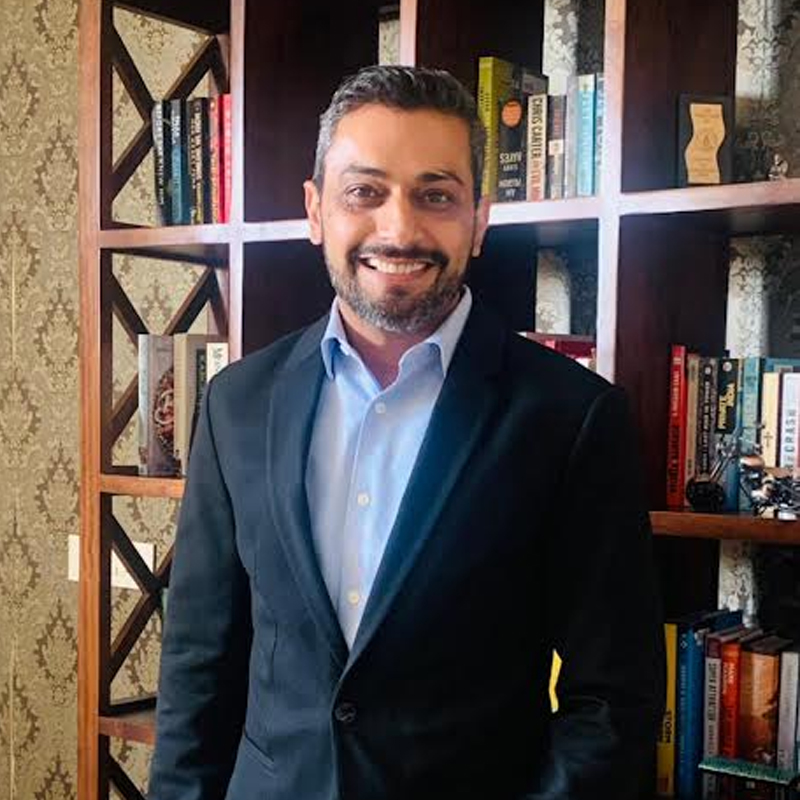
Abhay Duggal joins JioStar as director of Hindi GEC ad sales
The streaming giant brings in a seasoned revenue hand as the battle for Hindi television advertising heats up

MUMBAI: Abhay Duggal has a new desk, and JioStar has a new weapon. The media and entertainment veteran has joined JioStar as director of entertainment ad sales for Hindi general entertainment channels, adding 17 years of hard-won revenue experience to one of India’s most powerful broadcasting operations.
Duggal is no stranger to big portfolios or bruising markets. Before joining JioStar, he spent a brief stint at Republic World as deputy general manager and north regional head for ad sales. Before that, he put in three years at Enterr10 Television, where he ran the north region for Dangal TV and Dangal 2, two of India’s leading free-to-air Hindi channels. The north alone accounted for more than 50 per cent of total channel revenue on his watch, a number that tends to get attention in any sales meeting.
His longest stint was at Zee Entertainment Enterprises, where he spent over six years rising to associate director of sales. There he commanded the Hindi movies cluster across seven channels, owned more than half of north India’s revenue across flagship properties including Zee TV and &TV, and closed marquee sponsorships across the Indian Premier League, Zee Rishtey Awards and Dance India Dance. He also handled monetisation for the English movies and entertainment cluster and the global news channel WION, a portfolio that would stretch most sales teams twice his size.
Earlier in his career Duggal closed what was then a Rs 3 crore single deal at Reliance Broadcast Network, one of the largest in Indian radio at the time, before that he helped launch and monetise JAINHITS, India’s first HITS-based cable and satellite platform.
His edge, by his own account, lies in marrying data and instinct: translating audience trends, inventory signals and client demands into long-term partnerships built on cost-per-rating-point discipline rather than short-term deal chasing. In a media landscape being reshaped by streaming, fragmented attention and AI-driven advertising, that kind of rigour is increasingly rare and increasingly valuable.
JioStar, which blends the scale of Reliance’s Jio platform with the content firepower of Star, is doubling down on its advertising business at precisely the moment the Hindi GEC market is getting more competitive. Bringing in someone who has spent nearly two decades doing exactly this, across some of India’s most watched channels, is a pointed statement of intent. Duggal has spent his career turning audiences into revenue. JioStar is clearly betting he can do it again, and bigger.