MAM
Branding Overboard

Here are ten clues that your entire branding campaign has gone overboard.
Get the lifeboats ready!
One: There is a specially built underground tunnel between your HQ and your branding agency.

Most downtown complexes have these situations where services are set up for very quick and easy next-door access. There is nothing wrong with the access, but for a corporation to get pinned by proximity is surely a signal. Corporations should be more strategically driven than geographically motivated.
Two: Management will find any reason to add and invent new products, whether they are needed in the market or not.
As long as they fit a creative theme, executives without a good grip will support any promotional idea that alphabetically fits the catalog.The dilution of brands and constant change is the number one problem hindering long-term marketing. Most new innovations have a 90 percent failure rate, as most are rushed on fads, trends and quick blitzes for copycat ideas. Originality and long-term thinking is so rare it’s becoming extinct. It’s very wise to invent for real needs and not to fill the gaps in a branding theme.
Three: The creative innovation has become so complex that not even experts can figure out the launch campaigns and promotional themes.
Most advertising and branding is very often either apologizing for its blatantly raw message or explaining very hard to customers about the hidden messages behind its campaigns. Customers are fed up; they want clear, honest and simple messages. The overly creative twists and turns are just burdens. Most agencies are often scared, so they just copy ideas left and right and twist them for avoiding the obvious. This explains why almost all logos, names, identities and commercials are so similar. Remember, simplicity and originality will always win.
Four: Half of the entire HQ has become a multimedia center, and the staff frequently dress in Disney characters and skateboard the halls.
Most corporations seriously think that free-flow creativity is the way for modernized hip-hop success. They fail to see that real creativity is a very serious and a somber thing. Oversized creativity can cause fires.
Five: The boardroom is too small for big creative meetings, so local theaters are rented for the pitch and presentations.
It is good to get the larger teams of management involved with the branding issues. The bigger the space, the bigger the budgets; this is the Hollywood training of the glitzy noisy campaigns. Often, however, they really fall flat on the deaf ears of the product’s end users. Know thy limits, cut to size.
Six: There is nothing outsourced; with so much in-house now, there are even talks to completely drop the original business model. Why not become a branding agency?
Far too many businesses lose focus so easily. They become trapped in a branding circus and forget the real and original cause. Often, the message gets so twisted that it can cause a corporate meltdown. This is also one of the reasons why most corporations change agencies so frequently.
Seven: There are plans to change the zoning bylaws so as to accommodate the gigantic visuals, multi-story inflatable structures and the Ferris wheel.
The three dimensional dinosaurs of the past — once called visual aids — are the things of the past. Miniaturization of screens and gadgets are more in the play now, and customers want quick and cute access. Old graphic formats are gone.
Eight: There is a talk to repaint the entire HQ in the corporate color, and also the entire buildings nearby, and all the surrounding blocks.
The concept of the corporate color that grabs attention is a lost cause. With a billion businesses and only seven colors, no one remembers what corporation a particular color belongs to. Though it is a good idea to have a decent corporate color, to impose it on people as a calling device or to claim its exclusivity in courts is just dreaming in Technicolor. Get 3-D spectacles.
Nine: Now there are conveyor belts from office to office that carry newly designed displays and point-of-purchase innovations.
When there are far too many activities pulling the campaign in different directions, then obviously there will be an explosion of confusing selling messages, slogans and taglines with irrelevant graphics flooding the marketplace. Stop the presses.
Ten: There is talk of clearing space at the HQ to make a runway for a 747 to land for a photo shoot … and also to enable the creative teams to take off to exotic resorts on short notices.
Wildly creative ideas are really good, provided they are harnessed and controlled under professional leadership. The burst of profane exuberance in branding with an “anything goes” syndrome has already reached its climax. Perhaps it’s not a bad idea for the overly zealous creative teams with their extreme advertising mantra to take off to a relaxing island … make it a one-way trip, perhaps.







MAM
Lessons from global media markets on building enduring content franchises
Rose Audio Visuals COO and CFO Mitesh Patel.
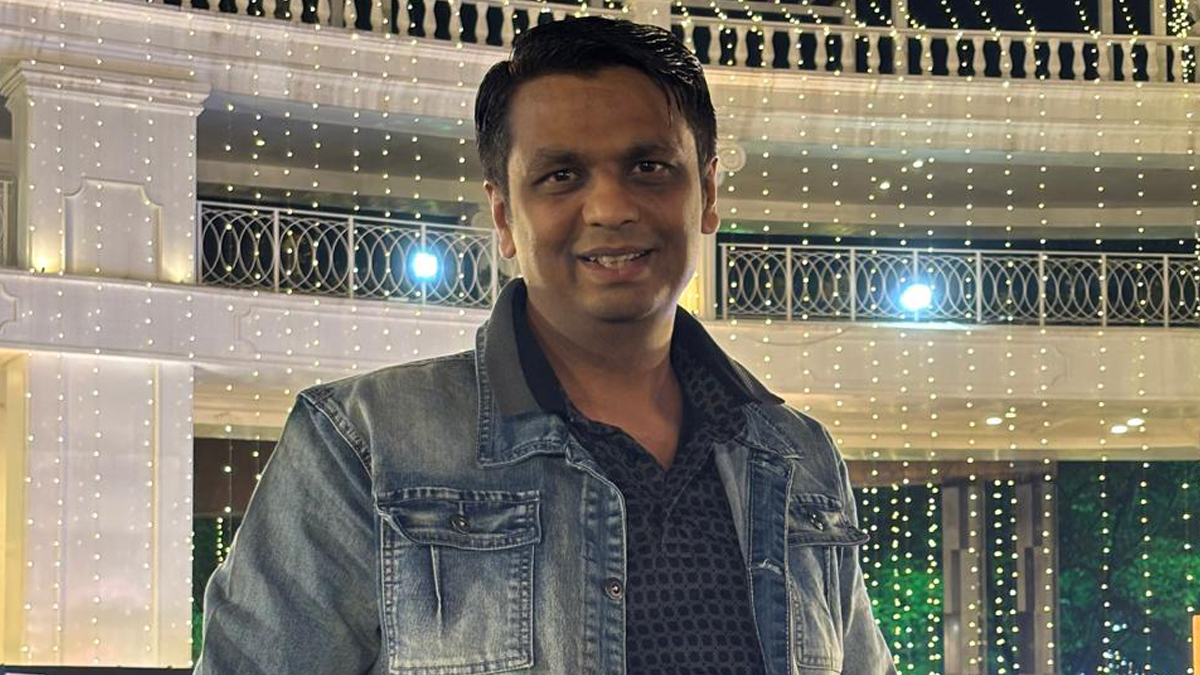
MUMBAI: The global media landscape has undergone a fundamental shift. Success today is no longer defined by a single hit show. It is defined by the ability to build intellectual property (IP) that travels, evolves, and compounds over time.
At Rose Audio Visuals, this shift is central to how we think about content pitching and creation. We are no longer in the business of just making shows. We are in the business of building IP ecosystems.
From Hits to Franchises
Globally, the most successful content is designed to extend beyond its first outing. It travels across: Seasons, Platforms (TV → OTT → Digital), Formats (series → spin-offs) Shows like Stranger Things and Money Heist are not just successful series they are multi-layered franchises with global recall, fan engagement, and long-term monetisation. The key learning is simple: If content cannot scale beyond one season or one platform, it remains a project not a franchise.
Local Stories, Global Impact
One of the most powerful global trends is the rise of culturally rooted storytelling. Platforms today reward local authenticity combined with universal emotion. Stories that are deeply regional are no longer limited by geography they are amplified by it. Consider the global impact of Squid Game or India’s own Sacred Games. The takeaway is clear: The more authentic the story, the greater its potential to travel if the emotion resonates universally.
Monetisation Begins After the First Window
A critical global learning is that the true value of content is not realised at launch, it is realised over time.
Strong franchises unlock multiple revenue streams: Licensing, International remakes, Brand integrations, Digital extensions , Events and immersive experiences
Global players like The Walt Disney Company have mastered this approach, turning content into long-term ecosystems that extend far beyond the screen.
The first window is just the beginning. The real value lies in what follows.
At Rose Audio Visuals, we increasingly evaluate projects not just on commissioning value, but on their long-term franchise potential.
The Rise of Creator-Led Franchises
An important global shift is the emergence of creator-led IP ecosystems.
Creators today are not just content producers they are building full-scale franchises across platforms, formats, and businesses.
A powerful example is MrBeast. What started as YouTube videos has evolved into: Multiple content formats, Global audience scale , Brand extensions and businesses, High-impact experiential content This is a fundamentally different model digital-first, audience-owned, and infinitely scalable.
This model is still in its early stages in Indian but it represents a massive opportunity.
The next wave of Indian content franchises may not come from traditional studios alone but from creators who think like media companies.
Balancing Data with Creative Instinct
Streaming platforms today are deeply data-driven. Data helps Identify emerging genres, Predict audience behaviour , Inform commissioning decisions However, global experience shows that data alone does not create hits. Data informs scale, but storytelling creates impact.
Talent is the Foundation of Franchises
Enduring franchises are rarely accidental they are built through long-term creative partnerships. Globally, there is a clear focus on nurturing Actors, Writter, Show runner and director. Franchises are not built on scripts alone they are built on creators. This is an area where we continue to invest deeply building long-term relationships with talent rather than project-based collaborations.
Multi-Platform Thinking from Day One
Content consumption today is inherently multi-platform. A successful show must be designed not just for its primary platform, but for: Short-form extensions, Social media amplification, Digital-first engagement. Every show today needs a second life beyond its original format.
India: A Market at an Inflection Point
India today stands at a unique moment in its content journey.
We are seeing significant opportunity in Regional markets (Telugu, Tamil, Marathi and others) Emerging formats such as micro-dramas, Scalable, franchise-driven fiction IP
India does not lack stories. What we have historically lacked is structured franchise thinking something that is now beginning to evolve.
The Way Forward
The biggest lesson from global markets is this: The future belongs to companies that do not chase hits, but systematically build franchises. Because while hits may deliver immediate success, franchises create long-term value, recall, and compounding growth.
At Rose Audio Visuals, this belief shapes how we develop, greenlight, and scale content across platforms.
For content companies today, the question is no longer “Will this show work?” It is: “Can this become a franchise?”
A Personal Note
Having worked across content, business, and strategy, one thing has become increasingly clear to me, the most valuable companies in our industry will not be those that create the most content, but those that create content that endures.
Building a franchise requires patience, conviction, and a long-term lens something that the industry is only now beginning to fully embrace.As we continue this journey at Rose Audio Visuals, our focus remains simple: to move from volume-driven creation to value-driven storytelling. Because in the end, stories may start conversations but franchises build legacies.







