MAM
Consumers, media, measurement; staying on top in a changing landscape

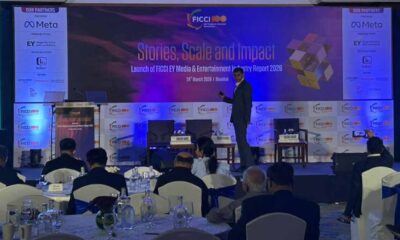
MUMBAI: Change is the only constant. Only it’s happening at a much more rapid pace today! From the changing consumer, to building relevant media, to moving beyond the obvious, to television ratings, to the relevance of print media, all were under the scanner at the MRUC (Media Research Users Council) seminar “Eye on Consumer, Eye on Media 2005” .
The seminar, held in Mumbai yesterday saw an impressive media turnout. With industry experts sharing their thoughts on the new emerging scenario of media, the seminar ensured good take home value.
BRANDBALLING
Kickstarting the session was none other than Dan Weiden, who, completing a decade as CEO Weiden & Kennedy, showcased a number of brands he worked with and how each case was uniquely treated to solve problems.
With Nike Basketball, the task he had was re-establishing a relationship for the disconnected target group. So, to position basketball as a people’s game and a game of self expression, Nike mixed hip-hop and basketball, Going beyond traditional media, they partnered with MTV and created a music video which was aired by MTV on several occasions. This not only accelerated the interactivity of the TG with the brand but also ensured phenomenal ratings for MTV. The video then went on to becoming a viral and Nike Basketball emerged as a leading brand in the sport of basketball in the US. To create a platform to solidify the relationship with the street ballers, Nike then conceptualized an event titled ‘Basketball One on One’ and the promo of which ran on MTV. The battleground became a franchise for Nike with MTV reaping profits as well with the popularity the event gained.
Another example cited was that of Nameshibori Beer. The positioning being fresh and alive, the agency created live programming on the Internet for a year, with 50 TV spots and 101 radio spots to get people to log onto the site. The whole campaign drove thousands onto the site with beer consumption going up by leaps and bounds.
The next session highlighted the new age consumer and where they were headed. Delivered by Venkat Ramaswamy, professor of marketing at the university of Michigan, he essentially focused on the “next” practices of value creation. “Everybody is sensing a very basic and fundamental shift in business,” said Ramaswamy. With increased awareness, consumers today are highly networked with the Internet, mobile phones and the rise of consumer to consumer communication. He reiterated that it was time companies wake up and understand that they can no longer create value for the customer, but need to create value with the customer. Hence there has to be a constant endeavour towards co-creation.
KRISHNANS IN A ‘RATINGS WAR’
Talking about the Apple I-pod, he pointed out how Apple demonstrated that Napster challenged the notion of choice. Going on to say that supply chain is intact but the locus of value creation has shifted the space of interactivity with consumers and other consumers. With the control over brands diminishing, the future demands that a two-way process for consumer interface be worked upon. Rapidly creating new knowledge by learning from each customer and integrating it with the firm. Moving to TAM (Television audience measurement) and is it the best possible system, saw the two Krishnans at loggerheads. The session conducted by LV Krishnan CEO, TAM and G Krishnan, CEO Aaj Tak threw a lot of light on the current standing the television rating system and its efficacy. While LV Krishna pointed out interesting trends across various channels and markets, G Krishnan stressed on the television measurement system being inaccurate and a lot to be desired.
Some of the key insights pointed out by LV Krishnan were as follows:
1) With the occurrence of any major disaster/ earthquake, ratings of
news channels jump significantly, the Tsunami catastrophe being the record breaker in terms of ratings.
2) DD Sports cashed in a lot during Olympics on account of Anju Bobby George, particularly in Kerala. A similar trend was also witnessed with Star Sports when Sania Mirza played Serena Williams at the Australian Open, with a chunk of ratings coming from Andhra Pradesh.
3) Vijay TV which is usually beaten hollow by Sun TV, managed to divertaudiences with the airing of dubbed movies like Titanic and Jurrasic Park in Tamil.
Coming to distribution, he pointed out that Max was a classic case of raising its connectivity to 100 per cent on the back of the World Cup. An issue in note today is that most cable operators work on an analog system allowing only 65 – 70 channels per TV set. Promotion and PR were also stated as important factors for increased sampling and TRPs. In fact 30 per cent of the audience are converted due to on-air promos, Krishnan stated.
G Krishnan on the other hand carped about a mere 5,000 people meters being the judge of the entire C&S and non C&S population. He stressed on the sample size being minuscule for a micro analysis and questioned the very basis of the media buying effectiveness. Citing that the TV advertising business which is Rs 50 billion today, is apportioned on the basis of measurement which is purely indicative and not accurate was not the way to go. He ended by saying, “Media planning should be a science and not an art based on a gut feel.”
The next two sessions were focused on retaining relevance of the print medium and the success story of the GCMMF (Amul) cooperative. Print will always be sacrosanct, but needs to adopt certain broad parameters to keep up with the times was the conclusion (nothing new in that). Next BM Vyas, MD Amul talk spoke about the history of the company, the dairy industry and how Amul became a brand to reckon with. Vyas pointed out that the consumer was not a static one, but a moving entity. He closing words were, “The milk industry is already the largest in India, but 2020 the production will soar to twice the current size and India will dominate the international dairy marketplace.”
All in all the seminar provided insight, raised relevant concerns, some age-old, some emerging to ensure perspective and progress.