MAM
Brand Darwinism in a changing landscape: Brand Summit 2005

CHENNAI: Day one of the third edition of the Brand Summit spearheaded by the Confederation of Indian Industries (CII), kick started today in Chennai at the Taj Coromandel addressing brands which go beyond business platforms and have become symbols of our times.
The theme of the convention focuse around the fact that, with a plethora of products filling the markets, addressing the consumer has become all that more challenging. The Summit aims at analyzing learnings on enhancing the consumer connect from a communication viewpoint, as well as providing a more integrated perspective of the industry. There seem to be a consensus about the fact that the environment is fast changing and the consumer is not averse to this change. Henceforth, redefining the whole concept of brand building has become paramount.
Experts at the Summit believe that the focus of the brands across the categories has to be on understanding these far reaching changes which incorporates the transforming perspectives of the new age consumer. Vivaldi partners CEO Dr Erich Joachimsthalar pointed out that now its no more dealing with a ‘brand image’ but rather its more to do with ‘brand identity’, not an individual brand but the entire portfolio, not just advertising but brand building. He underlined his observation while citing the example that Nike’s best kept secret was that they became a billion dollar brand without spending a dollar on advertising. Talking about Harley Davidson Joachimsthalar said that although not so strong on quality, the bike built its brand on the attitude and personality it produced for itself.
Joachimsthalar also remarked that India today commands the second largest number of brands in the world. However, non branded products contribute a majority of the volume sales and there seems to be a never ending battle between the multinationals and their domestic counterparts.
He questioned that how a brand can fit into a consumer’s life and become relevant? The fight has to move beyond just the attribute fight but has to be focussed on gaining a larger share of the consumers day to day life.

In this context Joachimsthalar proposed three key points:
1) Understanding the customers in context
2) Interesecting customers in their day to day activities
3) Developing strategies to capture more share in the TG’s life
Talking about the social economic changes, John Hariss director, London School of Economics took a critical stance of the blurring of geographies. He said that although globalization provided greater inter-connectivity between markets, it has also brought out to the surface the awareness and heightened the local identity. Globalisation, he stated, also brings with it the eruption of ethnic political conflict due to various factor. An instance Hariss cited was of the job cuts due to restructuring of different MNC’s and the angst within people driving them towards the rightist political parties. He candidly maintained that synergy between productive employment, intensive growth with a balanced approach towards globalization is where the current challenge lies.
Phiroz Vandrewala, executive vice president, Tata Consultancy Services stressed on technology and its ability to connect. ” The ability to connect with a consumer is unsustainable without technology,” he said. Retorting to Hariss’s comments Vandrewala said, “Yesterdays actors of globalization today adorn the masks of victims.” Agreeing to the fact that today’s challenges are tough, Vandrewala stressed on the fact that companies need to get back into the proactive mode instead of being reactive and responsive to competition.
Moving on to the changing consumer, which seems to be the favorite subject at most seminars these days, McCann president Santosh Desai talked about the underlying changes that have actually contributed in the making of the new age consumer. The new age consumer looks at life as a product and not a condition. Consumers today are looking at instant gratification. There is an immense need to be accepted at the global scale. Yet there is an equal stress on the need to sustain individual and ethnic identities. Money is being looked as a source of energy and not a static concept.
Strategic management consultant Rama Bijapurkar stressed on how the consumer has become his or her fickle self. She pointed out that the fickle behaviour of the consumer has been a result of marketers themselves. Loyalty shifts take place as value equations change and value equations change all the time due to over increasing entrants and pressures. The point Bijapurkar impressed upon was to identify who is making the consumer fickle?
Moving onto building enduring brands, Bijarpurkar remarked about companies not exploring all sources of advantage creation leading to a delivery with communication gaps. This she said leads a consumer to exerscise a brand shift.
Josy Paul head RMG David talked about insights in action and pondered that it was all about observation and being an eye witness to life. Madhukar Sabnavis, country manager planning O&M further commented on insight building by citing the Cadbury example. The insight being ‘there is a child in each one of us’. Cadbury is a childhood one never grows out of. He said using the same insight, different cuts have been used to drive home the same message. ” Zoom in, Zoom out,” he said of the consumers psyche.
The panel discussion saw ICICI’s Lalita Gupte, joint managing director talk about ICICI and its success story on being a solid brand in the retail market. Hi Design’s president Dalip Kapur talked about how a niche product like Hi Design managed to cut geographical barriers by solely relying on the exclusiveness and the quality of the product.
A glittering awards ceremony ‘The Brand Finale’ concluded the first day of the third CII Brand Summit. Nokia was announced as the CII Brand of the Year. Other finalist were Titan, Eveready, Dabur, Indane, Fair & Lovely, Lux, Ponds and Rin.

AD Agencies
Abhay Duggal joins JioStar as director of Hindi GEC ad sales
The streaming giant brings in a seasoned revenue hand as the battle for Hindi television advertising heats up
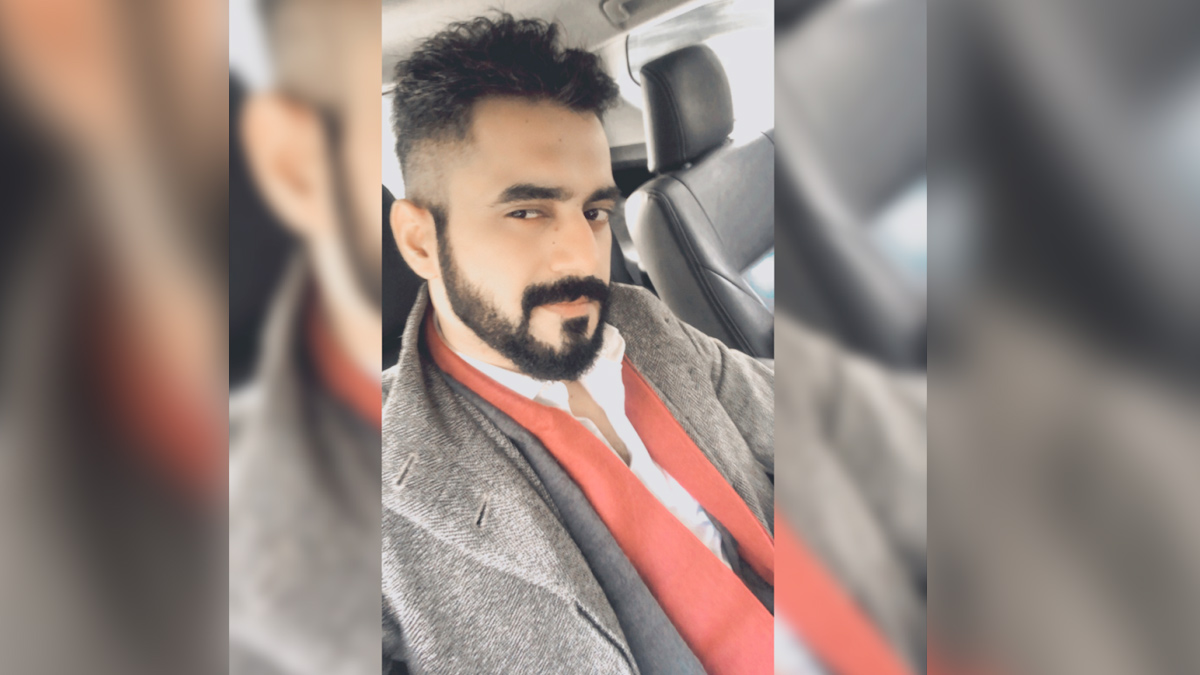
MUMBAI: Abhay Duggal has a new desk, and JioStar has a new weapon. The media and entertainment veteran has joined JioStar as director of entertainment ad sales for Hindi general entertainment channels, adding 17 years of hard-won revenue experience to one of India’s most powerful broadcasting operations.
Duggal is no stranger to big portfolios or bruising markets. Before joining JioStar, he spent a brief stint at Republic World as deputy general manager and north regional head for ad sales. Before that, he put in three years at Enterr10 Television, where he ran the north region for Dangal TV and Dangal 2, two of India’s leading free-to-air Hindi channels. The north alone accounted for more than 50 per cent of total channel revenue on his watch, a number that tends to get attention in any sales meeting.
His longest stint was at Zee Entertainment Enterprises, where he spent over six years rising to associate director of sales. There he commanded the Hindi movies cluster across seven channels, owned more than half of north India’s revenue across flagship properties including Zee TV and &TV, and closed marquee sponsorships across the Indian Premier League, Zee Rishtey Awards and Dance India Dance. He also handled monetisation for the English movies and entertainment cluster and the global news channel WION, a portfolio that would stretch most sales teams twice his size.
Earlier in his career Duggal closed what was then a Rs 3 crore single deal at Reliance Broadcast Network, one of the largest in Indian radio at the time, before that he helped launch and monetise JAINHITS, India’s first HITS-based cable and satellite platform.
His edge, by his own account, lies in marrying data and instinct: translating audience trends, inventory signals and client demands into long-term partnerships built on cost-per-rating-point discipline rather than short-term deal chasing. In a media landscape being reshaped by streaming, fragmented attention and AI-driven advertising, that kind of rigour is increasingly rare and increasingly valuable.
JioStar, which blends the scale of Reliance’s Jio platform with the content firepower of Star, is doubling down on its advertising business at precisely the moment the Hindi GEC market is getting more competitive. Bringing in someone who has spent nearly two decades doing exactly this, across some of India’s most watched channels, is a pointed statement of intent. Duggal has spent his career turning audiences into revenue. JioStar is clearly betting he can do it again, and bigger.