News Broadcasting
Ted Turner feels CNN is still good

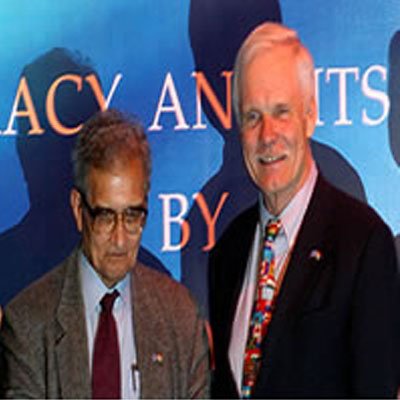
NEW DELHI: Asked by a young guy on a chilly December Thursday evening what was the secret of making money and leading a good life, pat came the reply: Early to bed, early to rise and work like hell. And, dont forget to advertise (your product).
Thats media visionary, philanthropist and statesman Ted Turner for you. In Delhi on his second only visit to India, Turner seems to be having fun as he divides time amongst various engagements over the last two days.
He hasnt lost any of his trademark aggressiveness, nor his sense of humour. I am slightly hard of hearing and didnt hear him for most part, he jokingly side-stepped when quizzed on some observations made by Nobel laureate Amartya Sen earlier in the evening at a lecture on `Democracy and Its Critics, organized by an agency of United Nations here.
His humour intact, what he might have lost is a few billions of dollars (when the share price of the then AOL Time Warner headed south on various allegations leveled at the share markets in the US). But enriching the monetary loss is a sense of purpose that is being directed towards making this globe a better place to live in.
Though the sale of Turner Broadcasting (owners of CNN and Cartoon Network amongst a host of other media properties) to Time Warner in 1996 was t ermed by him as the “biggest mistake of my life,” Ted still holds a candle for CNN.
Initially, he tried avoiding a direct reply to Indiantelevision.com, saying, Its not fair to ask meI have been associated with it for so long; you judge, but relented to add: Its (CNN) still so pretty good.
The poser to him was: does he feel that CNN, which he had started and nurtured so lovingly in 1980s, still lives up to the ideals of its founder?
Turners donation of $1 billion to support UN causes in 1998 and setting up of UN Foundation has brought Turner to India where hes interacting with non-governmental organizations, government officials and representatives and the India Inc, at times nudging it awake to its social responsibilities.
Time Warner acquired Turner Broadcasting in 1996 for $7.5 billion. For a period of time Turner served as Time Warner’s vice chairman, but then corporate maneuverings compelled him to leave the organization and pursue other interests, which include environmental activism and running a chain of restaurant called Montana Grill.
As a person from the UN, who has seen Turner over a long period of time, told Indiantelevision.com today, To many Ted might appear quirky, but thats him — he speaks and does things straight from the heart.