News Headline
Open Skies theme dominates Casbaa’s satellite forum


MUMBAI: The 2006 Casbaa Satellite Industry Forum which was held a few days ago featured calls for governments to lower regulatory barriers to the provision of cross-border satellite services or face the prospect of international satellite providers re-directing new capacity away from Asia.
Patience has reached a ‘critical point’ over regulatory stalemates in key markets such as China and India, is what more than 200 delegates heard at the Casbaa Forum in Singapore.
The warnings came at a time when advances in digital technologies are providing multiple new opportunities for the delivery of satellite services. “If global operators feel forced to re-target their payloads because of a lack of potential market access, it will be the end-users in the domestic markets who feel the burden through higher charges,” the delegates were told.

Korea’s SK Telecom has 550,000 subscribers to its TU Media service. Similar projects are now planned for a number of Asian markets. New DTH services are being launched in India and Indonesia while IPTV broadband via satellite and HDTV opportunities have added to unprecedented demand for new satellite capacity.
And, for this potential to be realised there is a need for more competition, more open market access, Open Skies and a change of mindset by governments, delegates heard.
Asiasat deputy CEO William Wade says,“There are tremendous opportunities in Asia today and for the coming years” .
SES Global VP Market Development, South Asia Deepak Mathur noted that even though the regulatory environment is generally stable, the interpretation of the rules tends more and more to favour restricted access. “This is a really serious challenge” he says.
While telecom markets such as cellular services have unleashed widespread competition, all too often Asia Pacific satellite markets remain constrained by the concept of protecting national incumbents or flagship monopolies.
Intelsat executive VP and general council Phil Spector says, “This should be a thing of the past,” said. He added that the international satellite community is already operating in the newly competitive world. “The days of ‘build and they will come’ have long gone,” he said.
One point that was made at the forum was that a harmonised approach to reform can deliver positive outcomes. Such outcomes include greater economies of scale for operators, local user capacity at cheaper prices and help rural users gain access.
Delivering the keynote address at the Casbaa Forum, China Association of Communication Enterprises vice chairman Hao Wei Min said that satellite is an important instrument for China to provide rural connectivity as part of the government’s five-year plan. “This year some 20,000 villages will be connected via satellite and by 2007, we will have 100 per cent connectivity,” he said.
Casbaa chairman Marcel Fenez, said, “The satellite industry, and Casbaa members in particular, are benefiting hugely from the explosion of demand for video content over all kinds of networks.”




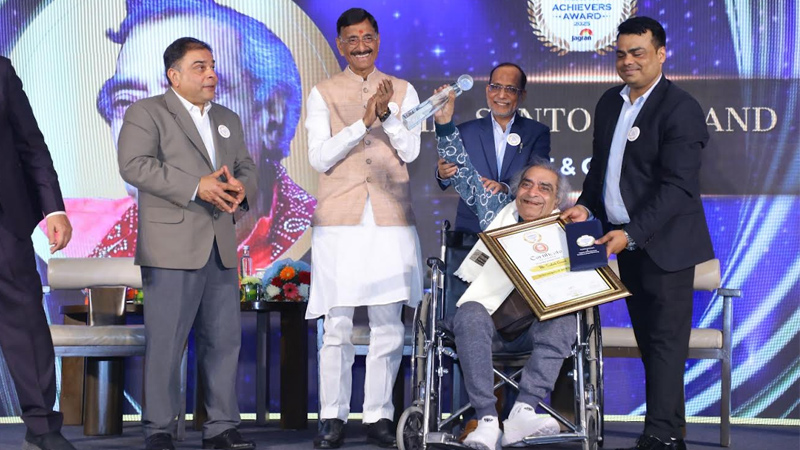
NEW DELHI: Hamdard Laboratories gathered a cross-section of India’s achievers in New Delhi on Friday, handing out the Hakeem Abdul Hameed Excellence Awards to figures who have left their mark across healthcare, education, sport, public service and the arts.
The ceremony, attended by minister of state for defence Sanjay Seth and senior officials from the ministry of Ayush, celebrated individuals whose work blends professional success with a sense of public purpose. It was as much a roll call of achievement as it was a reminder that influence is not measured only in profits or podiums, but in people reached and lives improved.
Among the headline awardees was Alakh Pandey, founder and chief executive of PhysicsWallah, recognised for turning affordable digital learning into a mass movement. On the sporting front, Arjuna Awardee and kabaddi player Sakshi Puniya was honoured for her contribution to the game and for pushing women’s participation onto bigger stages.
The cultural spotlight fell on veteran lyricist and poet Santosh Anand, whose songs have echoed across generations of Hindi cinema. At 97, Anand accepted the honour with characteristic humility, reflecting on a life shaped by perseverance and hope.
Healthcare honours spanned both modern and traditional systems. Manoj N. Nesari was recognised for strengthening Ayurveda’s place in national and global health frameworks. Padma shri Mohammed Abdul Waheed was honoured for his research-backed work in Unani medicine, while padma shri Mohsin Wali received recognition for his long-standing contribution to patient-centred care.
Education and social development also featured prominently. Padma shri Zahir Ishaq Kazi was honoured for decades of work in education, while former Meghalaya superintendent of Police T. C. Chacko was recognised for public service. Goonj founder Anshu Gupta received an award for his dignity-centred rural development initiatives, and the Hunar Shakti Foundation was honoured for empowering women and young girls through skill development.
The Lifetime Achievement Award went to former IAS officer Shailaja Chandra for her long career in public healthcare and governance, particularly in the traditional systems under Ayush.
Speaking at the event, Hamdard chairman Abdul Majeed said the awards were a tribute to those who combine excellence with empathy. “These awardees reflect Hakeem Sahib’s belief that healthcare, education and public service must ultimately serve humanity,” he said.
Minister Seth struck a forward-looking note, saying India’s young population gives the country a unique opportunity to become a global destination for learning, health and wellness by 2047.
The ceremony also featured the trailer launch of Unani Ki Kahaani, an upcoming documentary starring actor Jim Sarbh, set to premiere on Discovery on 11 February.
Instituted in memory of Unani scholar and educationist Hakeem Abdul Hameed, the awards have grown into a national platform that celebrates those building a more inclusive and resilient India. For one evening at least, the spotlight was not just on success, but on service with substance.