Applications
TDSAT directs Bhaskar Cable to pay Zee Turner in five weeks

NEW DELHI: In its closing day before the summer vacations, Telecom Disputes Settlement Appellate Tribunal has ordered Bhaskar Cable Network to pay all dues to Zee Turner within five weeks – which Zee officials said would come close to Rs 110 million – or face disconnection after that. The tribunal observed that this was an interim order, without prejudice to the main case that was going on. |
The tribunal order said that with the 2005 subscriber base (some 88,000 odd), Bhaskar Cable would pay Zee for an admittedly increased base of 20 per cent from January to September 2006 and from October 2006 till date at an increased subscriber base of 25 per cent of the 2005 figure. Bhaskar itself had admitted that its annual rise in subscriber base was 20 per cent, though Zee had wanted that to be corrected to 25 per cent. The tribunal accepted Bhaskar‘s admission till September 2006 and thereafter granted Zee‘s request for payment at a 25 per cent enhanced base. After a clamourous argument between Abhishek Singhvi and Maninder Singh, senior counsels for Bhaskar and Zee respectively. The tribunal also told Bhaskar and Zee to prepare and sign a new agreement for the year 2007 by 1 July. The tribunal also took exception to the fact that Bhaskar had not produced the subscriber base of Star, based on which the MSOs agreement with Star had been worked out. It ordered the MSO to make sure that that this was done before the next hearing. While Singhvi agreed to give that, he held that the document would be given to the tribunal only and not shared with Zee. Singh wanted the tribunal to rule that the stay that had been granted to them may be vacated, without which the MSO would never come to terms. “Vacate the stay (on disconnecting Zee signals) and they will resolve the issue within a week,” Singh had pleaded. However, the stay will hold for another five weeks and Zee can disconnect if the entire arrears are not paid within the stipulated time. |
Bhaskar, which said it had a market share of 75 per cent in Indore, 50 per cent in Bhopal and 80 per cent in Jaipur, contended that Zee was wanting them to charge for a subscriber base of nearly 600,000 for Jaipur alone, but contested it saying that was not its base. Rather, that was a figure given by the National Readership Survey, which was not acceptable to Bhaskar. Interestingly, Zee disclosed that they were giving signals to Bhaskar, despite the fact that they had not signed any agreement with the broadcaster for the entire duration of 2006, and most often not being paid for them either. Singh reminded the tribunal that the MSO has been abusing the stay by not complying with the commensurate order to Bhaskar to pay up, pointing out also that even for March and April this year, the payments were made only in May, not as per stipulated dates. Zee had disconnected the signals in two of the three cities mentioned. It had given a notice for disconnection in the third city as well, when the MSO had moved the TDSAT, which had granted them a stay. The main case would come up for hearing after the vacations end on 30 June. |

Applications
With 57 per cent single new users, Ashley Madison rebrands as discreet dating platform
Platform says majority of new members now identify as single
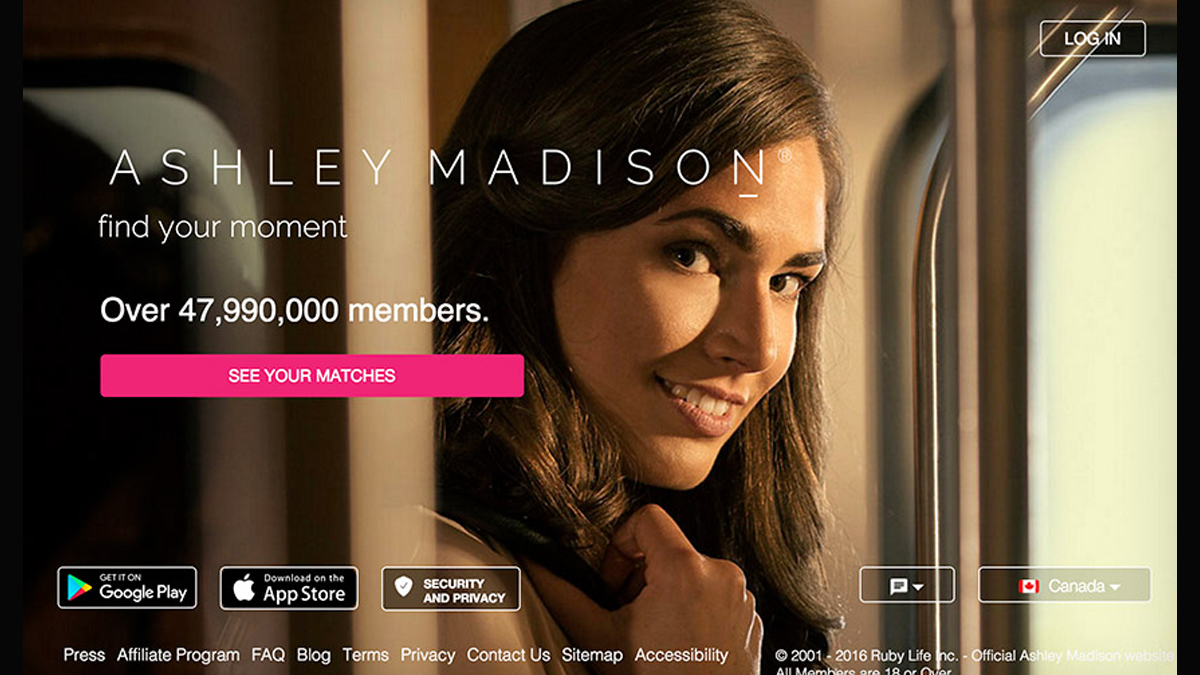
INDIA: Ashley Madison is shedding the “married-dating” label that defined it for two decades, repositioning itself as a platform for discreet dating in what it calls the post-social media age.
The rebrand, unveiled in India on 27 February, 2026, marks a structural shift in business model and identity. Once synonymous with married dating, the company now describes itself as the “premier destination for discreet dating” under a new tagline: Where Desire Meets Discretion.
The pivot is data-driven. Internal figures show that 57 per cent of global sign-ups between 1 January and 31 December, 2025 identified as single: a notable departure from the platform’s married core. The company argues that its community has already evolved beyond its original positioning.

“In an age where our lives have been constantly put on public display, privacy has become the new luxury,” said Ashley Madison chief strategy officer Paul Keable. He framed the platform’s offering as “ethical discretion” for singles, separated, divorced and non-monogamous users seeking private connections.
The shift also taps into wider digital fatigue. A global survey conducted by YouGov for Ashley Madison, covering 13,071 adults across Australia, Brazil, Canada, Germany, India, Italy, Mexico, Spain, Switzerland, the UK and the US, found mounting discomfort with hyper-public online lives.
Among dating app users, 30 per cent cited constant swiping and messaging as a source of fatigue, while 24 per cent pointed to pressure to curate public-facing profiles and early personal disclosure. Some 27 per cent said fears of screenshots or information being shared contributed to exhaustion; an equal share cited unwanted attention.
The retreat from oversharing appears broader. According to the survey, 46 per cent of adults actively try to keep most aspects of their life private online. Only 8 per cent feel comfortable sharing most aspects publicly, while 35 per cent say they are becoming more selective about what they disclose.
Ashley Madison is betting that this cultural recalibration towards controlled visibility can be monetised. By doubling down on privacy infrastructure and reframing itself around discretion rather than infidelity, the company is attempting to convert reputational baggage into a premium proposition.








