Hindi
Hollywood making too many sequels: Coppola

ANTALYA: Renowned Hollywood director Francis Ford Coppola feels there are too many films being made in Hollywood which are either sequels, re-makes or repetitive and this is leading to skyrocketing budgets.
He has therefore been wanting to give a new kind of experience to his viewers and that was the reason for his long hiatus from filmmaking.  Speaking about the extensive use of Sanskrit in his latest film Youth Without Youth screened at the ongoing International Eurasia Film Festival here, he said that tales told in ancient Indian scriptures in Sanskrit are very simple myths in themselves but hold very deep meaning. These tales showed a larger philosophical aspect to life than the western mind often comprehended.
Youth Without Youth (his first movie since The Rainmaker in 1997) has used Sanskrit shlokas and dialogues as a major highlight of the film. The film is a metaphysical story about a 70-year old professor Dominic Matei (played by Tim Roth) who gets magical powers that transform him back to a 30-year old youngster after he is hit by a bolt of lightening on Easter Sunday in 1938.
The Nazis learn about this and want him, and he has to escape by taking on a new identity. And his own dreams of unfulfilled love torment him since he had not been able to marry the woman he had loved in his younger days. This gets fulfilled when he finds a mystical woman who appears to hang between her present and past lives.
Coppola adapted, produced and directed the film based on the 1976 novel by Romanian-born religious historian and philosopher Mircea Eliade. The film also stars Alexandra Maria Lara, Bruno Ganz, Andre M Hennicke, Marcel Iures, and introduces Alexandra Pirici while Matt Damon makes a special appearance.
Speaking about the research involved and the extensive use of Sanskrit and the shooting experiences in India, Coppola said that Mircea Eliade was a renowned Orientalist. The film, which has been shot mostly in Romania, also has some sequences shot in Mumbai.
“While writing a screenplay, I was also assessing my own place in cinema. I was already 65 and did not know what my place was and what I should do,” he said earlier, addressing a press conference.
When he saw the story by Mircea Eliade, he thought it was like the story of Faust and he liked the interesting ideas of existence, and re-birth.

Hindi
Marico founder Harsh Mariwala’s book Harsh Realities set for film adaptation
Almighty Motion Picture taps Karan Vyas to script Marico story
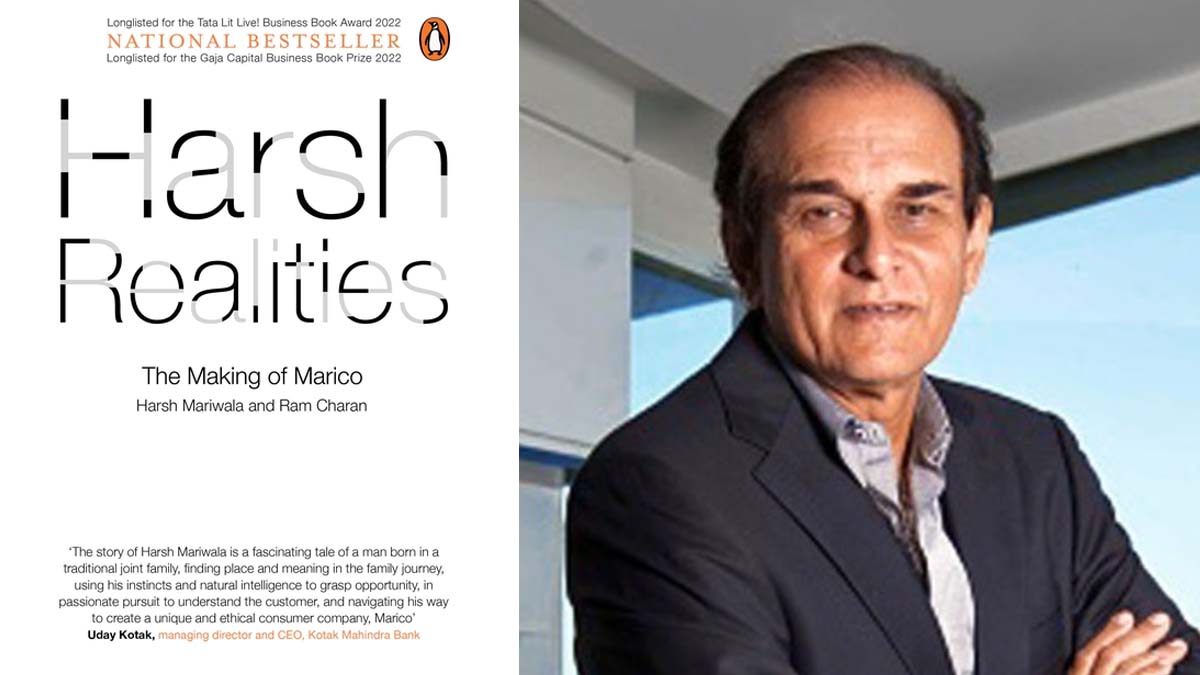
MUMBAI: Almighty Motion Picture is turning its lens on India Inc., with plans to adapt Harsh Realities: The Making of Marico into a screen project. The story charts the rise of Harsh Mariwala, the chairman and founder of Marico, and is currently in early development, according to a report by Variety.
Writer Karan Vyas, known for his work on Scam 1992, Scoop and Made in India – A Titan Story, is attached to pen the screenplay. The project continues the studio’s growing interest in real-life Indian narratives that blend business with human drama.
At the heart of the story lies a defining moment in 1987, when Mariwala chose to step away from the family-run Bombay Oil Industries and strike out on his own. What followed was not just the creation of a company, but the reinvention of a legacy. Marico would go on to become a global FMCG player, with brands like Parachute, Saffola, Set Wet and Livon becoming household names, reaching nearly one in three Indians.

The source material, co-authored by Mariwala and renowned business strategist Ram Charan, offers more than a boardroom chronicle. It captures the grit behind the growth, the risks behind the rewards and the leadership lessons forged along the way.
The adaptation aims to move beyond balance sheets and brand milestones, focusing instead on the person behind the enterprise. Expect a narrative that leans into the emotional stakes of entrepreneurship, where decisions are as personal as they are professional.
Today, Marico draws about a quarter of its revenue from international markets across Asia and Africa, reflecting its steady transformation from a domestic player into a multinational force. Yet, if the makers have their way, the screen version will remind audiences that every global success story begins with a leap of faith.
With development set to begin soon, this is one business story that may just trade spreadsheets for storytelling, and profit margins for moments that linger