News Broadcasting
Campaigning against terror

Indian news television channels have been lambasted by one and all for their over-the-top telecast of the terrorist strike late last month. While some of the caning has been well-deserved, one can‘t forget that the news crews and authorities probably lacked the experience to understand and implement the sensitivity required for the live coverage of such a high intensity event as the recent Mumbai terror attacks. And hence, as a consequence, both the parties have been taking steps to correct those flaws by announcing the formation of a code and a committee which will become active during the reportage of national crises.
One month down the line from the terror attacks, indiantelevision.com decided to take a look at what else Indian news media have been doing post 26/11, more specifically in terms of campaigns to create awareness about terrorism and to find solutions to some of the key issues which could prevent India from facing a similar situation in future.
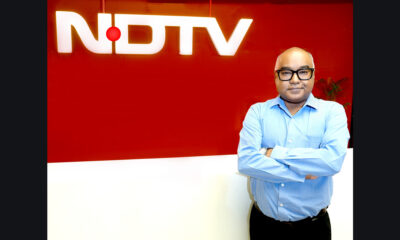
* NDTV Profit launched a campaign to try and find answers to terror-based issues like security, intelligence, infrastructure, corporate activism and crisis management from the corporate world of India. As part of this campaign, the channel hosted a daily special called Ideas for change at 10:30 pm every day.
 Speaking to indiantelevision.com, NDTV Profit managing editor Shivnath Thukral said, “The threat to India is intensifying and the recent attack on Mumbai has shaken each and every citizen of the country. Nevertheless, this is the time for people to come together and find solutions to our problems. Through this campaign we wanted CEOs to use their experience in drafting a blueprint which will help us all to contain this terror. We required ideas from the corporates who till this time have helped in building the shares of their stakeholders and expanding the Indian industry; to provide solutions to issues that would help in safeguarding our country from terrorism.”
NDTV Profit wishes to continue the campaign in the future in some form or another and address various other issues. Additionally, by the end of December, 2008 the channel will present the documented ideas to the Home Minister, P. Chidambaram and the Chief Minister of Maharashtra, Ashok Chavan.
* Newspaper daily Daily News & Analysis (DNA) launched its own initiative called ‘Eyes & Ears – People Protection Group‘ with the catch phrase, ‘somebody needs to protect this city, let‘s start with you‘.
 “We plan to continue this campaign forever and for that DNA has also launched the website, eyesandears.in. The idea behind the campaign is to encourage people to report anything suspicious in their surroundings to DNA. To follow up on a complaint, DNA will interact with the concerned security authorities for further investigation. Generally people are scared to approach the police. Therefore, through this campaign we are trying to provide a channel through which the common people can communicate easily without any fear or difficulty,” elaborated DNA CEO K.U. Rao.
* Network18‘s English news channel CNN-IBN in association with Hindustan Times group launched their own agenda against terrorism called, ‘Citizens against terror’.
 CNN-IBN executive editor Vinay Tewari noted, “Through this campaign with Hindustan Times, CNN-IBN is looking at addressing the burning issue the country faces after the terror attack in Mumbai. The campaign is an attempt to mobilise and help the people with various steps and initiatives they can take to contribute to this fight. We are inviting people to provide solutions to key issues via emails, blogs, messages etc. We then plan to create a handbook after selecting some of the best ideas which we will present to Home Minister P. Chidambaram and Maharashtra Chief Minister Ashok Chavan on 26 December, exactly a month after the attacks. In order to choose the best of the ideas we have set up an expert panel.”
While both CNN-IBN and IBN7 are hosting shows on the terror attack on weekends, daily newspapers of HT Media- Hindustan Times and Hindustan- are carrying stories of people who have suffered during the attack.
* Aajtak, the Hindi news channel, has also launched ‘Declare War on Terror‘. The mission of this movement is to bring all Indians together to fight and counter terrorism in all forms. The movement will develop programmes and will partner in areas such as empowering public opinion against all forms of terrorism. It will influence decision makers at the highest level – fighting against those who kill innocents, support measures that ensure safety, expose corruption and incompetence that endangered safety and security, defeat the enemy by having zero tolerance of terror, eliminate forces that propagate hate and promote unity among the people of India.
* Mumbai-based daily tabloid Mid-Day not only used print but has further extended its campaign against terrorism on its radio station, Radio One 94.3 FM.
 Mid-Day group editorial director Shishir Joshi elucidates, “We launched our campaign ‘Enough‘ across our platforms which include daily papers like Mid-Day, Gujarati Mid-Day and Inquilab, radio station Radio One, Mid-day.com and also through the mobile short code 53650. Through our campaign we asked four basic questions to the government – ‘Did we have prior information about the attack?’, ‘What did we do after we had the information?’, ‘what could have been a better way of handling the situation then?’ and ‘what are the measures that should be adopted now to improve the situation?’. We took the answers from the representative of the government to the common people and then took their feedback on these answers to the government once again.”
* The radio stations in Mumbai went an extra mile in serving as an interactive platform for listeners to express their anguish about 26/11. Red FM launched its campaign ‘Enough is enough‘ in which the airwaves were thrown open to Mumbaikars and the music on-air was reduced to accommodate the flood of calls from people. The callers included victims, families of victims, eye witnesses, staff members of the hotels and everybody else who wanted to speak about their experiences, send out a plea, express anger or demand answers for their unanswered questions.
 Mumbai station of ADAG owned Big 92.7 FM undertook a special drive to urge each and every Mumbaikar to join them and speak up against Terrorism. ‘Mumbai Halla Bol- Ab Chup Rehene ka Waqt Nahi‘ saw people from all walks of life including celebrities like Rahul Mahajan, Ad Film maker Prahlad Kakar, Singers Shaan and Ismail Darbar, Tops Security chief director Ramesh Iyer, Dr Mangeshkar who was one of the hostages at the Taj Hotel, professionals from various companies, College students, and the NGO Dreamz Home joining the initiative.
Commenting on Big FM‘s role on the issue, station head Neerja Dhillon said, “Radio as a medium today can not only inform people, but it can activate a complete movement in the city by not only creating awareness, but by creating a feeling of responsibility. Hence, Big 92.7 FM took up this drive to bring together people from various backgrounds.”
Additionally, ENIL‘s Radio Mirchi 98.3 FM initiated a 15 day campaign ‘Be alert but don‘t be prejudiced.‘ The campaign was an appeal to all to practice communal peace and tolerance rather than blindly blaming a particular caste or religion for the cause. The campaign also aired opinions and views of Muslims who lead normal, regular lives.