iWorld
Free quality content, easy discoverability, unique features – your mood, anytime, anywhere: RUNN TV’s Manish Sinha

Mumbai: RunnTV, the pioneering Indian free ad-supported streaming television (FAST) platform tailored exclusively for Indian audiences, has achieved a significant milestone by surpassing 50,000 downloads within a brief period, focusing on select Indian cities. This accomplishment underscores RunnTV’s relevance and resonance with OTT users in India.
Since its launch in November 2023, RunnTV has successfully engaged and captivated audiences through its thoughtfully curated content and a distinctive user experience characterized by a user-friendly interface and innovative features. The platform’s immediate appeal to a diverse audience can be attributed to RunnTV’s unwavering commitment to providing a high-quality entertainment experience that aligns with the dynamic preferences of today’s digital audience.
RunnTV strategically targets the burgeoning and high-growth FAST market in India. The positive response to RunnTV underscores the existing gap and demand for a free TV platform offering excellent user experience and quality content without the clutter associated with an overflow of freely available content. Notably, RunnTV is poised to expand its reach by soon becoming accessible on Smart TVs and other aggregator platforms.
Owned by Runn Media Labs, a forward-thinking company operating at the intersection of media and technology, RunnTV is at the forefront of developing technology and B2C products in the media domain. As the first Indian FAST-based content streaming platform, RunnTV is purposefully designed for the Indian market, offering channels tailored to every mood, genre, taste, and user in a personalized manner. Accessible across mobile, web, and connected TV devices without any subscription, RunnTV is redefining the landscape of free ad-supported streaming television in India.
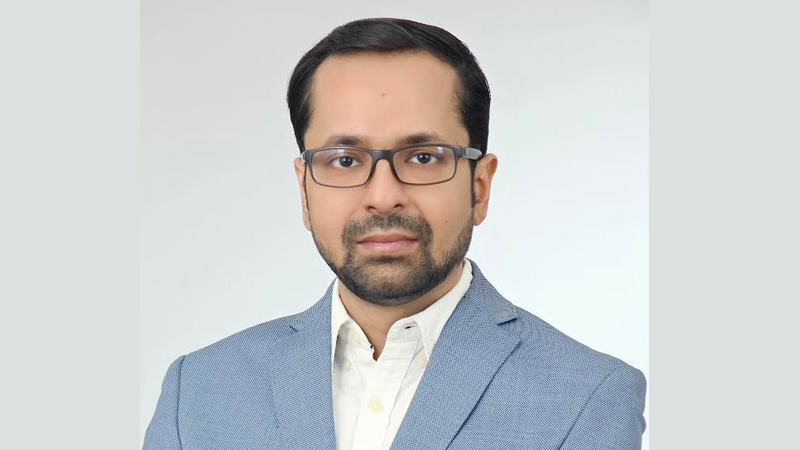
Manish Sinha is the founder and CEO of Runn Media Labs which launched RunnTV recently as India’s first independent FAST streaming service. Manish has close to two decades of experience in the Media & Entertainment (M&E) industry working with top media companies across the globe providing business and technology consulting to top broadcasters, studios, and pure-play OTT companies. With his deep understanding of the media value chain and business models, Manish’s expertise lies in bringing in the right set of industry and consumer insights, and technology to design and build result-oriented streaming businesses.
As RunnTV continues to evolve and expand its channels and content offerings, the company remains committed to providing an entertainment experience that brings many firsts to the Indian OTT audience.
Indiantelevision.com spoke to RUNN TV founder Manish Sinha on the launch of the channel, the emergence of FAST TV in India and much more…..
On the launch of launch RunnTV
While there are plenty of streaming platforms out there in India with a plethora of content choices, there exists a gap for a platform that looks at the Indian market in a very focused and contextual way. India is not a subscription economy and is primarily a free streaming market with more than 70% of consumption happening on free streaming platforms. The subscription-based consumption is not only small but also faces many challenges such as churn, account sharing and most significantly, fixed subscription revenue against variable consumption costs.
The free streaming platforms in India have either low-quality content offered for free or discoverability issues with quality content lost within a dump of low-quality content or both. Even the new FAST-based platforms launching in India are just chasing the count of channels and not evaluating the channels’ relevance or fitment for Indian audiences.
This is the gap and opportunity that we are targeting with RunnTV and ‘now’ is the right time with multiple factors at play – Fast growing digital and CTV advertising with increasing CPMs and CTRs, increasing Smart TV market share in new TV buying, development of FAST ecosystem in India, continued internet penetration and affordability, and rationalisation of content costing after non-sustainable boom post-pandemic.
On connected TV and other digital platforms today, what is your USP
We are focused both on delivering unique user experience and on building a long-term sustainable streaming business so that we can keep delivering such experience to our users consistently and keep getting better at it.
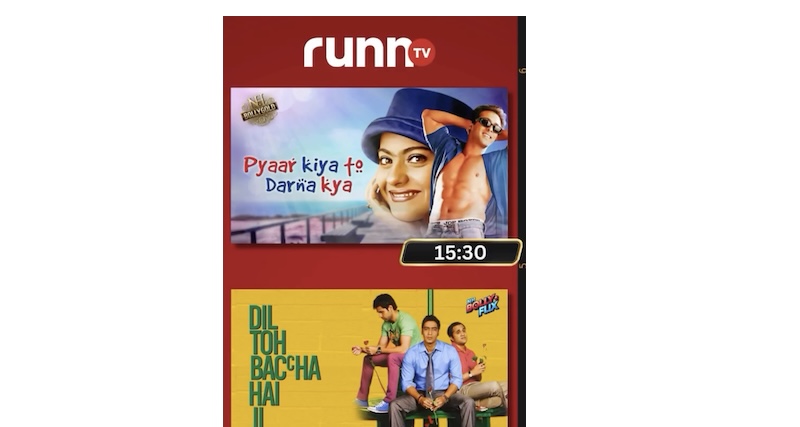
Our USP is the unparalleled combination of quality content, easy discoverability and unique features available at no cost to users. Highly curated content is presented to our users as channels with time shifts and catch-up options. In addition to proven categories like movies, shows and news, we are also making discoveries and audience-building for contemporary users’ tastes such as short films, stand-up comedy, and podcasts. We will also be rolling out multiple new and industry-first features such as personalised channels in the next two quarters. We can achieve this as we have built our proprietary technology that powers RunnTV with full control of user experience.
In summary, our USP is our content strategy and user experience which is made possible by our proprietary technology.
On the revenue model for such a venture
RunnTV will be monetized through ads and sponsorship that will include programmatic and direct sales including video ads, AFPs, sponsorships and promotions for brands and channels. Digital is the high growth area and is the future of TV consumption. The 70% of new advertising spend in 2023 went to digital. Within digital advertising, CTV is the fastest-growing advertising channel, the first preference for brand marketers and has highest CPMs. This will only go north for the next decade and we can benefit from it significantly if we build the right foundation in the next couple of years.
Additionally, our technology will again play a critical role in maximising our fill rates and CPMs while keeping our ad insertion costs low.
On consumers switching to RunnTV
The consumers will come to RunnTV for its curated content and experience built around ease of access and discoverability. With the current free streaming platforms, the consumers have to get through a clutter of irrelevant content to find something ‘watchable’. They need to be good with search or have the patience to browse and navigate. RunnTV is free too, but the content is curated and discoverability is easy.
Subscription-based streaming platforms are chasing originals and exclusives to drive consumers to their platforms. The paying consumers will go to these platforms and we don’t expect them to just switch to RunnTV. But they want to watch good content when not watching these limited exclusives on platforms they have subscribed to. They just need to have some of their monthly watch time with RunnTV watching good content served to them with ease of access and discoverability.
The initial response we have got for RunnTV from consumers underscores this relevance and interest for OTT consumers in India. It is very early days but it will only get better from here with every new release we do and every channel we add.
On achieving 50 thousand app downloads within a month of the launch, your thoughts
We are excited about this milestone achieved in such a short span and that too with targeting only selected cities in India. I think that it is a result of our sharp focus on Indians as our users and India as our market. We have thought extensively about each element of experience for the ‘Indian OTT consumer’ including the user journeys, features, content preferences and consumption patterns.
The consumers installing in such numbers are a validation of our need hypothesis for such a platform in India and the number of DAUs we are seeing can be attributed to the relevance of content and good user experience that is being delivered by RunnTV.
On the future of Fast TV in India and this subcontinent
FAST TV is a proven concept in the Western world where the countries are largely not price-sensitive markets. It has seen such adoption and success in those countries not because of it being free but because of the multiple user-friendly aspects of FAST TV including convenience, lesser decision overload and access to different content.
India and the subcontinent is even more suited for FAST TV with it being a price-sensitive region. Additionally, with the given demographics, its size and rising income, India will continue to have a rapid increase in consumer spending that will continue to positively impact advertising spends by brands on digital channels, where CTV is the fastest-growing segment at 47 per cent CAGR.
We have all the favourable, and so many, factors for FAST to be immensely successful in the coming year in India and the subcontinent – price-sensitive users, large and growing consumer base, growing digital ad spends, high free streaming market share, decline in traditional TV subscriptions, and growing Smart TV penetration.
On the vision and way forward
We are building RunnTV with a vision to make it the Entertainment Experience Destination for Indians across the globe. And in the next 3 three years, we see ourselves to have gained the trust, confidence and alignment of our consumers, content partners, and advertisers on that journey and a robust technology to fuel that journey.
Quantitatively, we see ourselves to be at 20M plus MAU in India in the next three years with RunnTV being one of the top three FAST platforms in India in terms of user engagement and growth and one of the preferred and trusted streaming platforms for content partners and advertisers.
On the trends for 2024
The year 2024 is going to be a landmark year for the Indian Media & Entertainment (M&E) industry considering the current state and the possibility of the emergence of two media behemoths with mergers and acquisition activities in the industry. It will change the industry order and force and alter industry trends.
Traditional TV, as DTH and cable, will continue to decline with cord cutting phenomenon and the growing share of Smart TVs in new TV purchases. The trend may just intensify with the availability of more and more aggregators and bundled offerings and with the new FAST platforms. 2024 will also have multiple launches of FAST-based streaming platforms fuelling the rapid development of the FAST ecosystem in India including tech, content and advertising. On the content side, I see some rationalisation on content licensing and commissioning deals with streaming companies looking to control costs with a stricter evaluation of real value and return on such content investments.
Generative AI is also expected to get some footing in 2024 not in terms of implementation itself but in terms of use cases, experimentations and pilots for content creation.