Executive Dossier
‘There is significant increase in competition from companies and countries from Asia and LA’ : Iatas president and CEO Bruce Paisner


|
The International Emmy Awards have been growing in strength from year to year. These recognise the best in television from around the world. This time around The International Academy of Arts and Sciences (Iatas) wants India to be a bigger part of the awards and the Academy. With that aim in mind Iatas president and CEO Bruce Paisner is coming down to India next month to meet with the top television industry professionals. He will be assisted in this by Anil Wanvari a member of the Academy.
In an interview with Indiantelevision.com, Paisner talks about the role the Academy plays in recognising the best of global television, country participation, the importance of having digital media awards. 
Excerpts:
What role does The International Academy of Television Arts & Sciences play in facilitating awareness of global television programming?
We pride ourselves in offering every year, a unique cultural showcase of the best television currently produced around the world. When a producer or broadcaster enters a programme or performance into our competition, they open themselves up to many wonderful opportunities: being nominated or winning an Emmy of course, but also, having their programme watched by jurors from all over the world.
Additionally, our network of over 600 Members from 50 countries who represent all sectors of the television industry including mobile and Internet, plays a major role in promoting our activities and the importance of entering into our competition. In light of this, we are doing more activities with our Members and more international outreach.
How has your flagship event, The International Emmy Awards, grown over the past five years?
The buzz around the awards has grown. Last year we gave Special Awards to Lorne Michaels and Simon Cowell. Past award recipients in the last five years have included Steven Spielberg, Al Gore and Oprah Winfrey. The global publicity and excitement around the event is rising every year and we are thankful to our Gala Partners, Phoenix Satellite Television, TV Globo, Microsoft, Dori Media Group, Ascent Media, Ernst & Young, Variety, Mip TV and Sofitel Luxury Hotels for their continued support.
How does the selection process work? Has country participation increased?
We have a total of 15 programme categories. Nominees are selected through a lengthy and rigorous judging process which takes place over a period of six months and three rounds of judging. Over 720 independent jurors, who are selected because they are experts in their category, participated in this process in 2010. There are four nominees in each category that make it to the final round
Regarding increase in country participation, in the past five years we’ve seen significant increase in participation in the competition from companies and countries from Asia and Latin America. Entries from Latin America have doubled and those from Asia, the Middle East and Africa have grown by more than 50 per cent. Unfortunately, India’s quality programming is vastly underrepresented so far. We look forward to that changing.
We also have a quarterly newsletter that goes to over 10,000 industry contacts worldwide and a Facebook and Twitter following. And as you know, since you have been hosting a semi-final round of judging for us for several years, we are present in over 15 countries every summer with local semi-final rounds of judging events organised by member companies. These events are strategic in creating awareness about the competition because they involve content producers directly. Once they see how the competition works, they are more likely to enter their programmes.
You added the digital Emmys a few years back. Was that done to acknowledge changes happening in a rapidly changing media landscape?
The International Digital Emmy Awards recognise excellence in programming and content created and designed for viewer interaction and/or delivery on a digital platform (i.e. mobile, internet, interactive TV, etc.) originating outside the United States. We have three categories: Fiction; Non-Fiction and Children & Young People. The competition has been growing over the past five years and we’re looking forward to more entries every year.
Our competition also stays one step ahead. One example is the digital Emmy awards, with the three categories which have evolved over the years and the presentation of a Pioneer Prize, which recognizes the outstanding contributions of an individual or organisation to the field of digital entertainment. Another example is separating the news categories to News & Current Affairs and presenting them at a separate News Emmy awards ceremony presented by the National Academy in New York.
Also, the Telenovela category was created three years ago because of the global nature of the phenomenon and the need for our competition to recognise this important genre became imperative.
Also, if you are involved in international television, you should consider becoming a Member. Our team in New York will be happy to help with any questions regarding Membership, they can email iemmys@iemmys.tv.
India is such a prominent player in the television industry and unfortunately, this is not reflected in the International Emmy Awards competition. We hope more Indian television professionals will get involved with us and thanks to the wonderful platform offered by Indiantelevision.com and Anil Wanvari, we hope this will be possible. |






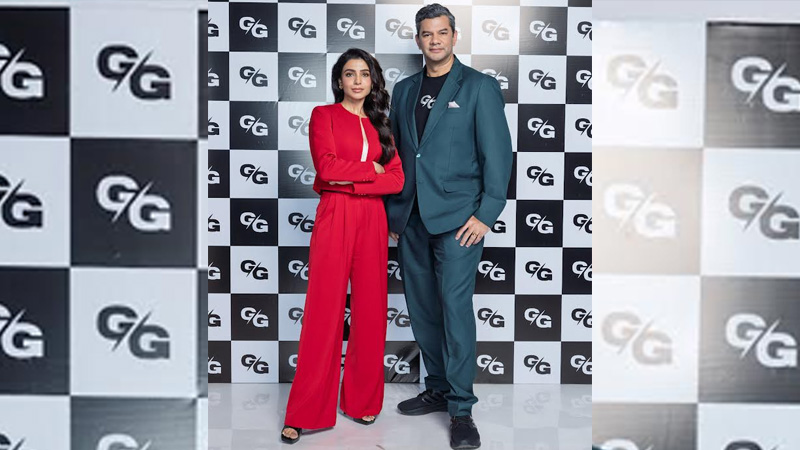
MUMBAI: Game faces on, pressure high India’s gaming ambitions are levelling up. Good Game, billed as the world’s first as-live global gaming reality show, has officially launched in India with a bold mission: to crown the country’s first Global Gaming Superstar.
Blending esports with mainstream entertainment, the show brings together competitive gaming, creativity and on-camera performance in a format that tests more than just joystick skills. Contestants will be judged on gameplay, screen presence and their ability to perform under pressure, reflecting how gaming has evolved from pastime to profession and pop culture currency.
Fronting the show are three high-profile ambassadors: actor and entrepreneur Samantha Ruth Prabhu, Indian cricket star Rishabh Pant, and gaming creator Ujjwal Chaurasia. The winner will take home Rs 1 crore ($100,000) among the largest prize pools for any Indian reality show along with the chance to represent India on a global stage.
Backed by a planned annual investment of up to Rs 100 crore, Good Game is also courting brand partners, promising a minimum reach of 500 million among India’s core youth audience. The creators position the show as a bridge between entertainment and interactive culture, offering long-format content, community engagement and commercial scale.
Auditions are now open to Indian citizens aged 18 and above, inviting amateur and professional gamers, creators and performers alike. Shortlisted candidates will be called for in-person auditions in Mumbai on 14 and 15 February, and in Delhi on 28 February and 1 March 2026.
With big money, big names and even bigger ambition, Good Game signals a shift in how India views gaming not just as play, but as performance, profession and prime-time spectacle.






