Hindi
Three of Reliance MediaWorks’ staff to receive Academy honours

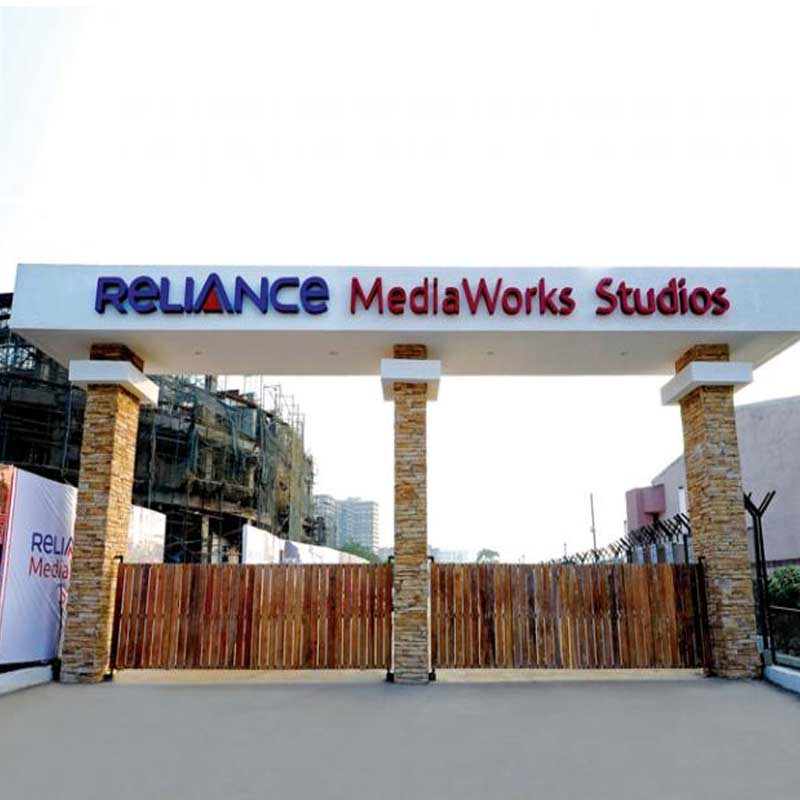
MUMBAI: Three members of Reliance MediaWorks Ltd have been selected to receive the revered Academy plaques at the Academy’s Scientific and Technical Awards 2012 on 12 February.
The award, to be collected by Kimball Thurston, Ian Godin and Tim Connolly, is for the development of a unique and efficient system for the reduction of noise and other artifacts, thereby providing high quality images required by the filmmaking process.
On being selected to receive an award, Reliance MediaWorks‘ Technology Centre lead Scientist Kimball Thurston said: “Being selected for this award is a very rigorous process, which proves that the technology that started well over 10 years ago has become a powerful tool in the movie making space. Our peers and customers in Hollywood respect the technology as a unique offering. I am extremely proud to have helped create this technology and be honored with an award, and also proud of the rest of the team at RMW Burbank who continue to move the bar forward.”

According to an Academy notification, the achievement demonstrates a proven record of contributing significant value in the space of science and technology for the process of making motion pictures.
Commenting on this achievement, Reliance MediaWorks CEO Anil Arjun said, “We are extremely proud of the team and their invaluable contribution towards the development of the proprietary image processing technology. Technology and innovation has been the cornerstone of our strategy and it is a great honour for the company to have its technology and members receive this prestigious recognition from the Academy.”
Reliance MediaWorks Burbank has developed sophisticated proprietary software that delivers unparalleled results for a variety of applications including restoration, re-mastering, SD to HD upconversions, large format films, new production emergency work, 3D correction, 2D to 3D conversion, among many others related to the media and entertainment industry.
The company’s body of work includes film restoration for classics like Citizen Kane, Singin’ In The Rain, Casablanca, Sunset Boulevard, the Indiana Jones trilogy, the early Star Wars films, twenty James Bond films and numerous classic Disney animated films.






Hindi
Remembering Gyan Sahay, the lens behind film, television and advertising
From a puppet rabbit selling poppadums to Hindi cinema, he framed it all.
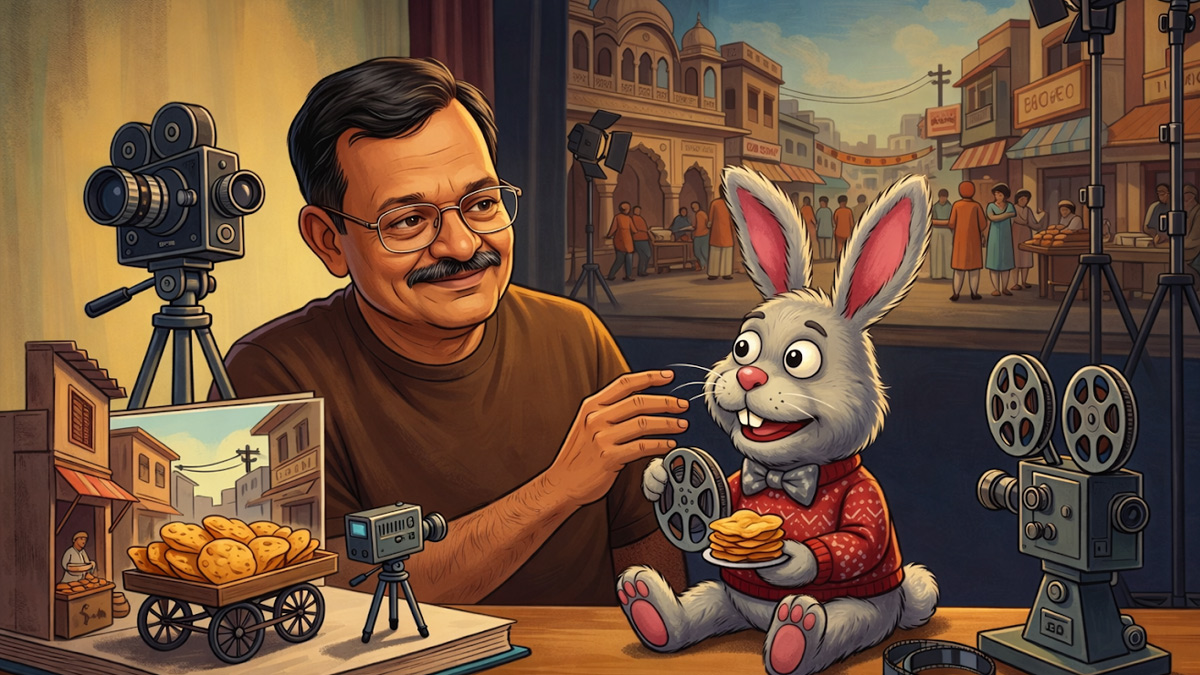
MUMBAI: There are careers, and then there are canvases. Gyan Sahay, the veteran cinematographer, director, and producer who passed away on 10 March 2026 in Mumbai, had one of the latter. Over several decades in the Indian film and television industry, he turned lenses, lights, and the occasional puppet rabbit into something approaching art.
A graduate of the Film and Television Institute of India (FTII) in Pune, Sahay built his reputation as a director of photography across a career that stretched from the early 1970s all the way to the digital age. He was the kind of craftsman who understood that a well-composed shot is not merely a technical achievement but a quiet act of storytelling.
For most Indians of a certain age, however, Sahay will forever be the man behind the rabbit. His direction of the iconic long-running television commercial for Lijjat Papad, featuring its now-legendary puppet bunny, gave the country one of its most cheerfully persistent advertising images. It was the sort of work that sneaks into the national subconscious and takes up permanent residence.
His big-screen credits as cinematographer include Anokhi Pehchan (1972), Pagli (1974), Pas de Deux (1981), and Hum Farishte Nahin (1988). In 1999, he stepped behind a different kind of camera altogether, making his directorial debut with Sar Ankhon Par, a drama that featured Vikas Bhalla and Shruti Ulfat, with a cameo by Shah Rukh Khan for good measure.
On television, Sahay was particularly prized for his command of multi-camera production setups, a skill that made him a go-to technician for large-scale shows and reality programmes. In an industry that has never been especially patient with complexity, he was the calm hand on the rig.
In later life, Sahay turned teacher. He participated regularly in masterclasses and Digi-Talks, often hosted by organisations such as Bharatiya Chitra Sadhna, sharing hard-won wisdom on cinematography, the comedy of timing in a shot, and the sweeping changes brought by the shift from celluloid to digital. He was also said to have been involved in a project concerning a biographical film on Infosys co-founder N.R. Narayana Murthy.
Tributes from the film industry poured in following the news of his passing, with colleagues remembering him as a senior cameraman who served as a rare bridge between two entirely different eras of Indian cinema. That is, perhaps, the finest thing one can say of any craftsman: he kept up, and he brought others along with him.







