MAM
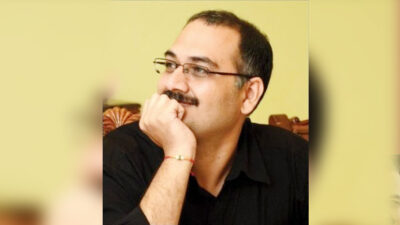
Mallikarjunadas replaces Srinivas as SMG India head
MUMBAI: Starcom MediaVest Group (SMG) has announced that its India CEO Mallikarjunadas CR will assume full responsibility for running the agency in India.
Mallikarjunadas replaces CVL Srinivas who has resigned to join GroupM as their South Asia CEO. Srinivas was the Chairman of SMG India but Mallikarjunadas will continue to be designated the CEO while assuming the role of Srinivas.
He will continue to remain as the CEO. In his new role, he will report to Starcom MediaVest Group (SMG) president, emerging markets Matt Blackborn, He will now join the Global Management Group, the SMG leadership team of market and client leaders.
As CEO, Malli has been responsible for the day-to-day management of SMG‘s clients in India, as well as leading its business momentum, with recent client wins Dabur, Axis Bank and Aircel, and leading the development of innovative products and an analytical center of excellence for SMG, the company statement read.
Blackborn said, “Since being named as CEO, Malli has worked very closely with CVL Srinivas (Srini), to grow its position in India, serve its clients and motivate its employees. During this time, Srini helped us build a new management structure and transitioned leadership responsibilities to Malli. With the structure set and a strong management team in place, the transition has been completed, and Srini is leaving the company.”
Malli started his career at Leo Burnett Media (now Starcom) working on P&G and has also worked on the client side at Asian Paints and Tata Group, before joining Madison where he was COO of one of the Group companies. He had re-joined SMG as CEO in May 2011.
Also read:
CVL Srinivas replaces Sakhuja at GroupM as South Asia CEO

Brands
India, Uzbekistan launch pharma and nutraceutical trade corridor
New partnership positions Uzbekistan as gateway to a USD 10 bn Eurasian health market
TASHKENT: India’s pharmaceutical and nutraceutical industries are getting a new route into Eurasia, and it runs through Tashkent.
The ministry of health of the republic of Uzbekistan has partnered with nutrify today and pharma eurasia to launch a structured indo–cis pharmaceutical and nutraceutical trade corridor. The initiative aims to streamline market access for Indian and global companies into the commonwealth of independent states and the wider Eurasian region.
The corridor brings together government policy support, industry leadership and a commercial platform designed to translate high-level discussions into actual trade deals. Pharma Eurasia 2026, scheduled in Tashkent from 20 to 22 May, will serve as the main marketplace where these opportunities are expected to materialise.
The timing is significant. The dietary supplements market across the CIS is already worth more than $ 5.8 billion annually, while the wider Eurasian nutraceutical sector is estimated at $ 7 billion to $ 10 billion and expanding quickly. Demand is being driven by rising interest in preventive healthcare, the spread of organised pharmacy chains and growing consumer appetite for vitamins, botanicals and functional nutrition products.
For Indian exporters, the corridor offers a structured entry point into these markets. The initiative also comes as regulatory systems across several CIS economies are tightening, creating greater demand for quality-certified products.
Uzbekistan is positioning itself as the region’s health industry gateway. In recent years the country has invested heavily in pharmaceutical parks, industrial clusters and regulatory reforms designed to attract foreign investment and manufacturing partnerships. Tashkent’s pharma park is intended to provide overseas pharmaceutical and nutraceutical firms with a clear pathway to establish production or distribution bases with government support.
The new trade corridor operates on what organisers call a dual-city model. Strategic dialogue and industry leadership discussions will take place in Mumbai through the sumflex and c-suite summit platforms, bringing together global CEOs, regulators and investors. The commercial follow-through will happen in Tashkent at pharma eurasia, where partnerships, regulatory engagement and buyer connections are expected to move deals forward.
Pharma Eurasia 2026 is designed as a meeting ground for manufacturers, ingredient suppliers, contract development and manufacturing organisations, distributors and regulatory experts from across the region. Under the new partnership, the exhibition will also function as the annual marketplace for the Indo–CIS health trade corridor.
Beyond trade deals, the corridor’s agenda includes regulatory harmonisation, digitalisation of supply chains, investment facilitation and joint research opportunities. Nutrify today plans to deploy AI-driven regulatory intelligence tools to support compliance and cross-border nutraceutical trade.
The ministry of health of the Republic of Uzbekistan first deputy minister of health and chairman of pharmaceutical industry development agency Abdulla Azizov said Ubekistan is well positioned to act as a strategic bridge between India and the CIS region while building a transparent, technology-enabled trade ecosystem.
Nutrify today MTI executive director Khasim said the initiative connects global leadership dialogue in Mumbai with a structured commercial platform in Tashkent, helping translate strategic discussions into executable trade architecture.
Tricornio technologies vice president and pharma eurasia project director m. harikrishnan said the platform aims to create a long-term, policy-aligned ecosystem where innovation, compliance and cross-border healthcare trade can grow in a sustainable and scalable manner.
The ministry of health of the Republic of Uzbekistan chief international relations specialist Kamila Mirzaeva said the collaboration introduces digital tools and transparent frameworks into a more institutionalised trade architecture, while also encouraging joint ventures in manufacturing, technology transfer and regional expansion.
With demand for preventive health products rising globally, the new corridor could offer Indian manufacturers a fresh gateway into a fast-growing Eurasian market while reinforcing Uzbekistan’s ambition to become a regional pharmaceutical hub.