MAM
Ipsos India busts popular myths about Gen Z & Gen X


Mumbai: Ipsos India showcased new thinking on Generations busting myths about Generation Z and Gen X, providing a true understanding of the two key cohorts, exhorting marketers to fine tune their targeting with precise messaging. The views were shared at the Ipsos After Hours, client event.
Generation Z, those born between 1997 to 2012 and Generation X (born between 1965 to 1980) have been the fastest growing cohorts. Ipsos highlighted some of the misconceptions around these two groups of dynamic people.
Ipsos India group service line leader, UU and Synthesio Ashwini Sirsikar said, “We all know that India is a young country, with 65% of its population belonging to Gen Z or Y. What may be news to some of us is that it is actually Gen X which is the faster growing population for India. While much is written, spoken and known about Gen Z, there is very little which is known about Gen X. However, what is common to both segments is the abundance of myths which exist around each of these segments. Our attempt is to bust some of these myths and leave some food for thought for marketers.”

Generation Z
Myth one – We all tend to have this stereotypical Gen Z image shaped by the popular media and our own exposure to various western influences. But the reality is different as shown by the data on this slide – the difference between Gen Z in India as compared to other countries.
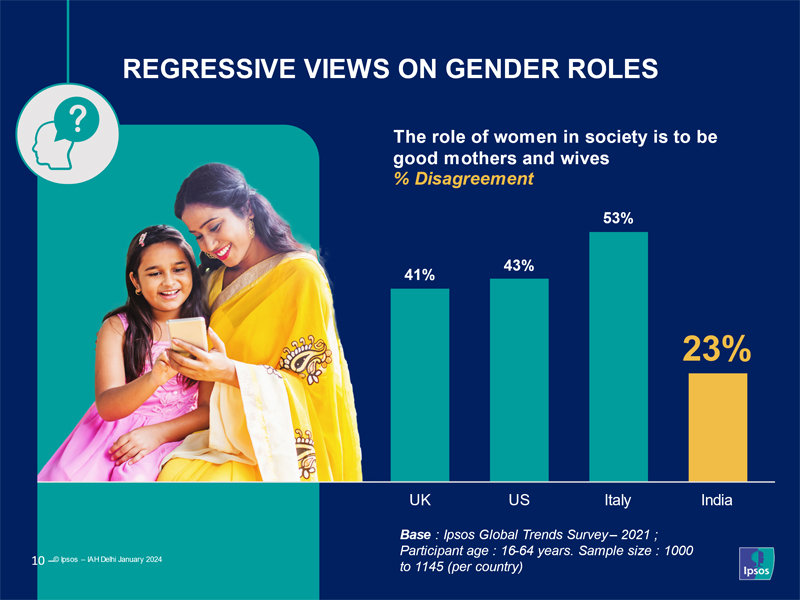
Generation Z has regressive views on gender roles.
Myth two – One would expect Gen Z as a cohort to be a happy bunch and someone who would lead a very carefree life where they are able to navigate the complexities of life very easily.
In reality, Gen Z was seen to be largely bored, lonely and frustrated. And constantly under stress.
Myth – GenZ often seen as digital natives are not just social butterflies in the virtual world but also adept at forming meaningful connections in the physical world.
Not only were they bored and lonely, but they were also finding it more difficult to make friends after the pandemic. They are comfortable interacting with people online but that itself could be a stressor for them – as it becomes difficult for them to form true human and personal connect in the non-online world.
They find the thought of talking to strangers difficult and struggle to open conversations.
Myth: Gen Z is self absorbed, entitled and privileged.
Interestingly, what we saw was a heightened sense of awareness about financial responsibilities – they did not feel as secure financially (some of them would have just started working) and worry the most about being a financial burden on the family.
To combat this, they were seen to often start to earn early and supplement their income through side jobs.
Gen Z was seen to be different from how it is perceived in money matters.
Generation X
Myth 1: Gen X is often caught between the responsibilities of caring for parents and raising their own families coupled with the pressures of maintaining their careers, mental and physical wellbeing.
Contrary to the popular notion, Gen X-ers actually felt way better physically and mentally when compared to Gen Z.
Myth 2: Significant global events, economic fluctuation have resulted in Gen X being pessimistic
We know that the Gen X has seen considerable financial fluctuation as well as big global events that have impacted their lives – which leads us to think that they are a naturally pessimistic generation.
However, they are feeling a lot more optimistic about life in general – more well prepared, excited and optimistic and less lonely, bored and frustrated.
Myth 3: Generation X with multiple financial responsibilities find themselves cash strapped and need to dip into savings.
We already know that as a Generation, they have a huge spending power.
Despite this, it was interesting to note both Gen X and Gen Z feel similarly when it came to buying things they need. However, Gen X-ers also try to keep their life simple as far as possessions are concerned. They in fact believe in leading a simple life.
While Gen Xers believe in simple living, it does not translate to frugal. They are in fact enthusiastic about making purchases across a very wide range of categories.
These categories span a broad range – these not just include the obvious ones like grocery, financial services, health care etc. but also others like fashion, home décor, consumer durables, personal care, automobiles etc.
Myth 4: Generation X often considered financially pragmatic, is known for saving for very specific goals.
Interestingly, Gen X was seen to be self-sufficient when it comes to money. They have a savings mindset but were not saving for anything in particular.
Popular culture Vs reality. Does Gen X’s portrayal match up?
Portrayal of Gen X in popular culture to see if this representation matched the reality or just carried forward the existing stereotypes showed, Gen X was a forgotten generation or a sandwiched generation. Every generation had its stereotype — millennials were seen to be whiny, Gen Z weird, and boomers were seen to be selfish. Gen X’s nobody remembered them.
41 per cent of them felt that their generation is not at all well-represented in the advertisements today.
Look at some salient TV commercials – Most categories focus on either the youth or the boomers, youth – because everyone runs after them, boomers – as everyone listens when granny speaks.
What was clearly evident that there were very few meaningful portrayals of Gen X or any meaningful relationships shown between Gen X and Gen Z.
Even when Gen X were represented in ads, the depiction was stereotypical and it was in categories like health, insurance etc. – portrayed as the ignorant, tech unsavvy folks, just as provider who need to be educated either by their smarter kids or an expert.
Also shown as being at logger heads with Gen Z – having extreme and traditional views. And the portrayal of one generation teaching the other.
Gen Xers also felt very under-represented in specific categories like fashion, beauty, durables, automobiles etc. – and unfortunately, these were the very categories that they were looking forward to buying in the very near future.
A few brave attempts made to unstereotype this generation – but not enough.
There was some glimmer of hope seen when it came to OTT – Many Gen X centric shows with lead actors in their 50s of late, have been coming through. Playing their age, breaking the stereotypes.
Need for more authentic representation of both generations to avoid alienation.
What will it take to engage them meaningfully and tap into their buying power?
At what age do we cap survey participation?
“The narrative of Generation X is marked by satisfaction, wealth accumulation, and unfortunately, disregard. This rapidly growing, affluent generation is often overlooked, both in terms of dedicated research and representation in studies and targeted marketing – a situation that requires introspection and change,” stated Ipsos India executive director and country service line leader, Synthesio Maitreyi Mangrati.
While there are many misperceptions and differences between these two generations, one thing on which their views converge is the impact of climate change on the planet and the need to take necessary action.



Brands
Mother’s Recipe launches Summerwala Sharbat range
Five nostalgic flavours priced at Rs 215 aim to tap summer refreshment demand.

MUMBAI: Call it a sip of summer nostalgia, Mother’s Recipe is bottling childhood memories and pouring them back into the present. The homegrown ethnic food brand has introduced its Summerwala Sharbat range, a five-flavour line-up designed to recreate the familiar tastes and rituals of Indian summers, while catering to modern consumption habits. The range features Mango Panna, Rose Syrup, Jeera Masala Syrup, Khus Syrup and Lemon Ginger Squash, each rooted in flavours that have long defined seasonal refreshment across Indian households. From the tang of raw mango to the cooling comfort of khus, the portfolio leans heavily into recall, not reinvention.
At a time when brands are increasingly leaning on nostalgia as a strategic lever, Mother’s Recipe is positioning Summerwala Sharbat as both a functional beverage and an emotional cue. The idea is simple: revive the small, everyday rituals post-play drinks, family gatherings, the clink of ice in a glass that once defined summer afternoons.
The products are packaged in 750 ml PET bottles and priced at Rs 215, targeting both routine household consumption and social occasions. Distribution spans leading e-commerce platforms as well as select offline retail outlets.
Mother’s Recipe executive director Sanjana Desai said the intent was to bring back flavours tied to “taste, routine and home”, while making them relevant for today’s consumers.
The move reflects a broader shift in the beverages market, where heritage-led storytelling and familiarity are increasingly being used to stand out in a crowded, innovation-heavy category.
With Summerwala Sharbat, Mother’s Recipe isn’t just selling a drink, it’s selling a season, one glass at a time.