MAM
Asci pulls up three HUL ads in December

MUMBAI: The Advertising Standards Council of India (Asci) has pulled up three ads from fast moving consumer goods (FMCG) manufacturer and marketer Hindustan Unilever. In its new update, the advertising watchdog has named the ads of New Rin, New Clear anti-dandruff shampoo and Comfort Fabric Conditioner as erring.
For the month of December, Asci‘s Consumer Complaints Council (CCC) upheld complaints against 43 out of 50 ads.
Of the 43 complaints upheld, 17 belong to the healthcare category while seven are from the home and personal care category. Five ads from education and four from consumer durables category have been pulled up. Other categories where ads have been found misleading include one each from telecom, real estate, food and beverage and surrogate ads.

The New Rin TVC had claimed that it is the “only detergent powder in India which gives freedom from yellowness and gives shining whiteness”. This claim is qualified by a super stating “Perception of yellowness removed through patented technology”. The use of “patented technology” does not mean that the same benefit of “giving freedom from yellowness” cannot be claimed by using any other technology. The super does not provide the details of the independent agency which conducted the tests.
Asci has said that in absence of independent technical data, this claim is false and misleading. The advertisement promoting the New Rin is based on the concept that “After repeated washing, clothes turn dull and yellow”. The said concept is not completely correct and is in fact misleading consumers. The visual showing the comparison between New Rin and other detergent powder is qualified by a super which states “creative representation of yellowness removal”. This in effect means that the shots showing the shirt washed with the other detergent and the shirt washed with New Rin cannot be replicated into reality. This is incorrect and misleads the consumers.
The Fast Track Consumer Council (FTCC) considered the technical data provided by the advertiser and the complainant. The FTCC concluded that the use of “patented technology” does not mean that the same benefit of “giving freedom from yellowness” cannot be claimed by using any other technology.
The advertiser provided data of products removing yellowness in various degrees of efficacy. Hence the claim of being the only product to remove yellowness was not substantiated. The claim, “New Rin is the only detergent powder in India which gives freedom from yellowness and gives shining whiteness”, is false and misleading as it is not the only detergent to do so. The advertisement contravened Chapters I.1 and I.4 of the Code. The complaint was upheld. At the request of the advertiser, the CCC reviewed the decision after HUL provided additional data and upheld the decision of the FTCC.
In case of the New Clear anti-dandruff shampoo advertisement, the TVC claims that New Clear “Is the best anti-dandruff shampoo in the country”, with a super “Based on clinical studies, microkill & ZOI data”. This superiority claim needs to be substantiated with technical and comparative data, and with details of tests/trials reports from an independent recognised testing institution. The claim, “Preferred choice of 9 out of 10 users”, is ambiguous. Where on one hand the claim does not clarify the parameters for which the Clear shampoo is preferred, the claim on the other hand is being used by Clear in its TVC. This claim is qualified by a super stating, “Based on consumer study”. This super does not state the source of the study and nor does it state the date on which the said study was conducted. The super, “Based on consumer study”, is not of adequate size and duration, and blurred so as to mislead the consumers.
The FTCC examined the technical substantiations of both the advertiser and the complainant with respect to clinical studies like BoSS (Bio-availability on stimulated scalp), ZOI (Zone of Inhibition) data, etc, and concluded that the claim of New Clear being the “best anti-dandruff shampoo in the country” is false and misleading. The CCC considered the additional data provided by the advertiser and concluded that the earlier decision of the FTCC stands and the complaint was upheld.
Other advertisers to be pulled up include Dabur India, Nature Health Care, SBS Biotech, Keya Seths Aromatherapy, Clintech Medical and Aesthetic Center, Kangra Herb Pvt Ltd, Rediscover – Laser, Skin, Slimming and Ayurvedic Clinic, Ego Wellness Pvt Ltd, Dr. Jains Zero Figure Clinic, Medinn Elle Herbal Care Pvt Ltd, Asian Institute Of Infertility Management, Naturoveda Health World, Niramay Consultancy, Maruti Herbal, Cure Spects Laser Ltd, G K Health Care, Maharshi Skin Centre, Rana Yog Chikitsa Kendra, Sareen Hair Clinic, Cocoona Cosmetic Surgery, Eleganza Skin And Cosmetic Surgery Clinic, Pernod Ricard India (P) Limited, Luminous Water Technologies Pvt Ltd, Megha Associates, Secured Engineers, Padmini Impex Pvt Ltd, Natraj Atta Chakki, Ark Prem Constructions, Education Express, Focus Educare Pvt Ltd, Global Institute Of Fire And Industrial Safety, Vivekanand Classes, Prestige Institute Of Engineering and Science and Aircel.
The advertisement of Step Up and its claim is under judgment in the High Court of Bombay. Hence there was no decision taken on this complaint by the CCC
During the month of December, the CCC also received complaints against six ads. The complaints were received against the advertisements of Ceat Ltd’s ‘Ceat Tyres’, Skin Alive’s ‘Forever Young’, Kovai Medical Center and Hospital’s ‘Effective Treatment for Thyroid Disorders & Cancer’, Gillette India LTD’s ‘Oral-B Cross Action Pro-Health toothbrush’, Clinic Dermatech’s ‘Beauty Solutions for Skin Problems’, Procter & Gamble Home Products Ltd’s ‘Pantene Pro-V shampoo’. However, as these advertisements did not contravene Asci’s codes or guidelines, the complaints were not upheld.






MAM
Tata Communications CEO A S Lakshminarayanan retires
Seasoned leader hands over reins after guiding the company through key growth years.
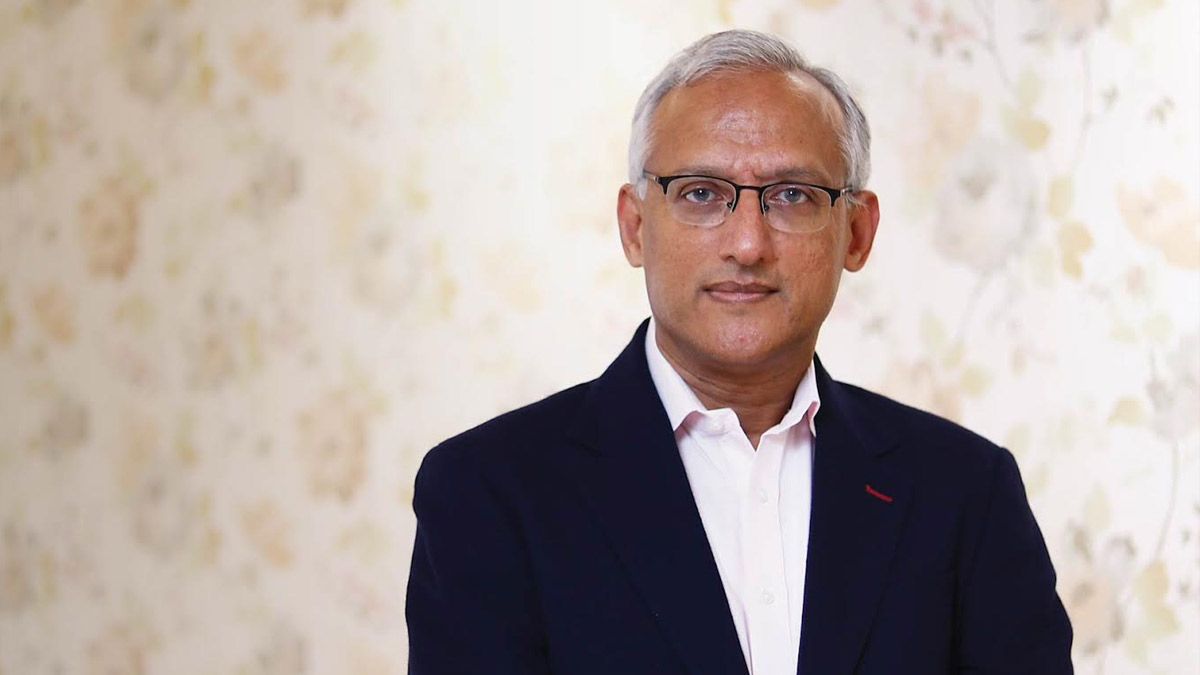
MUMBAI: Tata Communications is turning a new page and this time, the chapter is being written by a fresh voice from the same trusted book. The company has announced the retirement of its managing director and chief executive officer, A S Lakshminarayanan, effective at the close of business on 13 April 2026. Lakshminarayanan’s departure marks the end of a significant chapter in the company’s leadership journey.
The board expressed appreciation for his contributions during his tenure, acknowledging the role he played in shaping the organisation. In January 2026, the board had already appointed Ganesh Lakshminarayanan as managing director and CEO (Designate), ensuring a smooth leadership transition.
Ganesh Lakshminarayanan brings over three decades of experience across domestic and global enterprises. He currently serves as Managing Director and Group Vice President at ServiceNow India, where he has focused on driving enterprise adoption of AI-led digital transformation and strengthening go-to-market capabilities. Prior to this, he led Bharti Airtel’s enterprise business as CEO of Airtel Business and earlier headed its Enterprise division. His career also includes roles as Chief Operating Officer at Capillary Technologies, along with advisory positions at Ernst & Young and Sequoia Capital.
The transition reflects Tata Communications’ focus on continuity while bringing in fresh perspectives to navigate the rapidly evolving digital infrastructure landscape.
In the fast-moving world of global communications, leadership changes are like well-timed signal switches necessary to keep the network strong and the journey smooth. As A S Lakshminarayanan steps down, Ganesh Lakshminarayanan steps up, ready to carry forward the legacy while steering the company into its next phase of growth.







