News Broadcasting
News channels urge government to keep Trai’s ad regulation in abeyance


NEW DELHI: Fearing a huge impact on their revenue models, TV news broadcasters have urged the government not to implement the ad time regulation notified by the Telecom ReguIatory Authority of India (Trai) till digitisation is implemented across the country.
News channels feel that high carriage fees and low subscription revenues due to constraint of bandwidth on analogue cable networks are issues that need to be sorted out first. Any current regulation that would harm their advertising revenue, which amounts to more than 90 per cent of their total income, can only be “ill-timed”. Advertising has been “slow” and the economic slowdown of 2008 “has not been corrected yet”.

According to the Trai notification, news and current affairs channels will have to limit their commercial time to 12 minutes per clock hour.
Expressing “deep shock” over the new notification, the News Broadcasters Association (NBA) today said it was “appalled that by way of advertisement regulations, the Trai has issued the most sweeping and intrusive controls, and not just regulations, in relation to advertising that may be carried on TV channels.”
NBA urged the government to keep the notification in abeyance till such time digitisation is fully implemented in the country (with consequential benefits of no or low carriage fees and credible subscription revenue) and DAVP recommences advertising on news channels at rates which are fair and acceptable.
Despite Phase-1 of digitisation being implemented from 1 November last year, the benefits have not yet accrued to broadcasters, particularly news broadcasters. Carriage fees continue to be high and most news broadcasters do not get subscription revenues. Over the last year or so, news organisations have not received any advertising from DAVP, which has cut rates to levels 75 per cent lower than they were even five years ago. All of these factors have ensured that most news channel companies face losses on an annual basis.
The NBA said it believed that in the garb of “regulation of advertisements”, Trai has imposed severe restrictions which amount to “control of content” which is “anathema to our constitutional scheme”. The ad regulations are in violation of Article 19(1)(g) of the Constitution, which entitles a citizen to carry-on any trade or business, NBA stated.
The NBA notes that the recent regulations reveal a clear lack of understanding of the actual problems on the ground and the environment that the industry operates in. “The regulations, if implemented, will force many news organisations to shut down, taking away our democratic right to inform and educate and to do it independent of Government. With the general elections looming ahead, it would appear that this is an attempt to muzzle the media by taking away its ability to operate independently,” NBA said.






News Broadcasting
BBC to cut up to 2,000 jobs in biggest overhaul in 15 years
Cost pressures and leadership change drive major workforce reduction plan
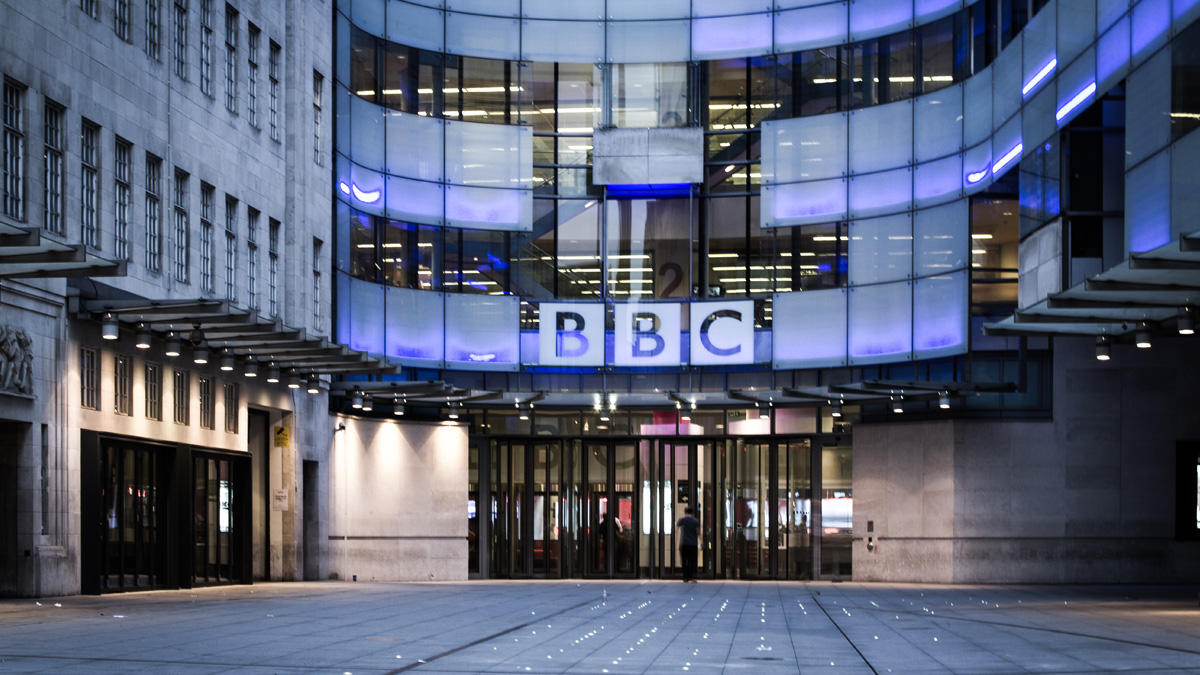
LONDON: BBC has unveiled plans to cut up to 2,000 jobs, roughly 10 per cent of its global workforce, in what marks its biggest downsizing in 15 years.
The announcement was made during an all-staff meeting led by interim director-general Rhodri Talfan Davies, as the broadcaster moves to tackle mounting financial pressures and reshape its operations.
Between 1,800 and 2,000 roles are expected to be eliminated from a workforce of around 21,500. The cuts form part of a broader plan to save £500 million over the next two years, aimed at offsetting rising costs, stagnating licence fee income and weaker commercial revenues.
In a communication to staff, BBC interim director-general Rhodri Talfan Davies said, “I know this creates real uncertainty, but we wanted to be open about the challenge,” acknowledging the impact the move would have across the organisation.
The restructuring comes at a time of leadership transition. Former director-general Tim Davie stepped down earlier this month, with Matt Brittin, a former Google executive, set to take over the role on May 18, 2026.
While some cost-cutting measures are being implemented immediately, the majority of the structural changes are expected to roll out over the next few years, with full savings targeted by the 2027–2028 financial year.
The broadcaster had earlier signalled its intent to reduce its cost base by around 10 per cent over a three-year period, warning of “difficult choices” as it adapts to shifting economic realities and audience expectations.
With operating costs hovering around £6 billion annually, the BBC’s latest move underscores the scale of the financial challenge it faces, as it balances public service commitments with the need for long-term sustainability in an increasingly competitive media landscape.