Applications
Yahoo! CEO Marissa Mayer is the highest paid chief in new media: SNL Kagan

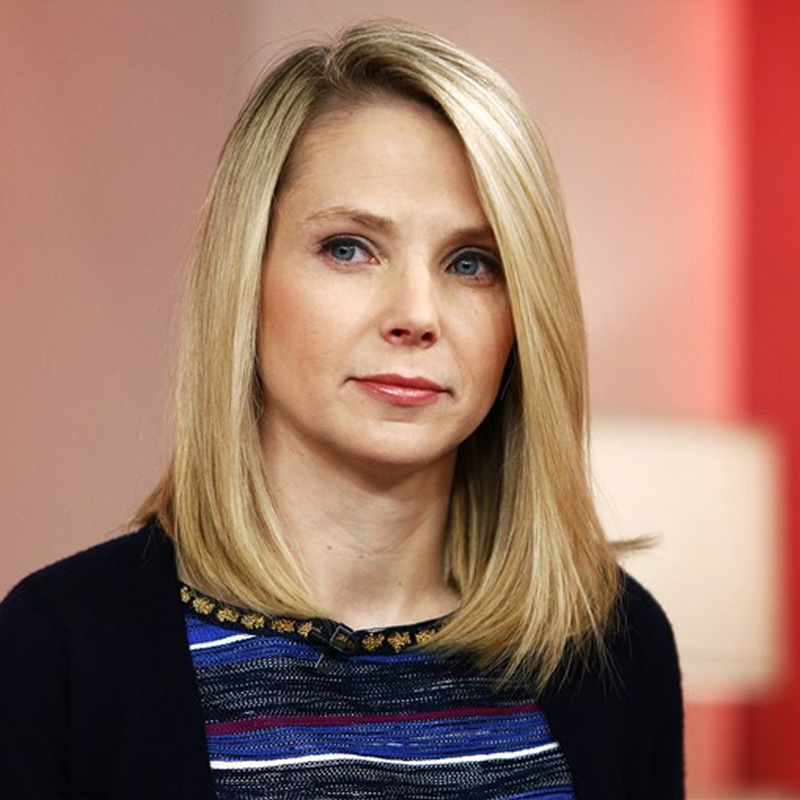
MUMBAI: Internet major Yahoo! CEO Marissa Mayer is the highest paid CEO among new media companies according to SNL Kagan. She made $36.6 million last year out of which $35 million was stock and option awards.
At the bottom of the rankings, meanwhile, were Mayer‘s former boss Google CEO Larry Page and LiveDeal CEO Jon Isaac, who both received total compensation of $1.
According to SNL Kagan, Mayer easily surpassed all rival executives in the new media space in terms of total compensation.
Mayer‘s year was characterised by a hands-on push to lead Yahoo‘s turnaround strategy. Long before the company was doing things such as angling for a far younger user base with its $1.1 billion Tumblr acquisition it was already in the midst of a major turnaround strategy overseen by Mayer. That strategy included a shakeup of Yahoo‘s top executive team.
Meanwhile, Yahoo also culled certain low-performing noncore assets such as Yahoo! Korea and a Chinese music service, all while stepping up an M&A strategy that saw Yahoo acquire such companies as video chat startup OnTheAir and mobile startup Stamped, while it eyed Summly, the news summarisation startup it ultimately bought in March 2013. In those dizzying 5.5 months, Yahoo additionally signed cross-promotional content deals with ‘Us Weekly‘ and ‘Rolling Stone‘ publisher Wenner Media and with NBC Sports Group, of Comcast Corp.‘s NBCUniversal Media LLC, and it overhauled both its Yahoo! Mail service, optimising it for Apple Inc iOS, Microsoft Windows 8 and Google Android mobile devices, doing much the same with a social-first revamp of its Flickr app.
Now-former CFO Timothy Morse presaged the Mayer era just as the executive took the reins, telling analysts on a July 17, 2012, earnings call that under Mayer, Yahoo would focus on bettering its technology, content offerings, mobile presence and ties with social players such as Facebook Inc. The company subsequently disclosed in August 2012 that Mayer was at work re-evaluating Yahoo‘s growth and acquisition strategy with an eye potentially toward investment rather than unquestioningly returning cash to shareholders. By April 2013, Mayer was calling that focus shift a "build, buy and partner," as she reiterated the company‘s previously stated commitment to M&A activity and to a robust mobile strategy.
Mayer‘s approach seemed to pay off for Yahoo in 2012, as the company ended the year with fourth-quarter earnings results reflecting Yahoo‘s first revenue growth in four years. All the ambitious strategising and execution, furthermore, was undertaken as Mayer gave birth to her first child right in the middle of her 2012 tenure as CEO.
Coming in behind Mayer in terms of CEO pay was eBay CEO John Donahoe, who likewise saw the bulk of his salary come in the form of equity-based compensation. Donahoe‘s base salary was $970,353, while he recorded roughly $25.7 million in stock and option awards, $2.8 million in non-equity incentive compensation and $160,420 in other salary, for a total of roughly $29.7 million.
Although Donahoe‘s 2012 was not quite as headline-friendly as Mayer‘s, he also led his company at a time of significant growth. EBay shares opened 2012 by ending the first day of trading 3 January with a value of $31.34 and climbed to close 31 December, 2012, at $51.00, a massive 57.3 per cent rise for the year.
EBay ended the year with meaningful revenue growth, capping off a year that saw the company transform its PayPal unit from an e-commerce transaction option to a bona fide real-world rival to traditional payment systems.
Donahoe was followed in the rankings by Vistaprint NV CEO Robert Keane and Expedia Inc. CEO Dara Khosrowshahi, who also had the distinction of recording the largest bonus out of the top 10 CEOs by compensation, with a $3 million payout on top of his $1 million base salary, $895,000 in other salary and roughly $10.4 million in stock and option awards. In fact, just one CEO in the entire new media sector, according to SNL Kagan, got a bigger bonus than Khosrowshahi: IAC/InterActiveCorp chief Gregory Blatt, who received a $3.5 million bonus, contributing to $4.6 million in total compensation, which did not qualify him for the top 10.
Overall, the average total compensation for the top 25 new media CEOs in 2012 was roughly $9.3 million. Not making the top 25 were such high-profile executives as Facebook CEO Mark Zuckerberg and Amazon CEO Jeff Bezos. Apple CEO Tim Cook made the top 25 but not the top 10, with his roughly $4.2 million in total compensation.