MAM
A CEO’s guide to visionary leadership: Dr Somdutta Singh


Mumbai: Scholar, organisational consultant and author, Warren Bennis has rightfully said, “Leadership is the capacity to translate a vision into reality.”
Let’s get one thing straight. Crafting a vision for your organisation is the only fundamental skill a leader should have.
Everything else is secondary. Period!

An upfront, heroic, and inspirational vision might just be magical: it unites individuals across the company under one shared objective and serves as the one focal point for devising strategies to realize a brighter future.
So. It’s time for your organization to progress – and this journey requires a leader with vision to drive it.
When we speak of company culture, three essential concepts evoke: mission, values, and vision. The mission, sometimes referred to as a purpose statement, defines the reason for a company’s existence; values interpret the manner in which individuals interact within the company, while vision describes the company’s future trajectory.
Remember what legendary management consultant and writer Peter Drucker has said, “Culture eats strategy for breakfast”.
Wait, he didn’t mean that strategy was irrelevant – it was rather that a powerful and empowering culture was a certain route to organizational success.
Over my years as a CEO, founder, investor and mentor, I have had conversations with numerous executives and there’s one thing that stands out, vision always holds a prominent place in their thoughts.
Where do they envision their company in the future?
What course must they chart to reach that destination?
Should they transition everyone back to full-time office work, persist with hybrid roles, or endorse fully remote work?
How should they organize their teams?
What approach will be most effective in nurturing client growth and delivering exceptional service in the future?
You might find yourself pondering some of these same questions. The response to all these inquiries ultimately boils down to your vision or your envisioned future.
Will you press onward, or would reverting to past practices be more prudent?
You likely have the answer you are looking for.
Your vision holds paramount importance for your company culture, compelling a leader with vision to breathe life into it.
Who is a visionary leader?
Visionary is a person who contemplates the future with imagination and intelligence.
It involves envisioning the world not merely as it presently exists, but as it could be, and discerning potential where others might not.
Take this for instance. If you have a child at home, you might currently be reminded of their abundant imagination and penchant for considering endless possibilities! Children consistently detect potential where others fail to, utilizing their imaginations to conceive of what might be.
However, the wisdom aspect of “visionary” likely remains a work in progress.
Certainly, you, too, can possess visionary qualities, but mere possession of a vision does not equate to being a visionary leader.
To embody visionary leadership is to translate your vision into action through your team. It necessitates identifying your vision, articulating it clearly, and igniting enthusiasm within your team to garner their support.
Yes, visionary leadership poses challenges, yet, it is a challenge that some of the most successful entrepreneurs have willingly embraced.
Let’s take a look at some visionary leaders…
Henry Ford from Ford Motor Company harbored a vision that stirred the imaginations of many: to manufacture and market a simple, sturdy, dependable, and affordable automobile for the masses. He envisioned the world as it could be by not only committing to manufacturing cars but also by extending his commitment to the masses.
In fact, his vision was so compelling that he effectively employed it to secure investments from others.
Ford identified and attracted exceptional individuals by discerning potential where others could not. Subsequently, he harnessed his vision and translated it into action through his collaborators and employees.
Ford summed this quite well when he said, “Whether you think you can, or you think you can’t, you’re right.”
Next, how about Netflix’s Reed Hastings?
Hastings founded Netflix in 1997 with an initial vision: to save consumers’ time and money by directly delivering movies to their homes. Simple enough, yet, I wish I thought about it, right?
Initially, Hastings achieved success with Netflix’s inaugural business model. However, similar to many visionary leaders, the crux of Reed Hastings’ success lay in his transformative vision. He famously declared, “Don’t be afraid to change the model.”
Hastings did not cease innovating following his initial triumph. His vision evolved – what if consumers could stream movies directly to their televisions, bypassing physical mail entirely? Hastings envisioned the future as it could be and outlined the path for his team. At the time, streaming technology did not even exist!
Of course, we know the ending of this story quite well, don’t we?
Had Netflix persisted solely as a DVD rental business, would it have mirrored Blockbuster’s fate?
GoPro’s Nick Woodman will definitely be on my list.
Woodman founded GoPro, a company that propelled him to become one of the world’s youngest self-made billionaires. His vision originated from his passion for surfing: he aspired to capture videos and photos while out on the water. Woodman’s vision subsequently expanded to encompass the broader populace.
Throughout his entrepreneurial journey, Woodman encountered numerous setbacks. For most individuals, these setbacks would have spelled defeat. Yet, the crux of Woodman’s visionary leadership lies in his adaptability and vulnerability. He coined the acronym FAIL – From Action I Learn. He adeptly navigated obstacles while keeping his vision and his team at the forefront.
What are the advantages of becoming a visionary leader?
Culture at the heart of all you do
Outlining a vision and translating it into action through your team reinforces your organization’s culture.
Individuals yearn for a connection to the overarching objectives of the organization and seek to understand the impact of their contributions. Visionary leaders possess the capacity to rally individuals together and propel them toward a shared objective.
Your mission, or the WHY, and the values, or the HOW, ultimately stem from this vision.
As gathered from Nick Woodman’s story, visionary leadership fosters a psychological safety net by nurturing an world where it is OK to innovate, even if it result in making mistakes. When you feel secure enough to exhibit vulnerability, you foster cohesion.
Your teams are highly, highly engaged
We cannot talk of robust cultures and not talk about engaged employees, can we?
According to Forbes, highly engaged teams exhibit 21 per cent greater profitability, 41 per cent reduced absenteeism, and 59 per cent lower turnover rates.
Engagement entails an emotional commitment and a willingness to deliver one’s best at work. Employees who arrive at work each day excited about the where, why, and how naturally invest themselves in their tasks.
You, the visionary leader ensures alignment and collaboration toward this common vision.
No more silent departures
I don’t need to spell this out, do I?
By now, everyone is familiar with silent departures. Similarly, it’s understood that robust cultures and high levels of employee engagement correlate with reduced instances of silent departures. When employees harbor an emotional commitment and willingly offer their best each day, silent departures become infrequent.
Visionary leadership is what sets the stage.
Employer branding at its best
Your employer brand is your organization’s identity and reputation as an employer.
With a visionary leader steering the ship, establishing a formidable reputation becomes effortless.
Employees are motivated and engaged, clients and customers reap the benefits, and the organization’s direction is transparent to all observers. The Brandon Hall Group discovered that companies boasting robust employer brands are 3 times more likely to make superior hires. Employer branding is integral to a company’s sustainable growth.
How do you become a visionary leader?
In the words of Walt Disney, “If you can dream it, you can do it!”
The first step toward visionary leadership is of course, envisioning your vision.
Visualize the future of your organization applying innovation, imagination, and rationality. Where do you foresee your organization in three, five, and ten years?
Begin with a blank canvas and commence reimagining.
Once you have a crystal-clear vision, your journey toward visionary leadership hinges on the cultivation of enduring habits. Here are four focal areas:
1. Translating vision into action
Remember, the “leader” in visionary leadership transforms vision into action. Paint a compelling portrait of your vision and be vulnerable!
Mistakes can be made and yes, a. that’s ok and b. let people around you, you can make mistakes.
Get your team along with you on your journey and collaborate to determine the why and how underlying the envisioned future. Cultivate a habit to ensure you value and incorporate everyone’s perspectives.
Remember, your vision will evolve. That’s the only way.
Imagine what would have happened if Henry Ford and Reed Hastings had shunned change? Would their narratives have been the same?
2. Motivate people
Every member on your team is contributing something to the collective success of your business. It’s imperative to invest time in understanding each team member individually.
Begin by asking them to observe:
● What motivates you to shine?
● How do you prefer to receive recognition?
● What managerial approaches resonate with you?
● What managerial approaches should be avoided?
Gaining insight into these facets will enable you to stimulate each individual’s drive. Once armed with this knowledge, ponder the following:
● How can I motivate this individual?
● How can I acknowledge this individual?
● How can I leverage this individual’s strengths?
● What managerial pitfalls should I avoid?
3. Listen actively
All too often, when we listen, we only do so to reply back, right? Visionary leaders devote time to genuinely listening to their team members.
Rather than listening to respond, listen to comprehend.
Establish a sincere interest in understanding the message by eliminating distractions and posing significant follow-up queries. The psychological safety net I spoke of earlier; empathy goes a long way. Remain receptive to feedback. Feedback serves as a catalyst for growth.
4. Embrace failures. Yes, it is absolutely OK to fail…
Visionary leaders embrace failures and gather insights from them. Following a setback, take stock of what came out well, what requires adjustment, and what lessons did you gather from the experience?
Maintaining strength and positiveness will foster similar qualities within your team. As a leader, you serve as an prototype for others to imitate.
Here are my concluding thoughts…
It’s time to drive your organisation forward, and as a visionary leader, you possess the capacity to effect this change.
Jack Welch, the former CEO of General Electric, remarked, “Good business leaders create a vision, articulate the vision, passionately own the vision, and relentlessly drive it to fruition.”
Ensure you define your vision with precision and cultivate habits that reinforce its realisation.




Digital
GUEST COLUMN: How AI is restructuring distributor and retailer motivation models
From incentives to intelligence, AI is redefining how brands engage channel partners
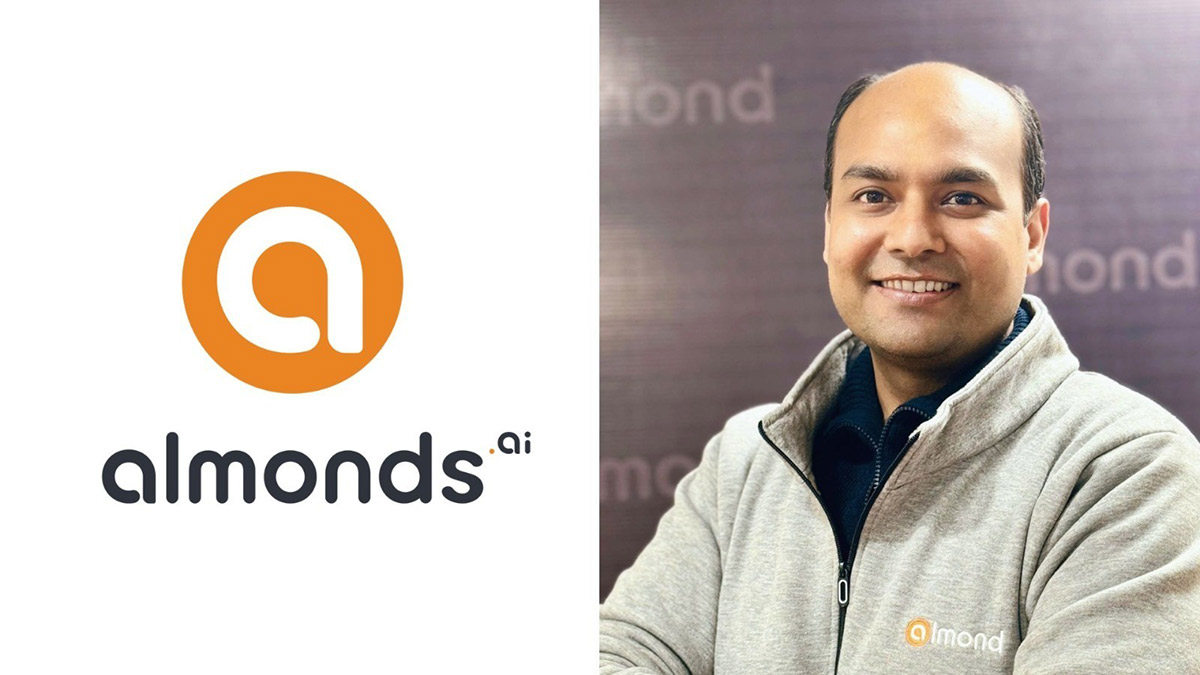
MUMBAI: Artificial intelligence is rapidly transforming how brands engage with their most critical yet often overlooked stakeholders: distributors, retailers, and last-mile influencers. For Abhinav Jain, co-founder and CEO of Almonds Ai, this shift marks a fundamental departure from traditional, transaction-led incentive models toward behaviour-driven, data-intelligent ecosystems. In this piece, Jain examines how AI is enabling brands to decode partner motivations, predict engagement patterns, and deliver personalised, scalable experiences—ultimately redefining channel relationships from transactional exchanges to long-term growth partnerships.
Across many sectors, there is increasing recognition that motivating those who bring products to market (distributors, retailers, last-mile influencers) poses a growing challenge.
Brands continue to invest significant marketing and digital resources to consumers, yet in many countries and the vast majority of emerging economies, these types of consumer-focused investment areas have had little impact on ultimate product delivery. Rather, it is still the case that traditional retail continues to make up most products sold.
So why is it that the systems built around motivating these channels have yet to evolve?
For decades, distributor and retailer engagement revolved around static schemes – quarterly targets, volume-based rewards, and occasional trade promotions. These programs were designed around transactions, not behaviour. The assumption was simple: if incentives increase, performance will follow.
Now, with the advent of artificial intelligence, the definition of performance is being challenged.
With the development of artificial intelligence, businesses can move beyond simply creating loyalty based on transactional-based models and toward models built on behaviours, the behaviours of channel partners that are intrinsic to their motivations in engaging with particular brands. As a result, the means by which businesses develop relationships within their distribution network are starting to evolve; thus, ultimately changing how brands interact with those within their distribution network.
Assessing engagement: Transitioning from transactional- to behavioural intelligence
Traditional loyalty systems refer to transactional activity (sales data). Although this data is valuable and important, it only provides a partial view of engagement across the channel partner.
For example, a retailer may have a high frequency of sales of a product, but their lack of engagement with the manufacturer would not reflect that they have true loyalty toward that brand. Conversely, a retailer who actively participates in training programmes, acts as brand advocates, and is engaged in learning with the supplier would exhibit more profound levels of loyalty but would have been invisible based on historical incentive programmes.
Artificial intelligence allows for the identification of behaviours that help to address this gap. Brands are able to use a variety of engagement data points, participate in learning programs, respond to communications, redeem behaviour and track platform use behaviour in order to identify motivation through behaviour.
McKinsey has stated that companies that leverage advanced analytics for their sales and distribution functions can achieve as much as a 15-20 per cent increase in productivity due to increased awareness of their behavioural trends throughout their networks.
This visibility of behavioural patterns within channel ecosystems can be transformational to brands as they can now view how partners engage on their path to purchasing products, instead of just measuring the sales revenue generated by those purchases.
Predicting motivations, not just measuring performance
Possibly, the largest contribution of Artificial Intelligence (AI) to helping brands engage with partners via channel ecosystems is its ability to predict future engagement versus simply measuring past performance.
Traditionally, brands only realised that a partner was disengaged (not likely to purchase products) once their sales performance had already declined. By then, the brand would have to use significant amounts of incentives or aggressive promotional activities to recovery their partner’s engagement level.
AI models can help organisations to detect early signs that a partner is becoming disengaged, such as declining participation in learning modules, declining interaction via the platform, or slower reward redemption rates. These indicators can help organisations to proactively engage with their partners before their sales performance begins to decline.
The practical application of AI and predictive analytics gives brands the ability to re-engage with their partners prior to their sales performance declines. For example, instead of developing and implementing broad-reaching incentive programs that provide a “one size fits all” incentive to all partners in an ecosystem, brands are able to develop targeted, engaging re-engagement programmes. This is how personalisation can be done on a large scale, such as across global distribution and retail networks.
The vast majority of distributor and retailer channels have thousands, if not millions, of individual channel partners. Historically, providing personalisation to such a large number of businesses has not been feasible.
However, with the advent of AI, personalisation at scale is becoming a reality.
Brands can now create tailored engagement journeys for all their partners, based on their partner profiles, through some combination of machine learning models and behavioural segmentation. For example, high-performing distributors might receive higher levels of leadership-based recognition and greater incentives to continue to grow. Emerging retailers, on the other hand, might be supported with training, onboarding rewards, and measurable performance milestones.
The shift towards personalisation of partner engagement echoes the direction that consumer marketing is already moving towards.
According to Salesforce’s report, over 70 per cent of customers expect personalisation in the way that brands engage with them. As such, there is a growing expectation for B2B ecosystems to have these same types of expectations from their channel partners.
Gamification and continuous engagement
AI is also radically changing how brands will engage with their channel partners through the use of gamification.
Many traditional incentive-based contests and leaderboards would spark temporary engagement among their participants, but they struggled to sustain engagement over time. With the use of AI, gamification mechanics are evolving dynamically based on historical and evolving participation patterns by their channel partners.
Challenges, rewards, and recognition structures can be modified continuously in order to sustain engagement with all of a brand’s partner segments. This will provide a greater opportunity to move away from episodic campaigns towards ongoing, continuous engagement experiences.
When channel partners receive motivation as part of their daily business activities through recognition, learning, and tracking their performance, long-term loyalty will be achieved.
Aligning motivation to broader impact
There is a growing trend within the channel ecosystem to integrate sustainability and socially responsible behaviours into the channel partner programmes of brands.
Increasingly, brands are motivating their partners to use sustainable practices in their operations, participate in sustainable practices like sustainability-related knowledge programmes, or promote products that are in line with their sustainability objectives.
Brands can use AI to monitor and measure these types of behaviours and incorporate them into their incentive frameworks so that brands can align their commercial objectives with broader social and environmental outcomes.
A shift in the way brands view their channel partners
AI is having the most significant impact on the way that brands are now viewing their channel partners, as it relates to the underlying philosophy of those fundamental relationships.
For the past several decades, many brands have viewed their channel partners as intermediaries in the supply chain. More and more brands are now beginning to view their channel partners as key ‘partners-in-growth,’ and their actions can have a direct impact on market performance.
In fact, all the channel ecosystems are using behavioural engagement platforms to design new models that reward not just transactional behaviour, but also create continuous engagement journeys for their partners, where their partners can receive recognition for their participation, learning, and continued engagement, thereby reinforcing long-term loyalty to the brand.
The future: Intelligent channel ecosystems
As we consider what the next phase of channel engagement may look like, many believe that it will be based on intelligent ecosystems, using AI to continuously monitor and adjust the engagement strategies used to engage their channel partners, in real time and based on the behaviours of those partners.
For brands operating in complex distribution networks, the ability to perform well will be determined both by whether products are available to their customers, as well as by the enthusiasm, expertise, and loyalty shown from each channel partner that represents the brand each and every day that they are working on behalf of the brand.
While AI clearly does not eliminate the human aspect of a brand’s relationship with its channel partners, it does allow brands to better understand and nurture that relationship.
In markets where the last mile will determine whether a sale is made, how one leverages the intelligence gained by using AI will ultimately be the difference between gaining a new, sustainable competitive advantage versus losing one.






