Cable TV
LCOs, independent MSOs unhappy with digitisation

MUMBAI: Back in 2012, when India kicked-off the process of digitisation, local cable operators (LCOs) were an unhappy lot; approaching state high courts for respite from what they perceived as a threat to their business.
Today, one would imagine cable ops to be happy, considering the first two phases of DAS are almost complete and India is on the threshold of the final phases (III and IV) of the big switch (analogue to digital feed).
However, the truth is: cable ops are not happy with the Telecom Regulatory Authority of India (TRAI) ruling on consumer application forms (CAF) and billing, which according to LCOs, makes multi system operators (MSOs) owners of consumers. In this connection, a group of LCOs and independent MSOs met the Parliamentary Committee on Information and Technology in New Delhi and put forth their views.
ABS 7 Star CMD Atul Saraf told the committee: “The ownership of the consumers should be with the LCOs and not with the MSOs. The TRAI and the Information and Broadcasting Ministry (I&B Ministry) should amend the DAS rules keeping in mind the interest of all stake holders.”
Almost 90 per cent of the STBs are imported from China, we propose that 70 per cent of the STBs should be Indian, says Atul Saraf
Saraf pointed out that though there were 60,000 LCOs and 8,000 MSOs across the country, the task force formed for the process did not include a single LCO or MSO. “A new task force should be formed with all stake holders and not a couple of MSOs and broadcasters who are in vertical monopoly,” he remarked.
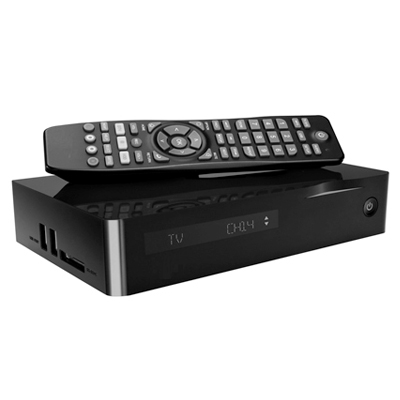
Drawing attention to the low quality of the Chinese set top boxes (STBs) being used, he said cable ops who had already spent close to USD 4 billion in the first two phases would be forced to spend another USD 4-5 billion in the last two phases of DAS. “Currently, most of the STBs being seeded are Chinese. The boxes which are of low quality may have to be replaced in the next couple of years, which means more cost for the operators,” Saraf said, cautioning against implementing phases III and IV before the completion of the first two phases.
“There should be a Broadcast Act to monitor broadcasters. Also, only after both the consumers and cable operators reap the benefits of DAS phase I and II, phase III and IV should be implemented,” he said.
Increasing import duty on STBs will discourage the MSOs from importing STBs from China, points Arvind Prabhoo
On behalf of the cable op community, Saraf demanded: “We want the committee to question the government as to why these loopholes were not looked at before importing such STBs,” pointing toward the growing need for indigenous box manufacturing. “Currently, almost 90 per cent of the STBs are imported from China; we propose that 70 per cent of the STBs should be Indian,” said he.
He proposed that while the current import duty on STBs is 10 per cent, it should be raised to 50 per cent. “Wasn’t digitisation meant to uplift Indian STB manufacturers and also create more jobs for them? What I fail to understand is how the TRAI and I&B Ministry did not see these loopholes before implementing digitisation,” Saraf questioned.
Seconding Saraf on the hike in import duty as well as indigenous manufacture of STBs was Maharashtra Cable Operators Federation president Arvind Prabhoo. “Of course, importance should be given to the national STB manufacturers. If the import duty is increased, it will surely discourage the MSOs from importing STBs from China and also encourage Indian manufacturers. That digitisation should have helped generate revenue and employment for Indians, are issues the government should have thought about,” he said.
We plan to go and meet the members of parliament once the winter session commences,says Pramod Pandya
He opined that the government had been misled at some point. “I think that a certain section of the industry presented a wrong picture to the government. But, I am sure they will work on it now.”
Gujarat Cable Operators Association president Pramod Pandya wanted to know if any consumer survey had been conducted before implementing digitisation. “I do not understand the need to force the implementation of DAS, if the country doesn’t have infrastructure to support it,” he thundered, pointing out that cable ops are hopeful the Broadcast Bill will be proposed during the winter session of the Parliament. “We plan to go and meet the members of parliament once the winter session commences,” he rounded off.