News Headline
Industry speaks on cable monopoly

MUMBAI: The Telecom Regulatory Authority of India (TRAI) is now looking at ensuring a level playing field for both the multi system operators (MSOs) and the local cable operators (LCOs). The regulator on 26 November came out with a recommendation paper which put a cap of 50 per cent on MSOs stake in any state. The recommendation paper aims at curbing the monopoly of MSOs.
“Currently there are no restrictions on the area of operation and accumulation of interest in terms of market share in a city, district, state or country by MSOs. It has been observed in some states that a single entity has, over a period of time, acquired ‘control’ of several MSOs and LCOs, virtually monopolising cable TV distribution in that market. Cases of market dominance by MSOs have been reported at various forums. Such monopolies/market dominance in the TV channel distribution market are not in the best interest of consumers and may have serious implications in terms of competition, pricing, quality of service and the efficient growth of the TV channel distribution market,” states the recommendation paper.
The regulator has now recommended that market dominance should be determined based on market share in terms of the number of active subscribers of MSOs in the relevant market. To evaluate the level of competition or market concentration in a relevant market, the Herfindahl–Hirschman Index (HHI) should be used. The TRAI has also recommended that the threshold value for any individual/ ‘group’ entity contribution to the market, HHI should be not more than 2500.
 |
|
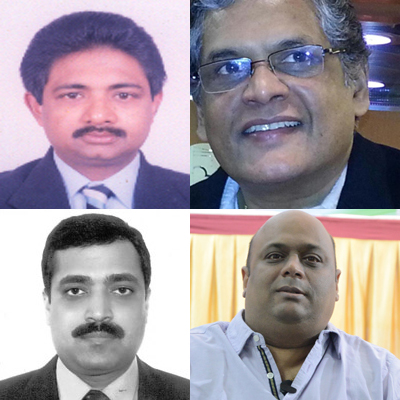
ABS 7 Star CMD Atul Saraf
|
“We welcome the recommendation paper. If one has to see, there is monopoly of one or two players in few states like Punjab, UP etc. I feel 50 per cent is also huge; it should be reduced to 25 per cent to give a level playing field. The recommendation paper if implemented will give quality service to customers,” says ABS 7 Star CMD Atul Saraf.
According to Hathway Cable & Datacom MD and CEO Jagdish Kumar G. Pillai, the MSO, by definition, does not have a market share of more than 50 per cent. “We are not impacted by this. And then it is just a recommendation paper. What will be interesting is how the regulator will ascertain the percentage of one’s operation till the country is fully digitised. It is impossible to know one’s percentage share in the analogue phase,” says Pillai.
He adds, “It will impact some MSOs that are dominant players in few states.”
 |
|
Hathway Cable & Datacom MD and CEO Jagdish Kumar G. Pillai
|
The recommendation paper states that MSOs that currently have more than 50 per cent stake in any state need not reduce their share, but cannot get into any further mergers and acquisition (M&A). “By this, the regulator has ensured that the MSOs are also not affected,” informs Pillai.
Through the recommendation paper, TRAI wants to ensure that there is no dominance of any player and that there is a level playing field for the LCOs, MSOs and the broadcaster.
The TRAI is laying down the rules for the future. “One never knows about the future in terms of technology and also the methods used by the MSOs to operate. The regulator has to think not for a couple of years, but 10-20 years down the line. The recommendation paper ensures that the LMOs and the MSOs on pan-India basis can co-exist and function rationally,” opines Maharashtra Cable Operators Federation president Arvind Prabhoo.
 |
|
Maharashtra Cable Operators Federation president Arvind Prabhoo
|
The 50 per cent cap will ensure excellent quality service, healthy competition and also keep costs in check. “The 50 per cent stake is still high, the regulator should keep the cap at 30-40 per cent,” he says.
According to Prabhoo, it is a progressive move by TRAI. “The authority is ensuring that there is no monopoly – vertical or horizontal and at the same time, is also ensuring that the LMOs have a choice. The LMOs welcome the move,” he states.
Ortel Communications president and CEO Bibhu Prasad Rath says, “As I understand, the authority, through this recommendation, is trying to restrict the building up of the market share by any individual /group entity through M&A/control of an entity over many MSOs and LCOs. This does not apply to us because of our differentiated business model being independent and expanding directly through last mile connectivity without going through any M&A or control of other MSO/LCOs.”
Rath thinks that a 50 per cent market share in a state for any MSO will be fair from a competition perspective. “So we do not see much problem in this. However, we believe that the market share should always be calculated by combining cable TV and DTH together as both aim to serve the same set of customers. The regulator has dismissed this argument which we think is unfair,” exults Rath.
 |
|
Ortel Communications president and CEO Bibhu Prasad Rath
|
Rath also opines that any such regulation can be implemented smoothly when digitisation is fully put into practice. “In an analogue era, it is not practical to implement this. We hope the MIB will take care of these issues before notifying the same,” he states.
GTPL COO Shaji Mathews says that the monopoly guidelines have their origins from the analogue era when broadcasters had complained to the TRAI. Says he: “It was an issue which was faced by the broadcasters due to dearth of space on cable networks then; it is being addressed at a time when the country is moving towards digitization.”
Mathews feel that the recommendation paper doesn’t address two key points — one, when the cable networks join hands to fight against the broadcasters and two, when the broadcaster joins hands with a particular cable network to help them monopolise. “Both these issues which are the root cause to monopoly have not been addressed in the recommendation paper,” says Mathews.
Mathews also points out that though the recommendation discourages monopoly, it encourages those cable operators who are related to broadcasters to grow their base in areas where they until now had no base. “For the viewer to get good service and for the cable operators to exist and also run a profitable business, there needs to be a transparent and non-discriminatory system. The regulator needs to bring laws for content players,” concludes Mathews.
TRAI recommendations on monopoly or market dominance in cable TV services