iWorld
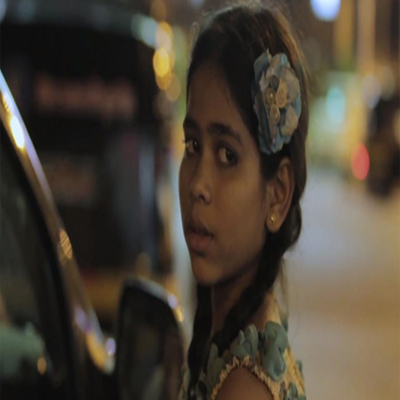
Video on child prostitution goes viral
MUMBAI: The truth, as they say, is stranger than fiction. So strange that often society chooses to look the other way despite knowing it.
For instance, how many of us know that over 1.26 lakh cases of child trafficking were registered in India during 2011-12 or the fact that nearly forty girls under the age of fifteen are forced into prostitution every day in this country?
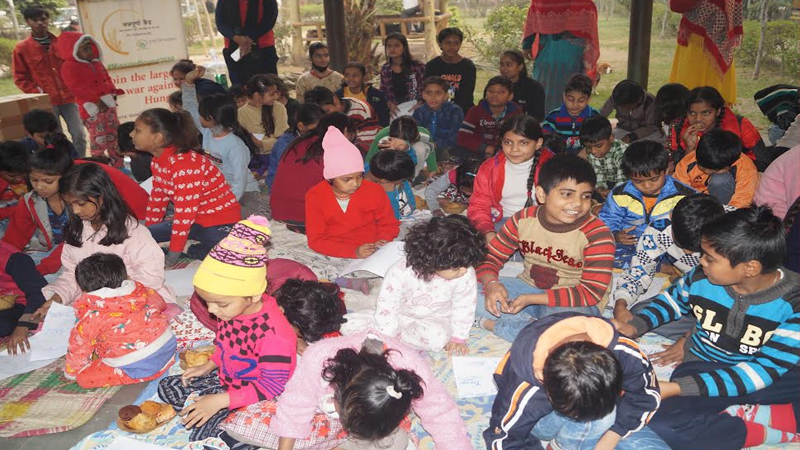
And so we have a new video uploaded to YouTube by Delhi-based NGO, Bachpan Bachao Andolan (BBA), in collaboration with PaapiPet Pictures, which sends out a clear message to people, urging them not to ignore the inhuman things happening to innocent children around them.
Watch the video: #dontlookaway
Aptly titled ‘Don’t look away’, the video, brings to the fore the grim reality of the flesh trade, and has gone viral, garnering a staggering 595,921 views within days of being uploaded.
‘Don’t look away’ rolls with a little girl, nicely dressed, standing by a busy road. The street is dark with just the traffic lights; evidently, it’s late in the evening. An old tailor eyes the girl from his shop across the street even as she fidgets, throwing nervous glances all around.
While viewers are left guessing what next, she simply crosses the road and walks towards a car parked at the corner. She turns back to look at the old tailor and he just nods. The girl enters the car and the camera pans to the middle-aged man at the driving seat. An evil smile on his face, he tries to give her a chocolate which she isn’t too keen about receiving. The man then keeps the chocolate on her thighs… and his hands follow suit…
BBA hopes that after watching this video, viewers won’t look away the next time they see something like this. According to Rajesh Sengar of BBA, the film is but a small effort to send across a message of righteousness. “One shouldn’t look away. In the last 33 years that we have been working for the cause, we have rescued 82,000 kids,” says he.
The video is directed by Jaydeep Sarkar, who drew inspiration from two different personal experiences. The first instance, which he regrets he ignored which happened while he was stuck in a traffic jam at the Andheri highway. “I saw a little girl crossing the road, her eyes seeking help and still, I couldn’t do anything as I was stuck in traffic and helpless. Those eyes kept haunting me for days,” he recalls.
The second incident – something a close relative experienced – which moved him deeply. “This couple had rescued a small girl in her early teenage years from the clutch of the sex business. They anticipated that something really wrong was cooking up in their neighbour’s house and when they dug deep, it was this horrific case that they discovered,” says Sarkar, who discovered while making the film that people don’t really want to be associated with such murky issues.
Sarkar says they struggled even with finding a good song for the video as no music composer worth his melody wanted to be associated with a video on child-trafficking. “However, my producer Rheyan Johari made me listen to a song, These Streets by Scottish singer-songwriter Paolo Nutini, which not just touched my heart but also reflected the theme of the movie. We wrote to Warner Music, London that released the album and we soon got a go-ahead,” says Sarkar, concluding on the note the cause would find supporters not just in India but abroad as well.

iWorld
Talk to your telly: JioHotstar’s new AI voice feature reads your mood to suggest shows
The streaming giant ditches the scroll for a “conversational” AI that understands moods, cricket and Hinglish
MUMBAI: The era of the endless scroll may finally be over. JioHotstar has officially flicked the switch on its “Conversational Voice Discovery” (CVD) feature, a high-tech overhaul designed to turn the hunt for a Friday night film into a natural chat. Developed in a landmark partnership with OpenAI, the tool moves beyond clunky keyword searches, allowing users to find content by describing their mood, context or even the most bizarre viewing scenarios.

The feature is vision of Uday Shankar, vice chairman of JioStar, whose goal is to eliminate “content overload” by replacing the tedious, traditional scroll with natural dialogue. By leveraging ChatGPT’s ability to grasp context and cultural nuance, the new mobile interface allows users to bypass menus entirely, turning search into a seamless conversation.
The launch, which rolled out across India this month, sees a ChatGPT-powered interface integrated directly into the heart of the app. Instead of typing “action movie” into a sterile search bar, viewers can now speak to their devices as if they were asking a well-read friend for a tip. For now, the feature is exclusive to the mobile app, with a rollout for Connected TV (CTV) expected in later phases.
Beyond the keyword
The CVD feature is built on what JioStar calls “Multilingual Cognitive Search.” It is designed to interpret nuance rather than just matching text. If you tell the app, “I’ve had a long day, give me something mindless and funny,” it won’t just look for those words in a title; it will sift through 300,000 hours of library content to find a light-hearted sitcom or a stand-up special that fits the vibe.
The tech is natively multilingual, catering to India’s diverse linguistic landscape. Users can switch effortlessly between languages—asking for “Koi light-hearted comedy dikhao” (show me some light-hearted comedy) or requesting a “Thriller hai but zyada dark nahi chahiye” (a thriller that isn’t too dark).
Real-time curiosity and live sports
Perhaps the most ambitious aspect of the rollout is its integration with live sports. During a high-stakes cricket match, the AI acts as a digital companion. Fans can ask, “Who is the top scorer right now?” or “Show me that last wicket again,” and the system will pull the relevant data or clips instantly. It even attempts to explain the “why” behind the crowd’s energy, responding to prompts like, “Why is everyone reacting like that?” by contextualizing on-field events.
A shift in streaming strategy
The move is part of a broader reimagining of the entertainment experience following the massive merger between JioCinema and Disney+ Hotstar. Uday Shankar noted that the goal is to make premium entertainment “truly accessible” by embedding AI at the core of the user journey. By anticipating culture and context, the platform hopes to kill off “decision fatigue.”
For OpenAI, the partnership represents a major play in the Indian market. Fidji Simo, the head of applications at OpenAI, said the goal was to turn a “one-way” passive consumption experience into a “deeply personal conversation.”
As the feature goes live for millions of subscribers, the message from Bombay House is clear: the remote control is becoming obsolete. Whether you’re looking for a show that “feels like a rainy Sunday afternoon” or a crime series with a “strong female lead but not too violent,” all you have to do is ask.