News Broadcasting
TRAI ad cap case: Judgement day dawns?


MUMBAI: Exactly a month after hearings first began in the ad cap case in the Telecom Disputes Appellate Tribunal (TDSAT), the verdict is set to be pronounced today. The TDSAT has listed it in the cause list for 11 December.
The case that is being fought by broadcasters led by the News Broadcasters Association(NBA) against the Telecom Regulatory Authority of India (TRAI) is all set to be given a new direction.

Indiantelevision.com gives you the highlights of the broadcasters vs TRAI ad cap legal slugfest and the coincidental twist that came near the end.
The NBA’s main contentions were that TRAI does not have the authority to regulate content and that the agreement between the two is not of a licensor and a licensee but is rather a registration. It also said that the TRAI had not fulfilled the laying requirements before parliament thus making the regulation invalid.
However, the TRAI stated that there was no rule in the TRAI act saying that merely because they hadn’t done the laying requirements, the regulation cannot be implemented. It also claimed that according to the terms of the licence and by applying section 7 of the Cable TV Networks Act it was authorised to implement the regulation to ensure the customers get quality of content on TV.
After hearing the NBA, the TRAI, music channels and some other channels the TDSAT had reserved the judgement. The twist that came last week was when in a separate case of BSNL vs TRAI and others, the Supreme Court had ruled that cases in which the validity of a regulation by TRAI is challenged, cannot be heard in the TDSAT and has to be appealed against in the High Court since by law a regulation needs to be passed through parliament. This has put the fate of the ad cap regulation in a fix since officially TRAI claims it is a regulation.
We wonder how the TDSAT will decide the case. Most probably, the TDSAT will dismiss it and request the petitioners to move the Hight Court after the verdict the SC gave on Friday. Had the petition been regarding the application of the regulation, the TDSAT could still have decided on it. However, the SC judgement clearly states that TDSAT cannot take a call on the very act that created it. TDSAT was formed under section 14 of the TRAI act giving it legislative and administrative powers.
Section 36, under which the regulation was formed clearly underlines that if it is framed, it needs to be consistent with the terms of the TRAI act.
However, after the SC ruling, the TDSAT seems to have been rendered powerless to decide on this case, even after 20 days of hearings and a long wait for the result, which will now be affected by the SC ruling.
If the broadcasters are asked to move the HC, it means more time for them to deliberate on the validity of the regulation. But it is possible that they will have to follow the 12 minute ruling till the time, the HC does not say anything about it.







News Broadcasting
BBC to cut up to 2,000 jobs in biggest overhaul in 15 years
Cost pressures and leadership change drive major workforce reduction plan
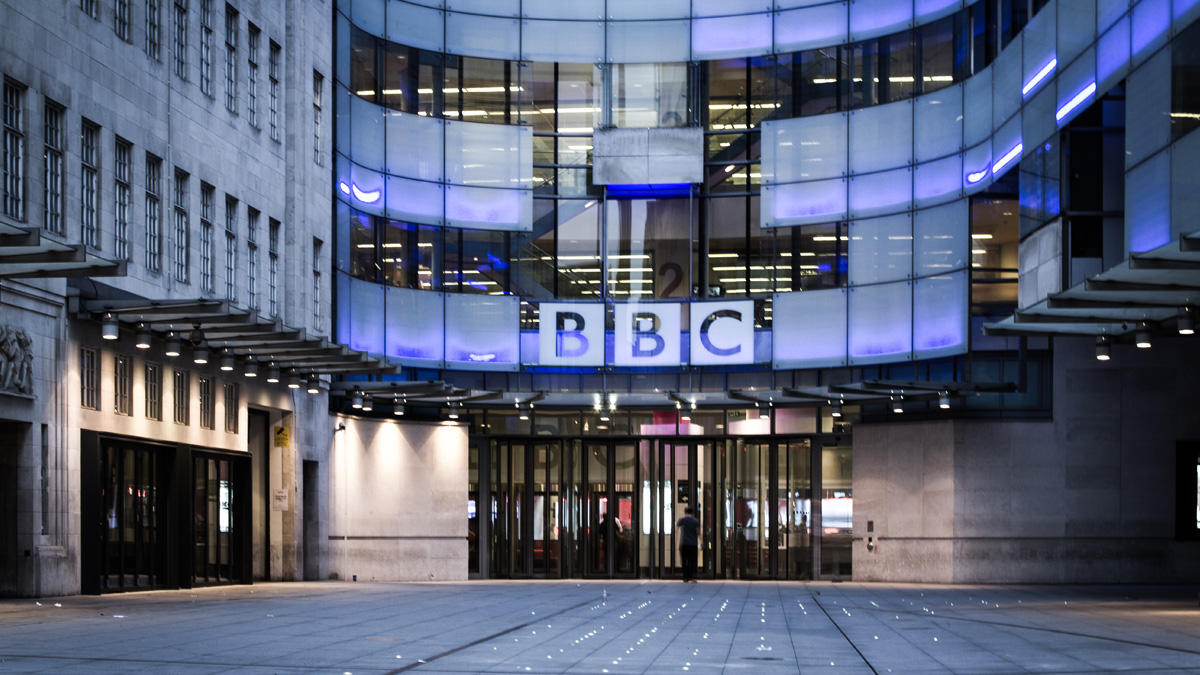
LONDON: BBC has unveiled plans to cut up to 2,000 jobs, roughly 10 per cent of its global workforce, in what marks its biggest downsizing in 15 years.
The announcement was made during an all-staff meeting led by interim director-general Rhodri Talfan Davies, as the broadcaster moves to tackle mounting financial pressures and reshape its operations.
Between 1,800 and 2,000 roles are expected to be eliminated from a workforce of around 21,500. The cuts form part of a broader plan to save £500 million over the next two years, aimed at offsetting rising costs, stagnating licence fee income and weaker commercial revenues.
In a communication to staff, BBC interim director-general Rhodri Talfan Davies said, “I know this creates real uncertainty, but we wanted to be open about the challenge,” acknowledging the impact the move would have across the organisation.
The restructuring comes at a time of leadership transition. Former director-general Tim Davie stepped down earlier this month, with Matt Brittin, a former Google executive, set to take over the role on May 18, 2026.
While some cost-cutting measures are being implemented immediately, the majority of the structural changes are expected to roll out over the next few years, with full savings targeted by the 2027–2028 financial year.
The broadcaster had earlier signalled its intent to reduce its cost base by around 10 per cent over a three-year period, warning of “difficult choices” as it adapts to shifting economic realities and audience expectations.
With operating costs hovering around £6 billion annually, the BBC’s latest move underscores the scale of the financial challenge it faces, as it balances public service commitments with the need for long-term sustainability in an increasingly competitive media landscape.