Brands
Can corporate executives be good brand ambassadors?

MUMBAI: An old man with a moustache and a turban advertises a popular spice brand. A chain of resorts has a familiar character giving it a thumbs-up. A recent advertisement features executives from other companies talk about their experience flying with a national airline.
Save for these examples, a majority of ads use celebrities to endorse products and services. Making one wonder why most brands prefer not to let their functional executives do the talking.
Apparently, using executives might lend a lot more credibility. However, it may not really appeal to the masses as there is no known face involved.
Brand consultant Harish Bijoor believes Indian brands don’t resort to using their executives as much as the West because Indian CEOs are rather shy and prefer to work behind the scenes rather than in front.
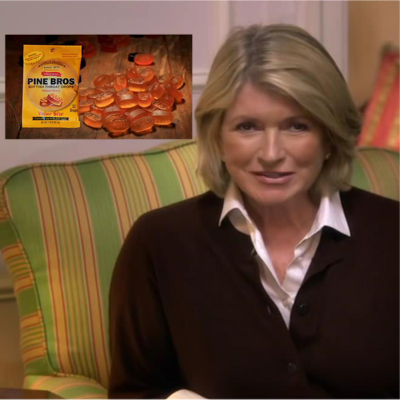
Martha Stewart recently appeared in a cough syrup ad. How many of our CEOs sell a product?
He points out that there are exceptions. “Vijay Mallya’s each and every move promoted his brand – Kingfisher. In the past, Mahindra used Pawan Goenka as well. So, it’s not always celebrities ruling the roost.”
Overall, Bijoor is of the view that people may debate the overuse of celebrities but there is no immediate need to get executives to screens. “There are already a few doing the needful and I don’t think we need more executives to promote the brands. There is a healthy mix, so why clutter it?” he argues.
Business head of Raising ibrows Ganapathy Visawanathan feels that in a country like ours where Bollywood and cricket is like religion, it is safer to use celebrities. “The brands normally use their executive to fight some crisis situation to build credibility, otherwise there will be a big disconnect between the brand and the masses,” he elaborates.
Taproot India co-founder & chief creative officer Santosh Padhi believes product category plays an important role in choosing a brand ambassador. “For an FMCG product, it would be senseless to use an unknown face. Celebs – be it actors or sportsmen – are more relatable to for a common man and hence, it is better to use them. However, for a category like airlines, it is fine to use executives,” he says. The choice between a celebrity, model and executive is also determined by the brand’s strategy, according to him.
Bang in the Middle MD and chief creative officer Prathap Suthan feels it’s a bad idea to use executives. “They shouldn’t get into advertising for their own brands. Essentially, brands need to have their own individual and original character. From the language, persona, tone, colors, design, advertising etc. All of this works together to create and craft a timeless personality for a brand – independent of everything else,” he says. “More importantly, a brand, if it is built on the shoulders of a CEO, what happens when the CEO quits and moves to another company, or cannot speak properly, or is not too presentable, or falls down and hurts himself, or gets into a controversy, or dies? All terrible situations if you build brands around publicly unknown CEOs,” he adds.
Business director GroupM ESP Ameya Sule has a different take on the matter. “For me, the idea is a little conditional. There is no black or white to it. For instance, if a CMO or a senior executive of an apparel brand goes on to promote the brand, then it is more easy to connect it. There has to be a connect and authenticity attached to it, no matter who promotes the brand. It will be good to use an executive as it shows more credibility,” he signs off.