Connect with us

English Entertainment

Romedy NOW celebrates Womanhood with a unique line-up on 8th March

Published

on

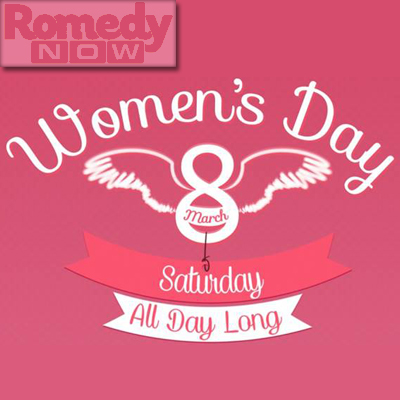
MUMBAI: Celebrate the myriad facets of a woman – fun and funny, tough and tender, witty and wise, intense and impish all at once! This Women’s Day, the exclusive English entertainment channel Romedy NOW celebrates with a lineup dedicated to the girls for what they are – bold and beautifulwith dollops of chutzpah! Enjoy the daylong marathon on Women’s Day, Saturday, 8 March, 8 AM-8 PMwith the best of movies.


The fashionable foursome Carrie, Samantha, Charlotte and Miranda are the Women of Substance in Sex and the City 2. Carrie (Sarah Jessica Parker) misses the freewheeling fun after getting married to Mr. Big, Samantha tries to stay young at 52, Charlotte battles her daughter Lily’s ‘terrible twos’, and Miranda quits her job because her boss cannot handle an intelligent and powerful woman like her. But when has mayhem stopped a girl from having fun? The awesome girls go on an all-expense paid trip to Abu Dhabi and experience one adventure after another in the UAE.

Advertisement


Be amazed by the brilliant Julia Roberts as she plays a single mother in Erin Brockovich, a legal assistant who almost single-handedly, brings down a Californian power supply giant to its knees for contaminating the city’s water – even if it means knocking from door to door with a toddler in tow.


Advertisement

Then be bedazzled with her bright smile in The Mona Lisa Smile where sheplays an art professor in the 1950s society, teaching girls to question their conservative societal roles.


There’s the glitz and glamour of the fashion world in The Devil Wears Prada as a young journalist Andrea Sachs (Anne Hathway) lands the job as second assistant to a powerful and demanding fashion mag editor Miranda Priestly (Meryl Streep).  As Andy transforms from geek to fashionista, she must make a choice between her dream job and her real life, love, friends and family.

Advertisement


There’s no age for being free-minded! Catch the fun punk rock loving teenager in Juno as she deals with an unplanned pregnancy at 16 and goes through the adult life with teenage fun and freshness.


Advertisement

In Her Shoes will treat you to two sisters who cannot see eye to eye. Throw in a hard to please grandmother who ultimately makes them get along with each other and you have the perfect combination of sibling rivalry and love.


The celebration is not just for a day. Sit with your feet up and relax with Sweet Nothings, a special slot every Wednesday at 1 PM. Your time, your space, your channel, filled with all the great stories of love and laughter at your fingertips.

Advertisement


Charlotte (Jennifer Lopez) has finally found the man of her dreams in Monster-in-Law but his mother Viola Fields (Jane Fonda) is a nightmare who won’t lose her son to Charlie. A fight to be the alpha-female ensues.


Advertisement

War of the roses ensues in Bride Wars when best friends Liv and Emma cross swords after their common wedding planner ends up scheduling their respective weddings on the same day at the same venue! No one will budge and change their wedding date and their claws are sharpened to sabotage the other’s wedding! Enjoy the hilarious ride.
 

Watch out for more moments of Sweet Nothings in Step Mom and more love in Letters to Juliet.


Advertisement

So let your hair down and enjoy the special treats this Women’s Day only on Romedy NOW!

Click to comment

Leave a Reply

Your email address will not be published. Required fields are marked *

English Entertainment

The end of Freeview? Britain debates switching off aerial tv by 2034

Published

on

UK: The aerial is losing its grip. As broadband becomes the default way Britons watch television, the UK is edging towards a decisive, and divisive, question: should Freeview be switched off by 2034? The issue, highlighted in reporting by The Guardian, has exposed deep fault lines over access, affordability and the future of public service broadcasting.

For nearly 25 years, Freeview has delivered free-to-air television from the BBC, ITV, Channel 4 and Channel 5 to almost every corner of the country. Even now, it remains the UK’s largest TV platform, used in more than 16m homes and on around 10m main household sets. Yet the same broadcasters that built it are now pressing for its closure within eight years.

Their case rests on a structural shift in viewing. Smart TVs, superfast broadband and the Netflix-led streaming boom have pulled audiences online. Advertising economics have followed. By 2034, the number of homes using Freeview as their main TV set is forecast to fall from a peak of almost 12m in 2012 to fewer than 2m, making digital terrestrial television, or DTT, increasingly costly to sustain.

Advertisement

But critics say the rush to switch off risks abandoning those least able, or least willing, to move online.

“I don’t want to be choosing apps and making new accounts,” says Lynette, 80, from Kent. “It is time-consuming and irritating trying to work out where I want to be, to remember the sequence of clicks, with hieroglyphics instead of words. If I make a mistake I have to start again.”

Lynette is among nearly 100,000 people who have signed a “save Freeview” petition launched by campaign group Silver Voices. She fears the government is about to “take [Freeview] away from me and others who either don’t like, can’t afford, or can’t use online versions”.

Advertisement

Official figures underline the fault lines. A report commissioned by the Department for Culture, Media and Sport estimates that by 2035, 1.8m homes will still depend on Freeview. Ofcom’s analysis shows those households are more likely to be disabled, older, living alone, female, and based in the north of England, Wales, Scotland and Northern Ireland.

Freeview is owned by the public service broadcasters through Everyone TV, which also operates Freesat and the newer streaming platform Freely. After two years of review, DCMS is expected to set out its position soon, drawing on three options proposed by Ofcom: a costly upgrade of Freeview’s ageing technology; maintaining a bare-bones service with only core PSB channels; or a full switch-off during the 2030s.

The broadcasters have rallied behind the third option. They argue that 2034 is the logical cut-off, when transmission contracts with network operator Arqiva expire. By then, they say, the cost of broadcasting to a dwindling audience will far outweigh the returns from TV advertising.

Advertisement

Ofcom agrees a crunch point is approaching. In July, the regulator warned of a “tipping point” within the next few years, after which it will no longer be commercially viable for broadcasters to carry the costs of DTT.

Others see risks beyond economics. Questions remain over whether internet TV can reliably deliver emergency broadcasts, such as the daily Covid updates, in the way that universally available DTT can. The UK radio industry has also warned that an internet-only future for TV could push up distribution costs and force some radio stations off air if PSBs no longer share Arqiva’s mast network.

“It is a political hot potato,” says Dennis Reed, founder of Silver Voices, who says he has “dissociated” his organisation from the government’s stakeholder forum, which he believes is “heavily biased” towards streaming.

Advertisement

The Future TV Taskforce, representing the PSBs, counters that moving online could “close the digital divide once and for all”. “We want to be able to plan to ensure that no one is left behind,” a spokesperson says, adding that rising DTT costs could otherwise mean cuts to programme budgets.

The numbers show the scale of the challenge. Of the 1.8m Freeview-dependent homes projected for 2035, around 1.1m are expected to have broadband but not use it for TV. The remaining 700,000 are forecast to lack a broadband connection altogether.

Veterans of the analogue switch-off, completed in 2012 after 76 years, recall similar fears of “TV blackout chaos”. Around 6 per cent of households were labelled “digital refuseniks”, yet a targeted help scheme and a national campaign, fronted by a robot called Digit Al voiced by Matt Lucas, delivered a largely smooth transition.

Advertisement

This time, the BBC is less keen to foot the bill. Tim Davie, the outgoing director general, has said the corporation should not fund a comparable support programme for a Freeview switch-off.

Research for Sky by Oliver & Ohlbaum suggests that with early awareness campaigns and digital inclusion measures, only about 330,000 households would ultimately need hands-on help ahead of a 2034 shutdown.

Meanwhile, viewing habits continue to fragment. Audience body Barb says 7 per cent of UK households no longer own a TV set, choosing to watch on other devices. In December, YouTube overtook the BBC’s combined channels in total UK viewing across TVs, smartphones and tablets, albeit measured at a minimum of three minutes.

Advertisement

That shift may accelerate. YouTube has recently blocked Barb and its partner Kantar from accessing viewing session data, limiting transparency just as online platforms consolidate power.

“When the government chose British Satellite Broadcasting as the ‘winner’ in satellite TV it was Rupert Murdoch’s Sky instead that came out on top,” says a senior TV executive quoted by The Guardian. “There already is such an outsider ready to be the winner in the transition to internet TV; it is YouTube.”

Freeview’s future now hangs on a familiar British dilemma: modernise fast and risk exclusion, or protect universality and pay the price. Either way, the aerial’s days as king of the living room look numbered.

Advertisement
Continue Reading

Advertisement News18
Advertisement All three Media
Advertisement Whtasapp
Advertisement Year Enders

Copyright © 2026 Indian Television Dot Com PVT LTD

This will close in 10 seconds

×