News Broadcasting
‘New government should lay foundation for improving relationship with media industry’


MUMBAI: The relationship between the media and entertainment industry and the government has “broken”. The industry and the new government that would be formed after the general elections should lay a new foundation for improving the relationship.
That was the clarion call by Star India CEO and FICCI Media and Entertainment Committee Chairman Uday Shankar in his opening remarks at the 15th FICCI-Frames in Mumbai.

Unless all the stakeholders get together for the betterment of the industry, the vibrancy of the media and entertainment sector will be at stake and the biggest victim will be free expression, said Shankar.
He asked, “Why not nourish an industry that has huge potential? Why not support an industry that needs policy support and nor resources support?”
The media and entertainment industry needs recognition that it is a potential economic growth engine and a force multiplier, he stated.
He said the media and entertainment industry grew by 12 per cent in 2013 despite economic headwinds and added “it is a testament to the tenacity of the industry.”
There is now tension between the media and entertainment industry and the government with the successive governments limiting free speech, he said.
Surprisingly, irrespective of the party, the media has been at the receiving end. “Whether you trumpet youth leaders or the state leaders, media is asked to be accountable,” Shankar said.
He also pointed out that the media created a political party out of thin air and put it in power, but eventually the same outfit has started making accusations against the media the moment accountability was sought.
The government has not been able to harness the potential of the media and before the elections kick starts there needs to be a new “contract” between the media industry and the government, Shankar said.






News Broadcasting
BBC to cut up to 2,000 jobs in biggest overhaul in 15 years
Cost pressures and leadership change drive major workforce reduction plan
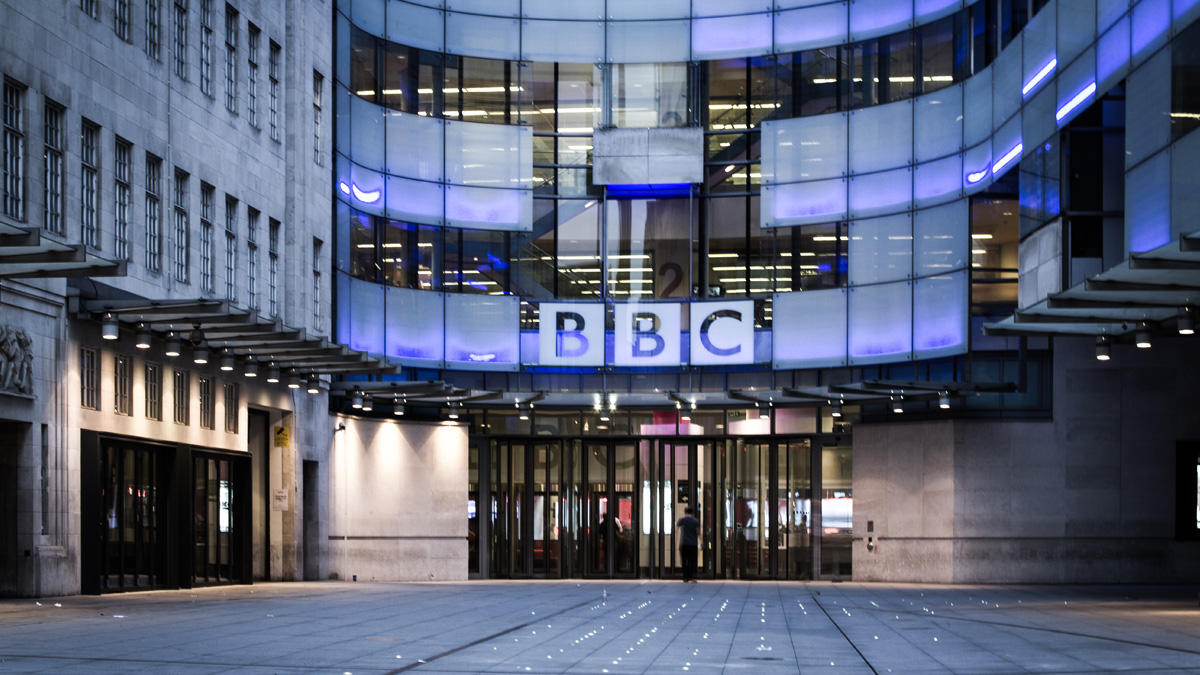
LONDON: BBC has unveiled plans to cut up to 2,000 jobs, roughly 10 per cent of its global workforce, in what marks its biggest downsizing in 15 years.
The announcement was made during an all-staff meeting led by interim director-general Rhodri Talfan Davies, as the broadcaster moves to tackle mounting financial pressures and reshape its operations.
Between 1,800 and 2,000 roles are expected to be eliminated from a workforce of around 21,500. The cuts form part of a broader plan to save £500 million over the next two years, aimed at offsetting rising costs, stagnating licence fee income and weaker commercial revenues.
In a communication to staff, BBC interim director-general Rhodri Talfan Davies said, “I know this creates real uncertainty, but we wanted to be open about the challenge,” acknowledging the impact the move would have across the organisation.
The restructuring comes at a time of leadership transition. Former director-general Tim Davie stepped down earlier this month, with Matt Brittin, a former Google executive, set to take over the role on May 18, 2026.
While some cost-cutting measures are being implemented immediately, the majority of the structural changes are expected to roll out over the next few years, with full savings targeted by the 2027–2028 financial year.
The broadcaster had earlier signalled its intent to reduce its cost base by around 10 per cent over a three-year period, warning of “difficult choices” as it adapts to shifting economic realities and audience expectations.
With operating costs hovering around £6 billion annually, the BBC’s latest move underscores the scale of the financial challenge it faces, as it balances public service commitments with the need for long-term sustainability in an increasingly competitive media landscape.