MAM
Why unconventional advertising is on the rise

MUMBAI: In May last year, what started as a wager between Virgin Atlantic boss Sir Richard Branson and Air Asia owner Tony Fernandes, ended up with Branson serving drinks on an Air Asia flight, sporting lipstick and a red skirt.
The British billionaire had laid a bet with Fernandes that if his Grand Prix team finished ahead of Fernandes’ team, Fernandes would work as a flight attendant on-board Virgin Atlantic and vice-versa. With the Virgin team losing, Branson had to fulfil his part of the deal.
Not only did the stunt garner world-wide publicity, it helped raise over $300,000 for the charity, Starlight Foundation, supported by both Virgin Australia and Air Asia.
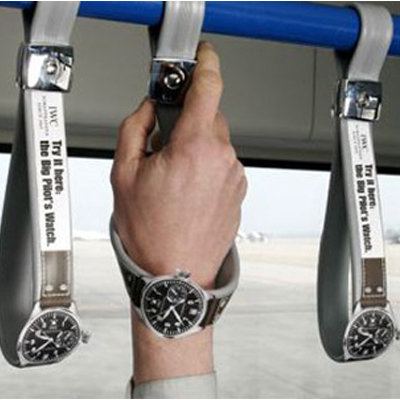
In Germany, Big Pilot’s Watches were attached to the hanging straps of buses ferrying passengers between the airport and airplane to encourage them to try them on.
Closer home, Jet Airways came up with a print ad seven years ago saying, “We’ve Changed”. No sooner, rival Kingfisher Airlines came up with an ad above the Jet one saying, “We made them change!”
All instances go to show that marketers are increasingly adopting unconventional means of advertising. And why not, for given the plethora of options, consumers’ attention spans are only heading south. In such a scenario, advertisers are compelled to come up with ‘out-of-the-box’ ways to get their brands noticed.
Newly-appointed regional head of Posterscope APAC, Haresh Nayak, puts it as: “The ultimate goal of the advertiser is to sell things, but the necessary preliminary goal is to get the attention of the public. Advertisers will go to great lengths to get this attention, as the pay-off for a truly successful advertising campaign can be enormous.”
Of the many triggers for unconventional advertising, Madison Media Sigma COO Vanita Keswani enlists some. “The need to target a niche audience and to avoid spill-over from mass media. The need for a lead brand in a competitive category to add unconventional to conventional to beat the clutter. The need for a small brand which does not have adequate monies to compete in traditional media,” she says.
Big Cinemas’ marketing and sales head Shirish Srivastava adds, “Advertisers and marketers have to use unconventional methods to target consumers at the opportune time and sell them the service at the Zero Moment of Truth. This is where non-traditional, out of the box, clutter-breaking ideas and media come into play. For instance, look at the way in-cinema advertising has evolved in the wake of a rise in multiplexes.”
For example, the HDFC Life ad in cinemas a couple of years ago was played right after the national anthem and this helped the brand get the attention it wanted. Similarly, Piramal Healthcare’s ad for its iSure ovulation kit was plastered across doors, mirrors and hand dryers of washrooms at Big cinemas. This was followed by a feedback camp with two promoters stationed at cinema exits, gathering feedback from women about the activation.
Says Amit Sinha of Piramal Healthcare, “Washroom advertising is effective as it gives you a one-on-one moment of impact for a range of products like i-Sure in the intimate space, while ensuring it is gender-targeted and thus very relevant. We are glad to have chosen BIG Cinemas as one of our media vehicles on this one, since the brand provided us a significant reach to connect with our customers, at the right time.”
Unconventional advertising is often referred to as guerrilla marketing and consists of creative, low-cost marketing methods used by businesses to temporarily promote their products or services. According to Srivastava, “Brands need to search for these convenience factors, create communication, create POS and convenient touch-points to generate business. Like traditional paan shops which have now become mini convenience shops where so many more products are available.”
Nayak recalls an innovation which encouraged immediate action on the part of consumers. The bespoke ad for Skoda Rapid, which was played in theatres, had a patron appear on the screen, take a test drive and return back to his/her seat to continue watching the movie. It created a lot of buzz on YouTube and facebook. HDFC Ergo did the same thing to promote car insurance through mobile.
Sometimes, unconventional media channels are to be found within the traditional ones. For instance, HD and DTH on TV or catching consumers at relevant touch-points like out of home screens or multiplexes or activations or stunts.
Coming to which is better, unconventional or traditional advertising? Media experts say that the biggest risk in unconventional advertising is that the insurgent stunts can flop and ultimately become a PR nightmare. However, smaller businesses don’t run as much risk as most people would just write it off as another failed stunt. There are other risks in unconventional advertising too like misrepresentation of brand image, vague communication creating false rumours about the brand and so on. As Keswani says: “There are risks of not having measurement metrics like traditional media, but then brands need to derive learnings through their own internal research and create measurement criteria for success.”