MAM
E&M CEOs optimistic about global economy: PwC study


MUMBAI: Continuing its trend of surveying top CEOs across the globe, PricewaterhouseCoopers (PwC) surveyed 1344 business leaders across 68 countries out of which 72 were media and entertainment CEOs in 33 countries to find out what exactly is their business sentiment for the coming years. In depth interviews were conducted with Interpublic Group’s Michael Roth, II Sole 24 Ore SpA’s Donatella Treu and SKYCITY’s Nigel Morrison. Some of the salient points of the study on entertainment and media (E&M) CEOs are:
• CEOs are confident of the company as well as global economy. 93 per cent (compared to 80 per cent in 2013) are somewhat or very confident in their company prospects for revenue growth in the next three years. They are also more optimistic about the global economy despite some concerns. 39 per cent of E&M CEOs believe that the global economy will improve in the next 12 months, compared to 20 per cent last year.

• CEOs have to be hybrid- run today’s business and create tomorrow’s business.
• Product and service innovation will provide the greatest opportunity for revenue growth and is likely to play a pivotal role in addressing their greatest concerns. Over half of E&M CEOs surveyed (56 per cent) see product/service innovation as the main opportunity to grow their business in the next 12 months, more than any other industry surveyed
• 71 per cent of E&M CEOs are somewhat or extremely concerned about shifts in consumer spending and behaviours, more than any other industry surveyed (and compared to a global total response of 52 per cent)
• 65 per cent of E&M CEOs are somewhat or extremely concerned about the speed of technological change (compared to a total global response of 47 per cent)
• 26 per cent E&M CEOs, more than any other industry surveyed, are extremely concerned about new market entrants.
• 11 per cent of E&M CEOs believe that strategic alliances and joint ventures will be the main opportunity to grow their business in the next 12 months
• 94 per cent of E&M CEOs rank technological advances as one of the top three global trends that will have the most transformative effect on their businesses over the next five years. This is more than any other industry.
• 68 per cent of E&M CEOs rank demographic shifts as one of the top three global trends that will have the most transformative effect on their business over the next five years
• 43 per cent percent of CEOs believe that as a result of regulation they haven’t been able to innovate effectively
• Pwc says in 2014 it forecasts that consumer spend on mobile Internet will overtake that from fixed broadband.




Brands
Ekart expands IKEA partnership with EV deliveries in Chennai
3PL to handle 600 plus products with 48 hour delivery via EV fleet.
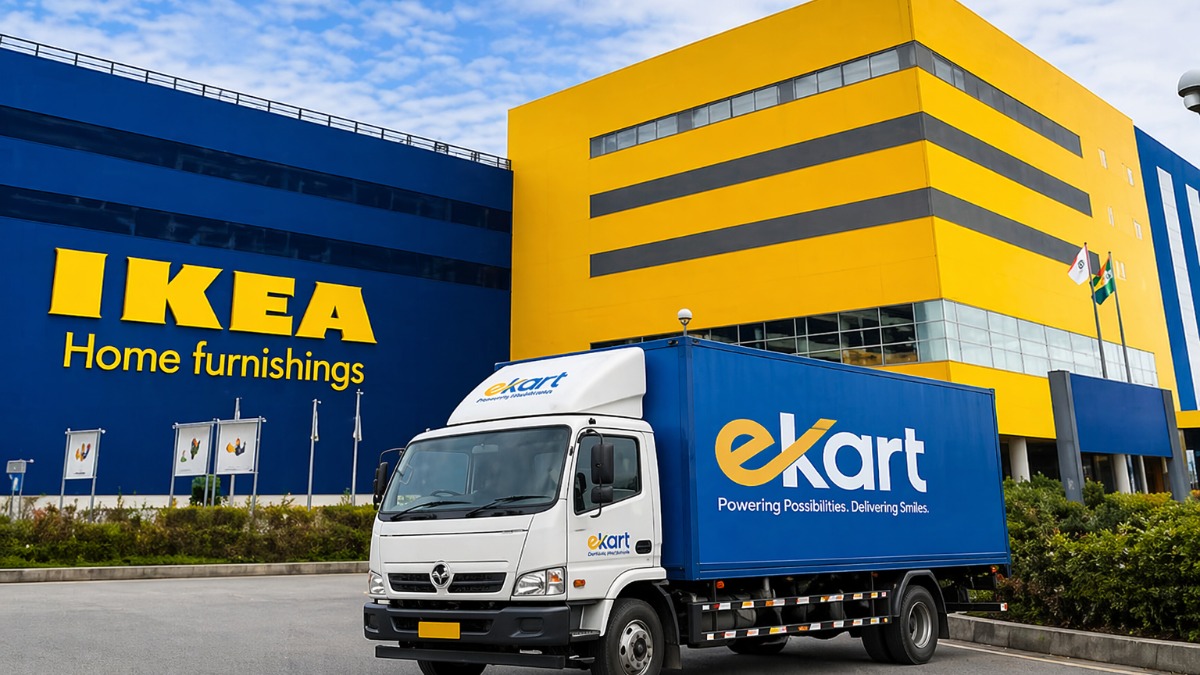
MUMBAI: Flatpacks are going electric and your sofa might now arrive with a smaller carbon footprint. Ekart has expanded its partnership with IKEA to power last-mile deliveries in Chennai, doubling down on speed, scale and sustainability in one of India’s key urban markets. Under the collaboration, Ekart will manage end-to-end large-format deliveries for IKEA across the city using a 100 per cent dedicated electric vehicle fleet. The move makes Chennai the second major market after NCR-Delhi where Ekart handles IKEA’s last-mile logistics, signalling a broader rollout of EV-led supply chains.
The mandate is no small load. Ekart will oversee deliveries for over 600 products from IKEA’s catalogue, ranging from furniture to home décor—categories that demand specialised handling and precision logistics.
Backed by its technology-driven fulfilment network, Ekart is targeting deliveries within a 48-hour window, offering real-time tracking and end-to-end visibility from warehouse to doorstep. The focus is clear: faster turnarounds without compromising on control or customer experience.
The EV-first model also aligns with both companies’ sustainability goals, as urban logistics increasingly shifts towards zero-emission solutions. For IKEA, which continues to expand its omnichannel presence in India, reliable and eco-conscious last-mile delivery is becoming central to scale.
For Ekart, the partnership reinforces its positioning as an enterprise-grade logistics player in large-format commerce. The company already supports over 1,800 retail, D2C and enterprise brands, spanning last-mile delivery, part-truckload services and warehousing.
As India’s logistics ecosystem evolves, this collaboration highlights a growing trend: delivery is no longer just about distance, it’s about efficiency, experience and increasingly, emissions.