MAM
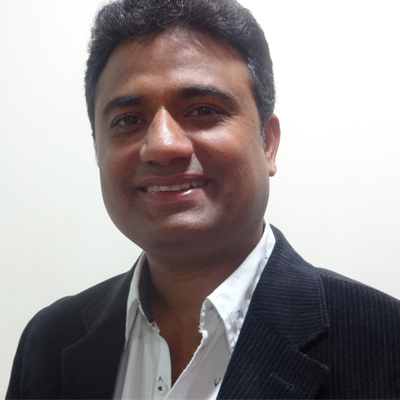
Indigo Consulting appoints Harshad Hardikar as COO
MUMBAI: Indigo Consulting which is a part of the Publicis Groupe, announced the appointment of Harshad Hardikar as its new chief operating officer. Hardikar is the former senior VP, e-commerce & CRM at OgilvyOne India.
Hardikar will be working closely with the agency’s managing director Vikas Tandon to help strengthen and grow its business nationally and internationally. Hardikar comes with over 17 years of experience in the industry. He is credited with launching India’s first coalition loyalty programme, iMint (now Payback).
In his previous role as senior VP, e-commerce & CRM at OgilvyOne India, he led the agency’s ecommerce and CRM practice nationally, managing clients’ needs end to end. Prior to this, he worked for Rediff.com, heading the company’s online sales division, Rediffshopping.
Commenting on the latest appointment Tandon said, “FY 2014 has been a great year for us, we are once again ready to shift to a higher gear. Not only are we seeing great organic growth, our international business as a regional COE for Leo Burnett Asia Pacific is seeing phenomenal traction. From a service bouquet point of view, after establishing our Mobile and Social practices, we are now investing in e-commerce and CRM capabilities. This is the ideal time for Indigo Consulting to expand its top management and leadership team. Harshad’s blend of expertise in our focus areas, and experience in driving revenues and P&L is exactly what we need to fuel and drive our journey in the next gear. I am very excited to have him on board and look forward to working with him in scaling up the company.”
Hardikar added, “I am very happy to become a part of this large family. Indigo already is a company with a great reputation and highly respected for their creative and technology capabilities. What really attracted me in this opportunity is the vision Vikas has, to grow this company further. I am sure with my experience of managing 360-degree digital work; I will be able to contribute to a greater success for this company.”
In addition to Hardikar’s appointment, the agency has also roped in Rimjhim Ray as AVP strategy and client services and Hanisha Vaswani as business head for the agency’s Delhi office.
At her previous stint at Edelman, Vaswani was responsible for devising brand building, content, and engagement strategies for clients such as HP, GM, GE, Shell, Juniper Networks, and the 1st Indian Grand Prix. At Indigo Consulting, she will be responsible for bringing in new business as well as managing the existing accounts of the agency’s Delhi office.

MAM
AI could unlock billions for India’s $30 billion media industry, says JioStar vice-chairman Uday Shankar
JioStar vice-chairman urges industry to seize once-in-a-generation AI moment to turn India into the world’s creative capital
DELHI: India’s media industry stands at a historic inflection point. Artificial intelligence, long discussed as a technological disruptor, could now become the lever that propels the country from a domestic content giant to a global creative powerhouse.
Delivering the keynote at the IndiaAI Impact Summit, Uday Shankar argued that AI offers India a once-in-a-generation opportunity to lead, not follow, in global media and entertainment.
Shankar credited the prime minister’s vision for centring India’s growth agenda around AI and described the summit as overdue . Drawing on three decades in media, he traced the industry’s transformation from the arrival of the first newsroom computers to the launch of India’s earliest digital platforms, each wave of technology reshaping speed, scale and audience engagement.
The numbers tell a story of staggering growth. In just 25 years, India’s media and entertainment sector has expanded from a few billion dollars to become the world’s fifth-largest market, contributing more than $30bn to the economy. Television households have jumped from about 70m to over 210m, with more than 800m video consumers today.
Yet global influence remains elusive. While South Korea exported Squid Game and Parasite to worldwide acclaim, and Puerto Rico produced the most-streamed artist on the planet, India has struggled to consistently break through beyond its domestic and diaspora audiences .
The constraints are structural. Hollywood studio productions command budgets of $65m to $100m, with tentpoles running as high as $300m. The average Indian film operates on $3m to $5m . A marquee US television episode can cost $20m to $30m; an Indian serial is typically produced for Rs 7 lakh to Rs 10 lakh per episode, roughly $10,000. The capital gap, Shankar argued, has narrowed ambition and limited global competitiveness.
AI, he said, changes the equation by rewiring the three pillars of the industry: content, consumer and commerce.
On content, AI-powered production is collapsing infrastructure costs and accelerating timelines. At JioStar, the company recently produced Mahabharat: Ek Dharmayudh, a 100-episode live-action series delivered three to five times faster than a traditional production pipeline. The implication is stark. The remaining constraint is no longer capital, but imagination.
On consumers, AI enables conversational discovery, interactive storytelling and regionalisation that goes beyond simple dubbing to reflect India’s linguistic texture. On commerce, it unlocks granular segmentation and dynamic pricing, moving beyond the blunt instruments of subscription and advertising that have defined the industry for a century.
The prize is vast. The global media market, currently worth nearly $3trn, is projected to reach $3.5trn by 2029. India’s share remains under 2 per cent. Even a shift to 5 per cent would generate tens of billions of dollars in additional value.
But Shankar cautioned that opportunity does not guarantee outcome. He called for three commitments: self-disruption before external disruption, aggressive skilling to create AI-native creative hybrids, and policy frameworks that accelerate rather than constrain innovation.
Hollywood’s defensive posture towards AI, he suggested, offers India a rare window to design the business models and regulatory frameworks that could set global precedents. The shift in advantage, he argued, favours nations with deep cultural reservoirs and massive audiences.
The question is no longer whether India can lead in the AI age of media, he concluded, but whether it will move fast enough to claim that position.
The stories were always here. Now the technology has caught up.