GECs
Media can be the most exciting “Made in India” story of the next decade, says Star India COO Sanjay Gupta

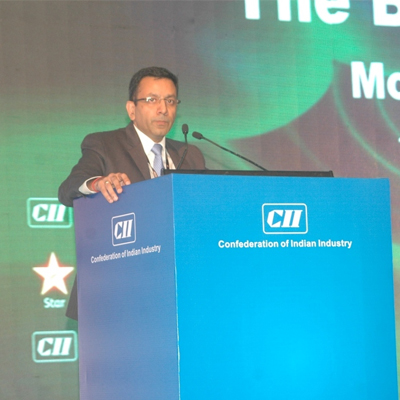
MUMBAI: Amid India’s steadfast focus on economic growth, the Media & Entertainment has the potential to serve as the country’s key engine of growth, both socially and economically, if the government unlocks its true potential by giving the industry the policy priority it deserves, Mr. Sanjay Gupta, Star India COO, said at the inaugural session of the CII Big Picture Summit 2014.
The two-day summit will deliberate on this year’s theme “Monetizing Strategies: The Tryst for a USD 100 billion Indian M & E Industry” by the end of this decade.

Delivering the theme address at the summit, one of the most influential platforms that brings together the industry and policy makers to discuss issues critical to the Industry, Mr. Gupta said that the industry needs some changes in outlook and policy to keep growing and continuing to make a strong social impact.
“The Indian media industry is the biggest in the world by output — over 500,000 hours of television content, 80,000 newspapers published daily, 1,600 feature films each year,” Mr. Gupta said. “With 98% of this output being conceptualized, shaped and produced in India… and very often exported to various parts of the world, very few industries can claim this extent of indigenous creation,” he said.
He said the industry has tremendous positive impact on society too. “We all know the impact of the M&E sector is not just economic. Years ago, the University of Chicago did a study across a large number of villages in India. They were trying to understand the impact of satellite television. Their results were startling. Within 2 years of cable TV coming to town, women were less likely to tolerate domestic violence, less likely to prefer sons over daughters, and more inclined to enrol their girls in schools. The power of this sector is in its ability to inspire imaginations.”
Mr. Gupta said that in spite of such economic impact and positive societal change and growth, the sector is not taken seriously as a growth engine. “Despite growing at 3 times GDP consistently for the last few years, despite employing 6 million people, despite being a 90,000-crore industry… what can be a uniquely ‘Made in India’ story is being ignored,” Mr. Gupta said.
He felt there are two reasons why the media and entertainment industry is not really seen as a growth engine or as an exciting part of the Made in India story.
“The biggest reason is that many successive governments have seen it as just a vehicle of glitz and glamour or … through the narrow lens of a very small and hyper-critical news sector,” he said. Therefore issues that are intrinsic to unlocking growth in this sector are either misunderstood or deprioritized, or both.”
Examining the case of digitization and pricing, Mr. Gupta felt that the debate around Digitization seems to have come down to issues such as LCO problems in making the shift … or how important it is to get the boxes manufactured in India. “In reality, the real issue is whether we are serious about creating an enabling framework for delivery of content that will dramatically increase diversity of content and boost creativity.”
On the second important issue of pricing, Mr. Gupta lamented that the “…price control and regimentation (in the M&E sector) reminds us of an era that we have put behind us. The biggest victim again is growth because keeping prices controlled in a market where consumers are demanding a lot more and willing to pay a lot more, only means that the sector is starved of the investment resources it needs to fuel growth,” he observed
Mr. Gupta felt that to continue to script the best ‘Made in India’ story, the M&E industry also needs to look within. “The problem lies with us too.”
He elaborated that the strong increase in production volumes need to be accompanied by a consistent increase in quality for which “we have always set the bar too low.”
In his view, “our films need to create a truly global market for our creative work” and that channels and producers should try to be more innovative and original in their dramatic content. On the digital pipeline of delivery for TV content, Mr. Gupta felt that the industry needs to rise above the myopic view that clips shot by TV will suffice as long as they are made available online. He emphasized that the business of shaping content requires shaping each part of the ecosystem including applications and middleware.
Mr. Gupta also brought up the “serious issue of talent”, saying there was a “real crisis on both supply and quality,” and the need to recognize the scale of the talent challenge for the sector. Actively finding the right talent and building the right skills, with stronger discipline than seen at present, where “we hide under the pretense of creativity … to be informal and chaotic”, are needs of the hour.
“How can we aspire to be a $100 billion industry, if we ourselves have not raised the bar on what we create and how we shape the agenda for this sector?” Mr. Gupta exclaimed.
“The possibilities are immense. And underlining the opportunity is a uniquely Made in India story – the Indian media and entertainment sector – that can excite and shape the world if we are alive to the possibilities,” he concluded.






GECs
Asianet Television Awards 2026 celebrates women power in Malayalam TV
“She is the Colour” theme honours icons as ceremony airs on March 14 and 15 at 7 PM.
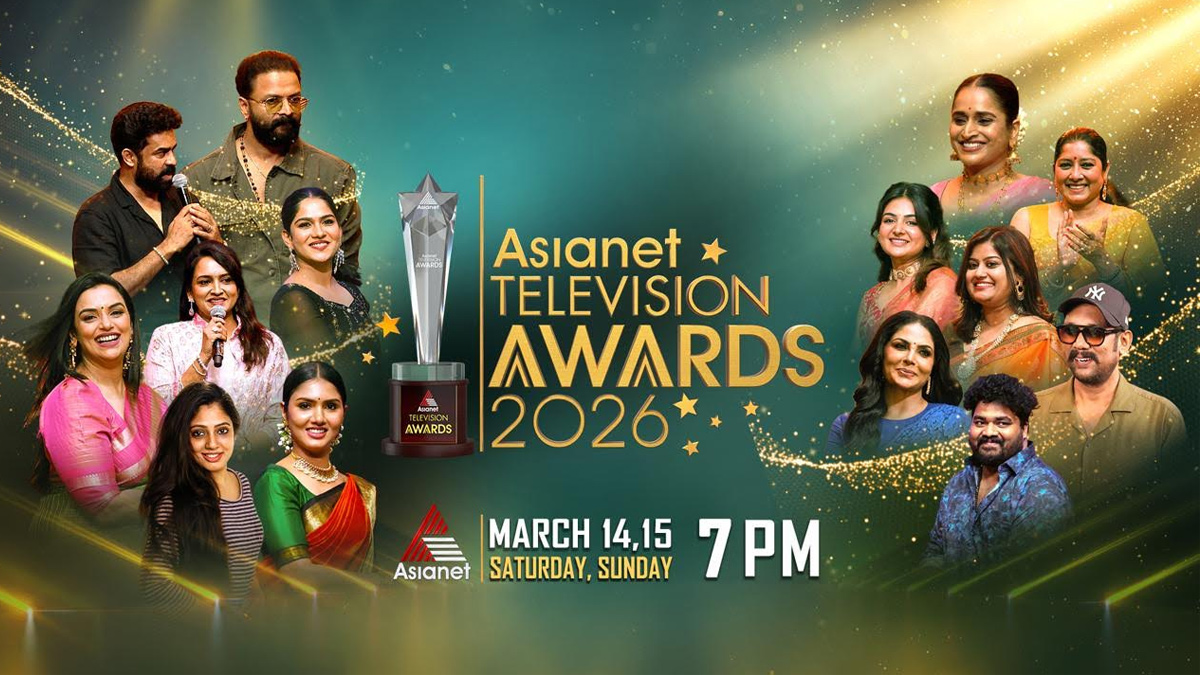
MUMBAI: If television lights up living rooms, this year Asianet decided to let women provide the colour. The Asianet Television Awards 2026 turned the spotlight firmly on women empowerment with the theme “She is the Colour”, celebrating the strength, resilience and achievements of women who continue to shape society and the Malayalam entertainment industry.
The ceremony honoured several distinguished personalities whose journeys have left a lasting cultural imprint. Among them was legendary playback singer Vimala Varma, widely recognised as the first Malayalam playback singer. The evening also paid tribute to Padma Shri awardees Devaki Amma and Vimala Menon for their exceptional contributions in their respective fields.
Leading women from the Malayalam film industry were also recognised during the event, including actor Shweta Menon, who currently serves as president of the Association of Malayalam Movie Artists, and National Award winning actor Surabhi Lakshmi.
The awards ceremony brought together a glittering lineup of actors and industry figures, including Jayasurya, Vijay Babu, Asha Sarath, Lena, Esther Anil, Anumol, Akhila Bhargavan, Sarayu Mohan, Prajod Kalabhavan, Gayathri Suresh, Sabumon Abdusamad, Swasika, Tini Tom, Sijoy Varghese, Kailash, Veena Nandakumar, Sabareesh Varma, Ansiba Hassan and Dinesh Prabhakar. Kishan Kumar, executive vice president Malayalam at JioStar, was also present at the event.
Beyond individual recognitions, the awards celebrated excellence across Malayalam television, acknowledging artists and technicians whose work continues to drive the industry forward.
The evening also offered plenty of spectacle, with elaborate dance performances, stunt acts and comedy skits performed by popular television and film personalities, turning the ceremony into a full fledged entertainment showcase.
Viewers will get to watch the celebrations when the Asianet Television Awards 2026 air on Asianet on March 14 and 15, Saturday and Sunday, from 7 pm onwards, bringing the star studded tribute to homes across Kerala and beyond.