Connect with us

MAM

Dept. of Consumer Affairs and ASCI join hands

Published

on

MUMBAI: Strengthening its mission towards self-regulation in advertising, Department of Consumer Affairs (DoCA), of the Ministry of Consumer Affairs, Food & Public Distribution, has partnered with Advertising Standard Council of India (ASCI) to augment the efforts on stopping misleading advertisements.


The collaboration will see joint efforts to evaluate and pass strictures against the violators. The six priority sectors that would be covered are: agriculture and food, health, education, housing, financial services and e-commerce.

Advertisement


DoCA will redirect the complaints received by it to ASCI to avoid duplication of processing of complaints against advertisements that is already under process by ASCI. The complaints will be evaluated across media like print, packaging, internet, outdoor, wall paintings, posters, bill boards, etc.


Advertisement

Commenting on the partnership, DoCA additional secretary G Gurucharan said, “The problem of misleading advertisements and the consequent unfair trade practices that arise is widespread – across sectors, mediums and geographies.  DoCA’s effort is to build a coalition of stakeholders to combat this menace – partnering with ASCI is an important step.”


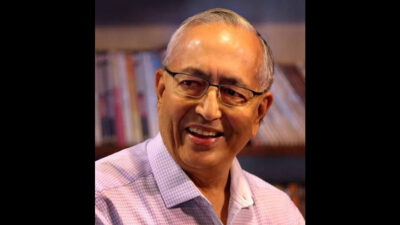
ASCI chairman Narendra Ambwani added, “It’s a moment of pride for ASCI to have received such support from DoCA. Earlier our work has been recognised by various government bodies like Ministry of Information and Broadcasting (MIB), Medical Council of India (MCI) etc. It’s highly motivating to see such developments and this partnership has widened ASCI’s scope for complaints.”

Advertisement


While the operational aspects of this collaboration between DoCA and ASCI is being worked upon, DoCA has requested ASCI to flag off  advertisements that are in clear violation of the law (e.g. claims regarding cure of diseases such as diabetes, cancer, sexual impotence, leucoderma (white spots), paralysis etc. covered under the Drugs and Magic Remedies Act). This would enable prompt action against such non-scrupulous advertisers and protect consumer interest.


 

Advertisement
Click to comment

Leave a Reply

Your email address will not be published. Required fields are marked *

Digital

Ethical AI must benefit society, not dominate it, says WFEB chief Sanjay Pradhan at IAA event

At Mumbai event, ethics expert urges businesses and governments to shape AI responsibly

Published

on

MUMBAI: Artificial intelligence may be racing ahead at lightning speed, but its direction must still be guided by human conscience. That was the central message delivered by Sanjay Pradhan, president of the World Forum for Ethics in Business (WFEB), during the latest edition of IAA Conversations held in Mumbai.

The session was organised by the International Advertising Association (IAA) and the Artificial Intelligence Association of India (AIAI) in association with The Free Press Journal at the Free Press House on 7 March. Addressing a packed audience, Pradhan called for stronger ethical leadership to ensure AI remains a tool that benefits humanity rather than one that governs it.

“Artificial intelligence has rapidly become one of the most powerful technologies humanity has created,” Pradhan said. “It is unlocking breakthroughs in medicine, science and creativity at a pace unimaginable just a few years ago.”

Advertisement

But he warned that the same technology carries serious risks. AI, he noted, can amplify disinformation faster than facts can travel, compromise privacy, deepen discrimination and disrupt millions of livelihoods. Referencing concerns raised by AI pioneers such as Geoffrey Hinton, often called the godfather of AI, Pradhan stressed that the real challenge is not whether AI will shape the world, but whether humans will shape it with ethics and wisdom.

Structuring his talk around four guiding questions, why, what, how and who, Pradhan introduced the audience to WFEB’s emerging AI Ethics Partnership, a global platform aimed at advancing responsible artificial intelligence. He outlined four priority concerns that demand urgent attention: disinformation, bias and discrimination, data privacy and job security.

To make the idea of ethical AI easier to grasp, Pradhan offered a simple metaphor. Ethical AI, he said, is like a three layered cake. The outer layer represents the visible value ethical AI creates for businesses and society. The middle layer is organisational culture that moves ethics from written codes to everyday practice. The innermost layer, however, is the most crucial, the conscience of individual leaders.

Advertisement

Drawing from Indian philosophical thought through WFEB co-founder Ravi Shankar, Pradhan noted that while artificial intelligence can reproduce stored knowledge, true intelligence is boundless and rooted in conscience, creativity and compassion. Practices such as breathwork and meditation, he suggested, can help leaders develop the calm clarity needed for ethical decision making.

The event also featured a discussion with Maninder Adityaraj Singh, chief of staff and head of innovation at Rediffusion Brand Solutions Pvt Ltd, and Yash Johri, lawyer, Supreme Court of India.

Opening the session, IAA India chapter president Abhishek Karnani, highlighted the need for industries to understand and engage with AI responsibly.

Advertisement

“AI has to be befriended and understood,” added Rediffusion managing director and AIAI national convenor Sandeep Goyal. “Its ethical use will determine whether it becomes a friend or a foe.”

As AI continues to reshape industries and societies, Pradhan ended with a simple but powerful call to action. Businesses, governments and individuals must work together to ensure that the algorithms shaping the future reflect human values rather than just cold logic.

Advertisement
Continue Reading

Advertisement News18
Advertisement All three Media
Advertisement Whtasapp
Advertisement Year Enders

Copyright © 2026 Indian Television Dot Com PVT LTD

This will close in 20 seconds

×