Hindi
Poster of ‘Detective Byomkesh Bakshy!’ launched in Kolkata

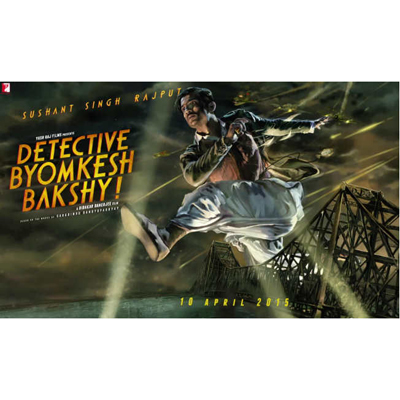
KOLKATA: Director Dibakar Banerjee along with his lead actor, Sushant Singh Rajput, released the first look poster of the upcoming film Detective Byomkesh Bakshy! at the Great Eastern Hotel in Kolkata (now The Lalit Great Eastern Hotel).
The film Detective Byomkesh Bakshy! is set in the back drop of World War 2 and it captures the Calcutta (now Kolkata) of that time. The motion poster was also released as a fitting tribute to a World War II air-raid in the war-torn history of Kolkata.
Detective Byomkesh Bakshy! is an upcoming Hindi crime thriller film directed by Dibakar Banerjee and produced by Aditya Chopra in association with Yash Raj Films and Dibakar Banerjee Productions. The film is based on the detective character Byomkesh Bakshi created by the Bengali writer Sharadindu Bandyopadhyay and the film is titled ‘Detective Byomkesh Bakshy’ to make it more contemporary. The film stars Sushant Singh Rajput, Anand Tiwari and Swastika Mukherjee in principal roles. The film is scheduled for release on 10 April 2015.
Dibakar Banerjee told the media, “In late 1942 and early 1943, Calcutta was the last frontier of the British Empire, holding out against the Japanese invasion of Asia. As Japanese bombs were falling on Calcutta dockyard, around The Great Eastern Hotel, history was being created and Calcutta stepped on to the world stage. It’s right here that Byomkesh’s first adventure catapulted him from anonymity to dangerous fame. I can’t imagine a more fitting place to launch the first look of Detective Byomkesh Bakshy! than this hotel and right on this day in 1942, this would have been full of chaos and mayhem as bombs fell around it seventy years ago!”
Shooting for the film began in early 2014, and ended in May 2014. A part of the movie has been shot in Kolkata and Mumbai. Some scenes were shot in an abandoned mill in Mumbai’s Byculla region.
“Shooting locations of the film in Kolkata was finalized in February 2012. Shooting did take place in Lalbazar, Presidency University, Coffee House and Bow Barracks. The cast was shooting for the film in Agarpara in January 2014,” said a cast member.
Dibakar Banerjee has paid attention to every detail and he further said that every aspect of his film brings back the bygone era.
“The planes seen on the poster of the film are the exact replica of the real Japanese planes which were used during the bombing in 1943. The planes at that time looked very different from the way the planes look today. Japan had done an aerial bombing attack on Calcutta and this is the central theme of the film,” he concluded.