iWorld
“No matter the platform, if the music is good, it will be recognized”: Music composer Dhruv Dhalla

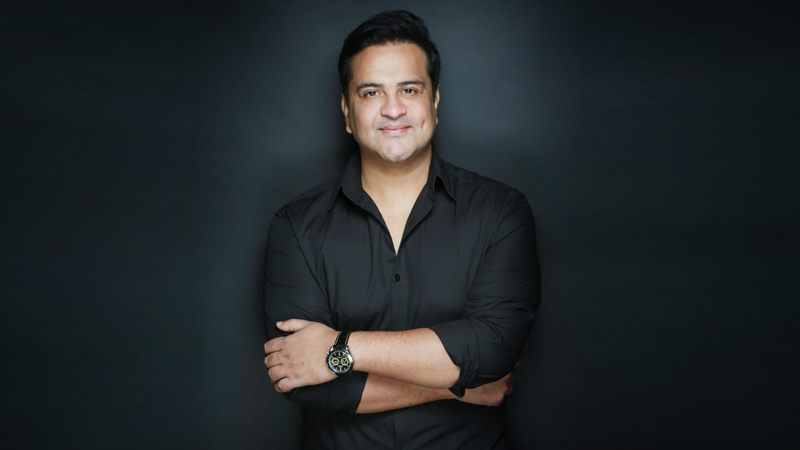
Mumbai: Music has the power to transcend boundaries and evoke emotions like no other art form. And among the sea of music composers, Dhruv Dhalla epitomizes this with his illustrious journey in Bollywood.
From his humble beginnings in a business class family to becoming a powerhouse in the Indian film music industry, Dhruv’s journey is nothing short of inspiring. With unforgettable contributions to iconic films like ‘Khosla Ka Ghosla’ and ‘Oye Lucky, Lucky Oye,’ Dhruv’s illustrious career has left an indelible mark on the industry. His recent collaboration with Dharma Productions for the upcoming film ‘Mr and Mrs Mahi’ promises to once again enchant audiences with his soulful melodies.
Indiantelevision in conversation with Dhruv Dhalla talked about various topics, from his journey to collaborating with international artists and navigating feedback and criticism, and more…

Edited Excerpts:
On your journey in the music industry so far
I consider myself very fortunate to have started my career as a composer in the film industry with Dibakar Banarjee. His knowledge of film and music was a masterclass, and both my films with him – Khosla Ka Ghosla and Oye Lucky Lucky Oye – were amazing experiences.
Bollywood is not for the faint-hearted. It’s a rollercoaster ride with some highs and a lot of lows. I realised that the idea is to keep working and not let failure be a deterrent. Patience and persistence will eventually be rewarded.
On your collaboration with Dharma Productions for “Mr and Mrs Mahi,” and what can audiences anticipate from the soulful melody by Kavita Seth
I had composed a song a while back and called Kavita Seth for the recording as a demo track. After she sang it, Kavita ji told me to pitch the song to a big film or production house. She was instrumental in making me believe that this song deserved a big canvas. And as luck would have it, it reached Dharma Productions and got selected. It’s a very soulful song, beautifully rendered by Kavita Seth and written by Devender Kafir. I really hope it touches the right chord and emotions with people.
On your insights on the multifaceted impact of AI in music composition, balancing its potential as a creative tool with ethical considerations surrounding copyright, ownership, and artistic integrity
I would consider AI as a tool, just as we use music software and technology for composing and production. Art in any form is a combination of feelings, emotions, and passion. It needs to have a human touch; otherwise, it’s mechanical.
Creating music through AI can be interesting, but it needs a human brain and heart to guide it. Otherwise, music all over the world would start feeling and sounding similar, which is not the point of any art form.
On perceiving bilingual collaborations like Shreya Ghoshal’s “Guli Mata,” which involve international artists, and do you aspire to engage in similar endeavors
Artist collaborations are always interesting. The cultural blends always have a fresh mix. I’m working on a concept of creating Western music, with Western symphonic production, yet giving it a hint of our flavor. In the universal language of music, anything is possible!
On navigating feedback and criticism, both positive and negative, within your creative process
Negative criticism is what one needs to look out for. That’s where change and growth come. It’s okay to be praised for something good, but the challenge is to accept, re-learn, and start again. A fresh start is hard, but that’s where I, as an artist, have learned and discovered more. That’s where one gets better.
On the advice that you would impart to aspiring composers seeking entry into the Bollywood music scene
It’s a great space for young and upcoming composers. They do not need Bollywood or films to make a mark anymore. Social media, reels, YouTube are as big platforms as any. And they come without defined boundaries and references. You’re free to express as you like. I would advise the younger musicians to explore this space and create as much as they can. No matter the platform, if the music is good, it will be recognized.
On envisioning the future of the music industry, anticipating its trajectory
I feel the future of the music industry will be technology-driven. Songs will be seen more than heard. Ten to twenty-second reels have already shortened the attention span of the brain. Gratification will be delivered faster, and music will be consumed more than it needs to be felt.




Gaming
India’s broadcasters say no to Fifa World Cup 2026
Fifa has slashed its asking price by 65 per cent but India’s broadcasters are still not buying
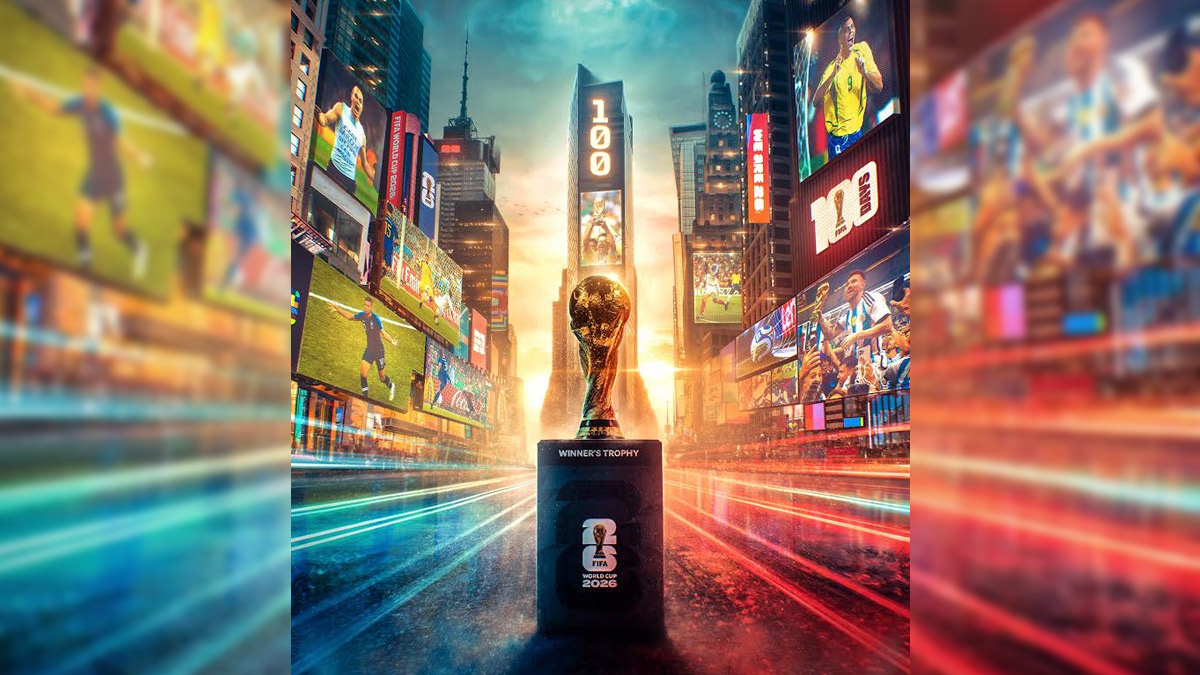
MUMBAI: The world’s biggest sporting event cannot find a single taker in the world’s most sports-mad nation. Fifa’s television rights for the 2026 World Cup remain unsold in India, and the clock is ticking loudly.
To shift the property, world football’s governing body has already swallowed hard and cut its asking price from $100m to $35m, bundling in the 2030 edition as a sweetener. It has not worked. Indian broadcasters have looked at the offer, done the sums and quietly walked away.
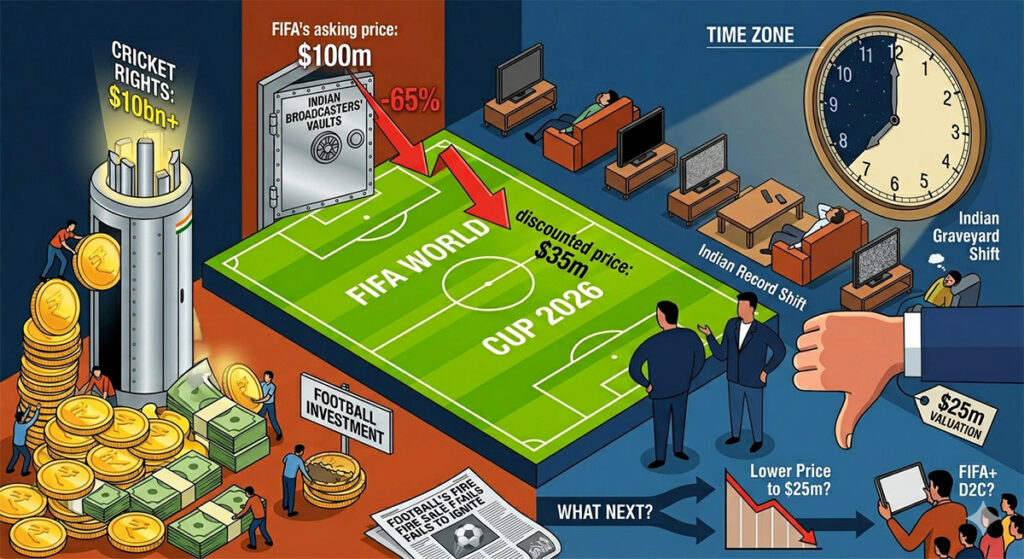
The reasons are brutally simple. The 2026 tournament, co-hosted by the United States, Canada and Mexico, kicks off in a time zone that turns India’s primetime into a graveyard shift. Most matches will air between midnight and 7am IST, a scheduling catastrophe for advertisers chasing mass reach. The 2022 Qatar edition was a gift by comparison, with matches dropping neatly into Indian evenings. North America offers no such luxury.
The market itself has also changed beyond recognition. The merger of Star India and Viacom18 into JioStar has gutted the competitive tension that once sent sports rights prices soaring. Where rival bidders once slugged it out, there is now a single dominant buyer, and it is in no hurry. JioStar has valued the rights at roughly $25m, a full $10m below Fifa’s already-discounted floor price. That gap has so far proved unbridgeable.
Broadcasters are also nursing a ferocious cricket hangover. Between 2022 and 2023, Indian media houses committed well over $10bn to cricket rights alone, covering IPL, ICC events and BCCI domestic fixtures combined. After a binge of that scale, appetite for a football package that delivers a fraction of the ratings, in the dead of night, is close to zero.
The economics of football broadcasting make the maths even harder. Cricket, with its natural breaks every few overs, is an advertiser’s paradise. Football offers a 15-minute halftime and precious little else. Recovering a nine-figure rights fee from a single half-hour ad window is a stretch at the best of times. These are not the best of times: the Indian government’s tightening grip on real-money gaming and gambling advertising has vaporised a category that once underwrote the economics of big sporting events.
Nor is the World Cup an anomaly. Indian Super League valuations have cratered. English Premier League rights have softened across successive cycles. The cooling of football as a broadcast commodity in India is structural, not cyclical.
With the tournament opening on 11th June, Fifa is running out of road. It may yet blink and meet JioStar at $25m. Or it may go direct, streaming the entire tournament on its own platform, Fifa+, or cutting a digital deal with YouTube, and hoping that a generation of Indian football fans finds its way there without a broadcaster to guide them.
Either way, the beautiful game’s Indian chapter is looking decidedly ugly.







