I&B Ministry
States asked to involve community radio stations in disseminating info on govt policies

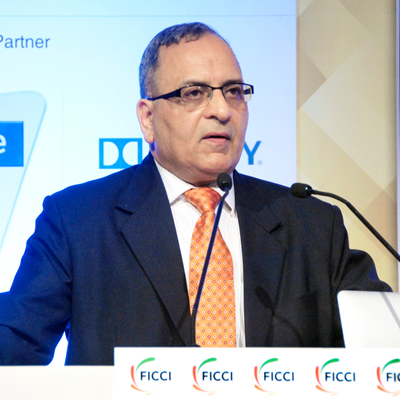
NEW DELHI: District magistrates of Indian states have been asked to proactively involve community radio stations in the dissemination of information regarding government policies.
A communication on the same will be sent across to District Magistrates soon. The move is a part of steps that are being taken to facilitate the enhanced role of CRS stations at the state level.

Addressing the closing session of the fifth Community Radio Sammelan, Information and Broadcasting secretary Bimal Julka said that appropriate directions would be issued to the Directorate of Advertising and Visual Publicity to address all important issues including the enhanced presence of the medium across the media plans concerning the Central Government ministries and departments.
Julka assured participants of the Sammelan that the inputs and suggestions given during the three-day workshop would be included in the future policy planning and deliberations of the Ministry.
Regarding operational issues being faced by the stations, Julka said that the Ministry had been involved in discussions with concerned stakeholders at appropriate forums including the Inter-Ministerial Committee of CRS Stations.
He said the Sammelan convened by the Ministry provided critical inputs for harnessing the potential of the medium. As a medium, CRS stations led the way in facilitating interactive platforms amongst the community enabling an opportunity for the local communities to highlight their success stories and learn from each other. As an outreach tool, the medium played an important role in facilitating information on key flagship schemes of the government namely ‘Swachh Bharat Abhiyan’, ‘Beti Bachao. Beti Padhao’ and ‘Jan Dhan Yojna’ amongst others.
Julka also said that the objective was to ensure high trajectory of growth. He added that Community Radios not only made people aware about their rights and entitlements but acted as an important tool for empowerment of masses especially women and marginalized communities. As a platform, it encouraged the local youth to mainstream their talents. As a medium of communication, the CR Stations also promoted and acted as a repository of local folk songs and culture. The repository of rich heritage showcased across CR stations reiterated the diversity of the country in a language and form understood by the people.

I&B Ministry
MeitY & Reliance Foundation launch e-SafeHER cyber training for Women
Programme aims to train one million rural women in cyber safety over three years
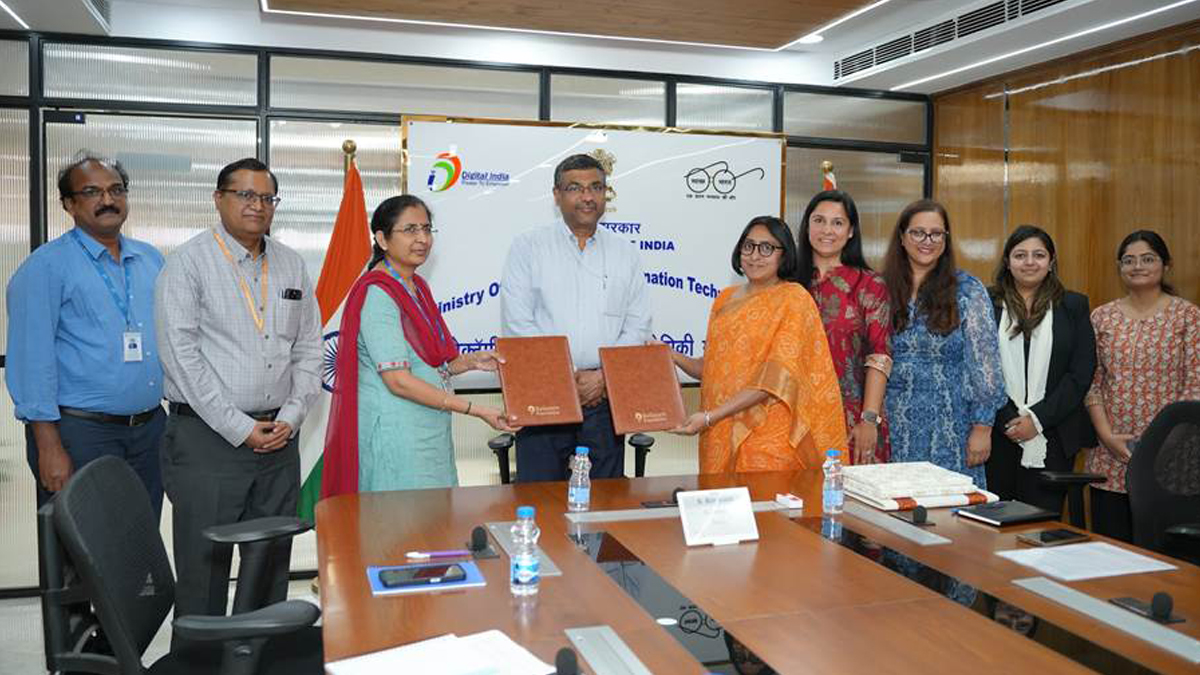
NEW DELHI: The Ministry of Electronics and Information Technology has partnered with Reliance Foundation and C-DAC Hyderabad to launch ‘e-SafeHER’, a nationwide cyber security awareness programme aimed at empowering one million women across rural India.
Anchored under the Information Security Education and Awareness Programme, the initiative will focus on building digital confidence and safe online practices among women who are increasingly using digital platforms for financial transactions, livelihoods and essential services.
The programme will be rolled out through a community-led model, with training delivered via women’s self-help groups and grassroots networks. C-DAC Hyderabad will develop and localise training content, while Reliance Foundation will drive on-ground implementation using its rural outreach platforms.
Speaking on the launch, Ministry of Electronics and Information Technology secretary S Krishnan said, “e-SafeHER is an exciting opportunity to bring together knowledge and collaboration to build a cyber secure Bharat. Through this initiative, women from even the remotest regions will be empowered to participate safely in the digital ecosystem.”
Echoing this, Reliance Foundation director Isha Ambani said the initiative aims to equip women with the skills needed to navigate the online world safely. She added that the goal is to enable one million “Cyber Sakhis” who can confidently adopt digital tools to improve their lives and livelihoods.
The programme will begin with pilot training in Madhya Pradesh and Odisha, before scaling nationwide through a phased approach. It will use multilingual content, audio-visual modules and blended learning formats to ensure accessibility and engagement.
Designed for long-term impact, e-SafeHER will be integrated into existing digital literacy and women’s empowerment programmes, avoiding the need for parallel infrastructure. The initiative also aims to drive measurable behavioural change, from improved awareness of cyber risks to safer digital transactions.
By combining policy, technology and grassroots reach, the programme looks to bridge not just the digital divide, but the digital safety gap, ensuring that inclusion goes hand in hand with security.







