News Headline
Govt. bows to votaries of free social media, withdraws controversial draft on Encryption Policy
NEW DELHI: Following protests by votaries of a free social media, the government today withdrew a draft of an encryption policy, thus exempting mass use encryption products, which are currently being used in web applications, social media sites, and social media applications such as Whatsapp, Facebook, Twitter, etc
In a statement, the Department of Electronics and Information Technology said that it had “noted public sentiments viz-a-viz this draft. It is clarified that the above mentioned draft is not the final view of the Government on the matter.”
The draft had been prepared by a High-level Committee as part of an attempt to ensure secure transactions in Cyber Space for individuals, businesses and Government and prepare a National Encryption Policy.
The statement said the Department had also taken note of the ambiguity in some portions of the draft that may have led to misgivings. “Hence, the draft has been withdrawn and will be put up for consultation after appropriate revision.”
The removal of the draft also amounts to exemptions to SSL/TLS (Secure Sockets Layer/ Transport Layer Security) encryption products being used in Internet-banking and payment gateways as directed by the Reserve Bank of India and SSL/TLS encryption products being used for e-commerce and password-based transactions.
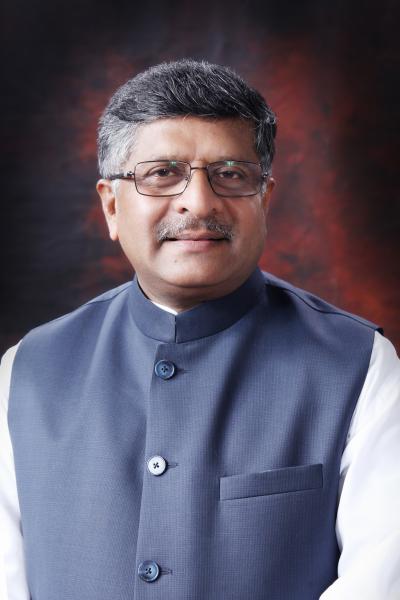
Communications and IT Minister Ravi Shankar Prasad told newspersons that the draft was not the final view of the government. “The policy will consider the views of the public,” he said.
Under the draft, which has now been withdrawn, every message that is sent through e-mail, Whatsapp or SMS was required to be stored in plain text format for 90 days from the date of transaction and made available to the law enforcement agencies on demand.
The draft was to help introduce a New Encryption Policy under Section 84A of the Information Technology Act, 2000, and had called for public comments by 16 October.
The stated mission of the policy is to provide confidentiality of information in cyber space for individuals, protect sensitive or proprietary information, ensure reliability and integrity of nationally-critical information systems and networks.
“Users or organisations within B2B group may use encryption for storage and communication. Encryption algorithms and key sizes shall be prescribed by the government through notifications from time to time… On demand, the user shall be able to reproduce the same plain text and encrypted text pairs using the software or hardware used to produce the encrypted text from the given plain text,” the draft said.

Awards
Hamdard honours changemakers at Abdul Hameed awards
NEW DELHI: Hamdard Laboratories gathered a cross-section of India’s achievers in New Delhi on Friday, handing out the Hakeem Abdul Hameed Excellence Awards to figures who have left their mark across healthcare, education, sport, public service and the arts.
The ceremony, attended by minister of state for defence Sanjay Seth and senior officials from the ministry of Ayush, celebrated individuals whose work blends professional success with a sense of public purpose. It was as much a roll call of achievement as it was a reminder that influence is not measured only in profits or podiums, but in people reached and lives improved.
Among the headline awardees was Alakh Pandey, founder and chief executive of PhysicsWallah, recognised for turning affordable digital learning into a mass movement. On the sporting front, Arjuna Awardee and kabaddi player Sakshi Puniya was honoured for her contribution to the game and for pushing women’s participation onto bigger stages.
The cultural spotlight fell on veteran lyricist and poet Santosh Anand, whose songs have echoed across generations of Hindi cinema. At 97, Anand accepted the honour with characteristic humility, reflecting on a life shaped by perseverance and hope.
Healthcare honours spanned both modern and traditional systems. Manoj N. Nesari was recognised for strengthening Ayurveda’s place in national and global health frameworks. Padma shri Mohammed Abdul Waheed was honoured for his research-backed work in Unani medicine, while padma shri Mohsin Wali received recognition for his long-standing contribution to patient-centred care.
Education and social development also featured prominently. Padma shri Zahir Ishaq Kazi was honoured for decades of work in education, while former Meghalaya superintendent of Police T. C. Chacko was recognised for public service. Goonj founder Anshu Gupta received an award for his dignity-centred rural development initiatives, and the Hunar Shakti Foundation was honoured for empowering women and young girls through skill development.
The Lifetime Achievement Award went to former IAS officer Shailaja Chandra for her long career in public healthcare and governance, particularly in the traditional systems under Ayush.
Speaking at the event, Hamdard chairman Abdul Majeed said the awards were a tribute to those who combine excellence with empathy. “These awardees reflect Hakeem Sahib’s belief that healthcare, education and public service must ultimately serve humanity,” he said.
Minister Seth struck a forward-looking note, saying India’s young population gives the country a unique opportunity to become a global destination for learning, health and wellness by 2047.
The ceremony also featured the trailer launch of Unani Ki Kahaani, an upcoming documentary starring actor Jim Sarbh, set to premiere on Discovery on 11 February.
Instituted in memory of Unani scholar and educationist Hakeem Abdul Hameed, the awards have grown into a national platform that celebrates those building a more inclusive and resilient India. For one evening at least, the spotlight was not just on success, but on service with substance.