Brands
All eyes on Maggi’s relaunch campaign as brand clears lab tests

MUMBAI: If you are a loyal Maggi patron who has been pining for the product’s return to the market, it’s time for a fist pump. ‘The two minute noodles’ have been declared safe for consumption by the testing labs, announced Nestle India on Wednesday. The newly manufactured stocks have cleared all the three lab tests authorised by the Bombay High Court, and Maggi is expected to hit the shelves by this November.
This isn’t good news for just Maggi lovers, but for the company’s investors as well. Since the news was out, Nestle’s share prices saw a surge. As compared to its previous day’s close of Rs 6234.35, the company’s stock was up 12.80 per cent at end of day’s trade on 4 November to close at Rs 6247.15. The stock opened at Rs 6256.85 and touched an intra-day high of Rs 6479 and a low of Rs 6220.80.
The popular FMCG product came under scrutiny after more than permissible amount of lead was found in it, which eventually led to the product being taken off the shelf.

To read more on Maggi’s ban from the market, click here.
But Maggi’s fight to win back its lost reputation, and make up for its absence from the brand space doesn’t stop at government clearance.
The industry’s eyes are trained to see what the brand pulls off on its marketing and advertising front, given that Maggi’s return could be the biggest brand come back of the year.
A precursor to which we saw in a slew of short videos that Nestle recently launched on its official YouTube channel. These managed to evoke nostalgia for the brand, even when the product was off the shelf.
Responding to the many love letters from loyal fans on social media, Maggi released six videos each ending with a ‘Miss You’ message. Conceptualised by McCann Worldwide, which handles Nestle’s corporate campaigns, the campaign instantly grabbed eyeballs with #WeMissYouToo spreading across social media.
In a later interview to a leading business daily, McCann Worldwide India CEO Prasoon Joshi had said that the campaign was an instinctual response to what was being said on Twitter and Facebook.
While Publicis Worldwide remain the creative agency for Maggi, Joshi is heralding the re-launch campaign for the brand.
The campaign may have tugged at the heartstrings of a few, but according RK Swamy Hansa Group chairman and International Advertising Association (IAA) India chapter president Srinivasan Swamy the campaign hit the market “a little late in the day.” Swamy also feels that the campaign was mostly targeted towards opinion makers, and not at the core consumer base of the product, which is a larger number than Twitter and Facebook’s audience.
“I feel that for a FMCG product, social campaign through Facebook may not be adequate. They must employ mass media to engage with their consumers. The audience that they can reach through Twitter and Facebook, is small compared to its huge consumer base,” he says.
Digitally Maggi may have made an effort to remain alive in our memories, but the volume the product lost from the shelves is not going to be regained by a campaign. It is going to be a long drawn out process, where the brand will have to make use of the mass media more aggressively, keeping digital as one of the peripherals, feels Swamy.
And that is precisely what the brand has done with their recent full page ad in a national daily. Meanwhile, the company has been playing up Maggi’s safety.
“Your Maggi is safe, has always been.” – is what the ad reads before it goes on to explain that 3,500 tests conducted in India and abroad by food standards authorities in the US, Canada, the UK, Australia, New Zealand and Singapore have pronounced the noodles as “safe for consumption.”
During the ban, Nestle India lost advertising inventory of about Rs 10 crore due to Maggi recall although they aired commercials of Nescafe or KitKat in all advertisement slots booked for the instant noodles brand. Nestle notified broadcasters and other media houses in India to stop publishing Maggi ads till the next directive is issued.
Nestle India is known for their conservative spends on marketing and advertising. Between 2010 and 2014, Nestlé India’s spending on advertising and sales promotions was between 4.2 per cent and 4.8 per cent of total income. With a powerful and impactful campaign in the queue, market analysts predicts a sea change in their spending in the sector, which may even go up to seven per cent.
While not revealing any figures, Nestlé India’s new managing director Suresh Narayanan, had earlier stated that the company would “spend more on advertising, marketing and promotions across categories to counter impact on sales caused by the Maggi ban.”
“They have to spend more on marketing and advertising if they even attempt to relaunch the product,” says BBH India CEO Subhash Kamath. “The brand has been off air for a while now. They need to come back with a bang and to be more credible and visible to their consumers,” he adds, saying that the company should spend a portion of their marketing spends in the initial phase of the re-launch campaign.
This isn’t the first time that a popular household product needed a comeback campaign after they went off shelf for a period of time. Remember Cadbury Dairy Milk’s come back campaign with Amitabh Bachchan, conceptualised by the maverick ad man Piyush Pandey?
Kamath recollects how Cadbury had re-packaged the product with an extra layer and brought it back to the market to convince its consumers, and how a similar approach may work for Maggi as well. “Credibility is something the brands need to earn, and campaigns can just assist it. Cadbury did a very good job at that time. Maggi will probably have to do the same thing.”
Having said that, going the celebrity way to earn this credibility may not work for Maggi.
“Bachchan Ji had a certain credibility in the eyes of the people at that time. It was possible for him to convince the consumers of the products lost credibility. Consumers today are more skeptical. They wouldn’t buy any product just because their favourite star is selling it. Chances are, Maggi wouldn’t go the celebrity way. They may prefer the testimonials of consumers and facts for their campaign,” opines Kamath.
Incidentally, Bachchan was also one of the endorses of Maggi some years back.
Going ‘bold and confident’ is the only way Maggi can pull this off, opines Grey South and southeast Asia chief strategy officer Dheeraj Sinha, who has also penned the book India Reloaded. “The biggest thing that the consumers will be looking out for in Maggi’s first relaunch campaign is the air of confidence. Their message to the consumers should be emphatic about the fact that they are back. And that should be sufficient,” he says, adding that evoking any more nostalgia and emotions may undo the campaign.
Commenting on the pressure on the products marketing team, Swamy adds, “It is an interesting challenge for the brand marketers and their creative agencies. They must obviously take multiple approaches to strategise this relaunch. I don’t believe that the marketers are sweating under the pressure. I believe they will be closely monitoring the first communique that the brand will put out in the public, and evaluate the same. This is an important re-launch for them and they have to get it right. Irrespective of what the campaigns may say, consumers take a while to respond to these changes.”
It is interesting to note that as per a survey conducted by Airloyal’s GeInsights, 73 per cent of the respondents said that can’t wait to get their hands on a packet of Maggi, while 27 per cent are still a little unsure of its safety.”

However, sample base for the responders form a small section of the product’s total consumer base, therefore whether this survey reflects the true guideline for the campaign is still something to wait and watch for.





Brands
Godrej clarifies ‘GI’ identifier after logo similarity debate
Says GI is not a logo, will not replace Godrej signature across products.
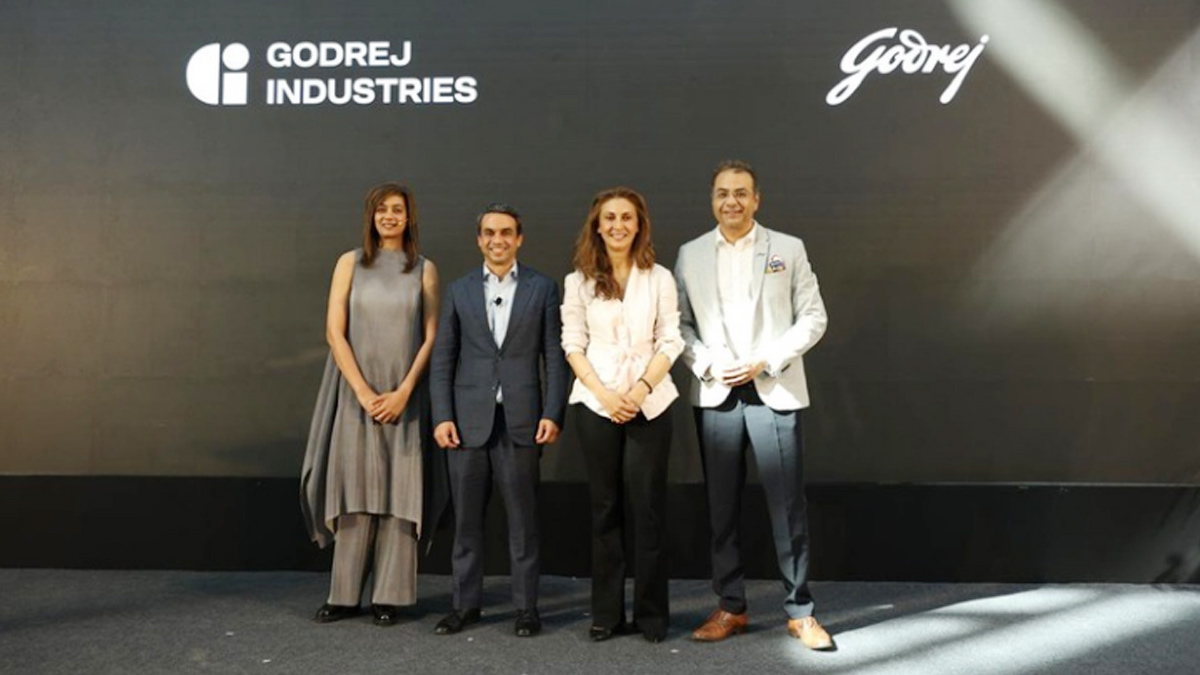
MUMBAI: In a branding storm where shapes did the talking, Godrej is now spelling things out. Godrej Industries Group (GIG) has issued a clarification on its newly introduced ‘GI’ identifier, addressing questions around its purpose and design following a wave of online criticism. At the centre of the debate were two concerns: whether the new mark replaces the long-standing Godrej logo, and whether its geometric design mirrors other corporate identities.
The company has drawn a clear line. The Godrej signature logo, it said, remains unchanged and continues to be the sole logo across all consumer-facing products and services. The ‘GI’ mark, by contrast, is not a logo but a corporate group identifier intended for use alongside the Godrej signature or company name, and aimed at stakeholders such as investors, media and talent rather than consumers.
The need for such a distinction stems from the 2024 restructuring of the broader Godrej Group into two separate business entities. With both continuing to operate under the same Godrej name and signature, the identifier is positioned as a way to differentiate the Godrej Industries Group at a corporate level.
The rollout, however, triggered a broader conversation on design originality. Critics pointed to similarities between the GI mark’s geometric composition and logos used by companies globally, raising questions about distinctiveness.
Responding to this, GIG said its intellectual property and legal review found that such overlaps are common in minimalist, geometry-led design systems. Basic forms such as circles and rectangles appear across dozens of brand identities worldwide, the company noted.
It added that the identifier emerged from an extensive design process and was chosen for its simplicity, allowing it to sit alongside the Godrej signature without competing visually. While acknowledging that elemental shapes may appear less distinctive in isolation, the group emphasised that the mark is part of a broader identity system that includes a custom typeface, sonic branding and other proprietary elements.
Following legal and ethical assessments, the company said it found no impediment to using the identifier, reiterating that the GI mark is a corporate tool not a consumer-facing symbol.
In short, the logo isn’t changing but the conversation around it certainly has.