News Broadcasting
Non-bailable FIR by Mamata Banerjee against Zee News & Sudhir Chaudhary

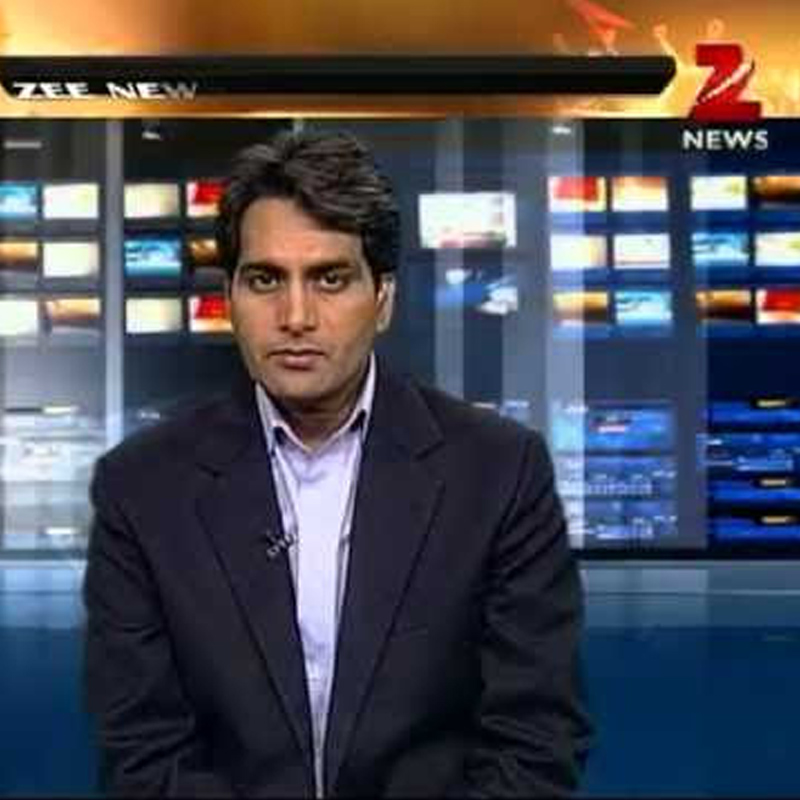
MUMBAI: West Bengal Chief Minister Mamata Banerjee has filed a non-bailable FIR against Zee News and its reporter Sudhir Chaudhary for daring to openly air the communal rampage which took place in her backyard.
Chaudhary wrote on Facebook: “Just to inform all of you Mamta Banerjee Govt has filed an FIR against me and Zee News reporter Pooja Mehta and cameraperson Tanmay Mukherjee for covering Dhulagarh Riots on Zee News. The FIR has non-bailable sections which is enough to gauge their intentions to arrest me and my colleagues. Pooja Mehta is just 25 and got the taste of Mamta’s intolerance so early in life in the form of a non bailable FIR.
The message goes on to say: “This is what a young girl reporter is getting to learn from a woman Chief Minister who claims to be the champion of democracy. It’s another low point in our democracy to see a democratically elected government using police force to curb media in an effort to suppress uncomfortable facts and reality. When you can’t manage media, use the state machinery to conquer the media only to conceal the failures of your administration. It shows the intolerance of a chief minister who is using the state machinery as her personal fiefdom and acting like a feudal lord. I see the positive side of this blunder as a window for all free minds of this nation to act and show fascist forces their actual place. Or will once again Selfish Politics prevail? That’s my fear. #IntolerantMamta”
A few days ago Dhulagarh in Howrah district of West Bengal, located some 30 odd kilometers from the state’s capital was rocked by communal violence. While Hindus of the town were busy with Margashirsha Poornima festivities on 13 December, the Muslims formed a procession, blaring loud music, ostensibly claiming to celebrate Milad-un-Nabi, which actually fell the day before and was a public holiday. A simple request by Hindus to lower the volume of the loudspeakers provoked the Muslims into a frenzy of riot and arson. Hindu homes and shops were set ablaze and scores of Hindus were forced to flee. Locals reported that the Muslims who rioted at Dhulagarh were not locals but had come from outside specifically with the purpose of ousting Hindus. As per news reports, the police party sent to put an end to the riot was stopped by the rioters and bombs were hurled at it.
This is not the first case in recent times of a TV channel getting the axe for reporting the truth. Earlier, it was NDTV India faced a one-day black-out imposed by the Union Government for airing content regarding Pathankot strike that it felt could have aided the terrorists and imperiled the lives of security men and their families.