iWorld
Lose the hate, lose the fear, lose the shame with Voot’s ‘Untag’
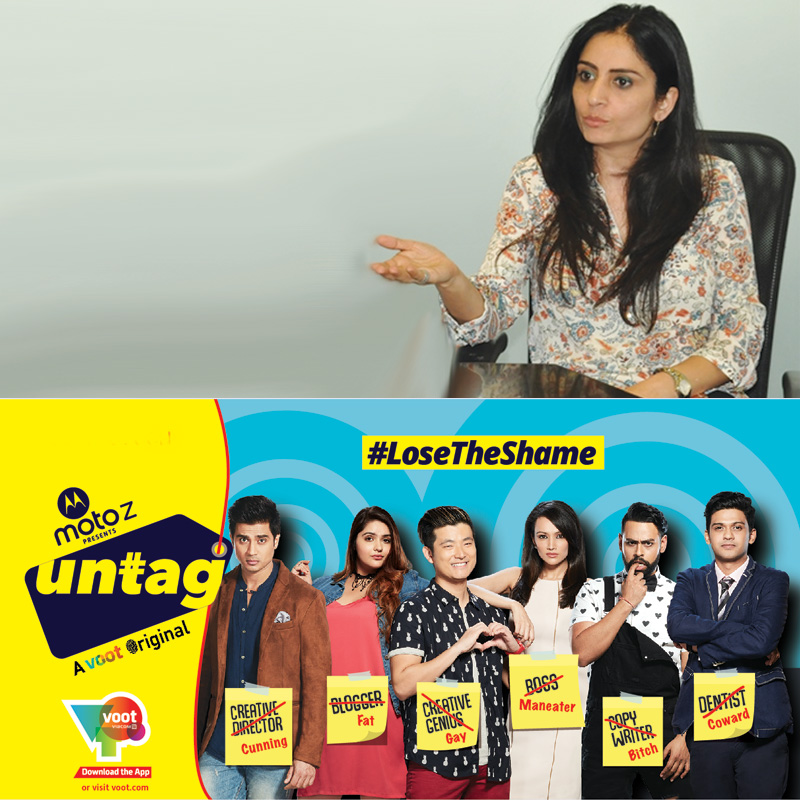
MUMBAI: After the success of its web series It’s Not That Simple starring Swara Bhaskar, Viacom18’s OTT platform Voot has announced another 6-episodic original series. Titled Untag, the series starts today.
The series is presented by Moto Z, and the association with the series goes far beyond just sponsorship as the brand is deeply embedded into the show.
It delves into the lives of regular people with seemingly harmless tags…their dreams, their inhibitions and most importantly their struggles. It gives the audience a fresh and light perspective of six characters, each dealing with their imposed tags, trying to become much more than what the world has labelled them as.
“At Voot, we focus on creating differentiated, yet relatable content that resonates with today’s digital generation. We are glad to announce the launch of our latest Voot Original ‘Untag’ – a story of people living with tags and how it’s important to go beyond such tags that prevent you from becoming the best version of who you are. We are delighted to partner with Moto Z for this series especially because Moto Z’s proposition of ‘Different is Better’ is also the key message that ‘Untag’ wants leave its viewers with,” said Voot head of content Monika Shergill.
The series has a power packed star cast featuring Meiyang Chang (Nischay), VJ Andy (Cyrus) Dipannita Sharma (Anahita), Shiv Pandit (Prithvi), Anjali Anand (Shikha) and Naveen Polishetty (Sumeet).
“We are quite thrilled with this association with ‘Untag’ on Voot. Like the Moto Z with Moto Mods enable you to break away from mundane smartphone usage and make it different by allowing you to transform it in a snap. Similarly, ‘Untag’ is a journey of 6 individuals who are trying to break away from the tags they have received from the society. The show looks really cool and different just like the Moto Z and Moto Mods. And we hope the viewers resonate with the key message of the show – different is better,” Motorola Mobility and Lenovo Mobile Business Group marketing head Rachna Lather.
Untag celebrates friendship, relationships, love and the uniqueness of each of these journeys. It is astory about losing the tags, the labels, the fear and most importantly the shame! It showcases the philosophy of you’re different, you’re better than the tag you’re given.
The series is scripted by Zaheer Shaikh and is directed by Ashima Chibber.

e-commerce
Visa report tracks rise of India’s affluent, experience-led spending
Affluent base doubles to 130 lakh, travel 58 per cent of elite spends.
MUMBAI: In India’s new luxury playbook, it’s less about owning more and more about living better. A new whitepaper by Visa Consulting and Analytics (VCA) maps a decisive shift in India’s affluent economy, where spending is becoming more intentional, experience-led, and closely tied to personal identity rather than pure income growth.
Titled India’s Affluent Economy 2025–2026, the report draws on a Visa-commissioned Yougov study and VisaNet data across travel, dining, retail and lifestyle categories. The headline number is hard to miss: individuals earning over Rs 10 lakh annually have nearly doubled from 69 lakh to 130 lakh, significantly expanding the country’s discretionary spending base.
But it’s not just about scale, it’s about behaviour. As consumers move up the affluence ladder, discretionary categories are taking a larger share of credit card spends, positioning cards as key enablers of premium, lifestyle-driven consumption.
The geography of wealth is shifting too. Affluence is no longer confined to metros such as Mumbai, Delhi and Bengaluru, with cities like Ahmedabad, Surat, Jaipur and Lucknow increasingly mirroring metro consumption patterns.
The report highlights a clear pivot from ownership to access. More than 50 per cent of affluent consumers now use cards for elite memberships, while 7 in 10 are drawn to limited-edition drops and curated collections. Increasingly, luxury is defined by seamless access be it concierge-led travel or curated dining where time saved is as valuable as money spent.
Spending patterns reinforce this shift. Among the ultra-elite, travel accounts for 58 per cent of discretionary spends, far outpacing retail and luxury combined at 28 per cent. Cross-border spending penetration stands at 63 per cent, signalling a growing global outlook among India’s affluent.
Closer home, indulgence is becoming routine. Nearly 4 in 5 affluent consumers dine at premium establishments at least three times a year, while 1 in 4 visit luxury venues more than five times annually. Dining spends are also climbing, with Rs 20,000 emerging as a new entry-level benchmark per experience and Rs 50,000 marking premium territory.
Retail, meanwhile, is becoming more selective. Three in four affluent consumers make a high-end purchase at least once a quarter, while one in four shops premium every two weeks. Luxury retail intensity is also rising, with 2 in 5 consumers spending over Rs 5 lakh annually, and a smaller but significant segment exceeding Rs 10 lakh.
Technology and wellness are carving out new roles in this ecosystem. High-end gadgets now see average spends of Rs 60,000 or more per purchase, while ultra-elite consumers are eight times more likely to visit spas and show five times higher engagement with cosmetic stores than non-affluent groups.
The broader takeaway is structural. Affluent consumers are no longer buying products, they are buying ecosystems. Integrated experiences across travel, dining, wellness and payments are becoming central to how this segment lives and spends.
As India’s affluent base expands beyond metros and aligns more closely with global consumption patterns, the real opportunity lies not just in size, but in speed. For brands, the message is clear: relevance will be defined by how early and how seamlessly, they plug into this evolving lifestyle economy.