AD Agencies
R Scape: Understanding the rural consumer
MUMBAI: Last year the broadcast and advertising industries woke up to the rural television audience with Broadcast Audience Research Council India’s rural inclusive data. Now, as several industry experts have been cited as saying that as the rural market has become extremely important for advertisers as it commands almost half of the total television viewership. Not to mention that with improved internet services and infrastructure in these areas, the need to understand how consumers behave differently in these pockets has become extremely important. Marketers have come to understand that a single brand communication may not work in both urban and rural markets.
With this understanding comes the awareness of how limited our knowledge is of the evolved rural consumers, and how badly marketers need to develop tools to address the change in the landscape.
Keeping that in mind, IIM-Ahmedabad, MaRS Monitoring and Research Systems, Decision Point and the Geometry Global I Encompass Network have done an extensive study of consumer behavior in the rural markets to help marketers come up with new strategies to address new challenges in rural marketing.
Called the R Scape, the study dashboard is able to generate category-level adoption, purchase and consumption-related insights based on inputs such as age, gender and region/ state.
R Scape covers 6,000 rural consumers with near equal split of married men, married women, young men, young women across eight states, which represent all regions across India and over 20 popular categories including deodorant, shampoo, hair oil, lipstick, toothpaste, talcum powder, shaving cream, after-shave lotion, cooking oil, toilet soap, fairness cream, detergent, utensil cleaner, floor cleaner, biscuit, tomato sauce, butter, jam, breakfast cereal, branded aata, shoe, denim, candy, seed, pesticide, banking, life insurance and mutual fund.
As per the study, the rural consumer segmentation needs to be a function of adherence to village norms and urban centricity, which has created strong differentiation among rural married women.
Moreover, rural consumers tend to exhibit lack of brand fidelity attitudinally as well as behaviorally. The biggest divide when it comes to urban and rural consumption is the reason for consumption itself. Hence, the same brand positioning or advertising does not work across both markets. Add to that that rural markets are not homogenous, therefore, reasons to buy and consume categories are often starkly different for consumers from different regions.

AD Agencies
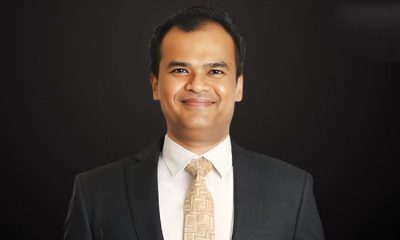
Abhay Duggal joins JioStar as director of Hindi GEC ad sales
The streaming giant brings in a seasoned revenue hand as the battle for Hindi television advertising heats up
MUMBAI: Abhay Duggal has a new desk, and JioStar has a new weapon. The media and entertainment veteran has joined JioStar as director of entertainment ad sales for Hindi general entertainment channels, adding 17 years of hard-won revenue experience to one of India’s most powerful broadcasting operations.
Duggal is no stranger to big portfolios or bruising markets. Before joining JioStar, he spent a brief stint at Republic World as deputy general manager and north regional head for ad sales. Before that, he put in three years at Enterr10 Television, where he ran the north region for Dangal TV and Dangal 2, two of India’s leading free-to-air Hindi channels. The north alone accounted for more than 50 per cent of total channel revenue on his watch, a number that tends to get attention in any sales meeting.
His longest stint was at Zee Entertainment Enterprises, where he spent over six years rising to associate director of sales. There he commanded the Hindi movies cluster across seven channels, owned more than half of north India’s revenue across flagship properties including Zee TV and &TV, and closed marquee sponsorships across the Indian Premier League, Zee Rishtey Awards and Dance India Dance. He also handled monetisation for the English movies and entertainment cluster and the global news channel WION, a portfolio that would stretch most sales teams twice his size.
Earlier in his career Duggal closed what was then a Rs 3 crore single deal at Reliance Broadcast Network, one of the largest in Indian radio at the time, before that he helped launch and monetise JAINHITS, India’s first HITS-based cable and satellite platform.
His edge, by his own account, lies in marrying data and instinct: translating audience trends, inventory signals and client demands into long-term partnerships built on cost-per-rating-point discipline rather than short-term deal chasing. In a media landscape being reshaped by streaming, fragmented attention and AI-driven advertising, that kind of rigour is increasingly rare and increasingly valuable.
JioStar, which blends the scale of Reliance’s Jio platform with the content firepower of Star, is doubling down on its advertising business at precisely the moment the Hindi GEC market is getting more competitive. Bringing in someone who has spent nearly two decades doing exactly this, across some of India’s most watched channels, is a pointed statement of intent. Duggal has spent his career turning audiences into revenue. JioStar is clearly betting he can do it again, and bigger.