News Headline
TRAI seeks industry comments on FM Phase III migration


MUMBAI: The Telecom Regulatory Authority of India (TRAI) has released the consultation paper on the migration of FM radio broadcasters from Phase-II to Phase-III. As part of the consultative process, the stake holders have been requested to offer their comments and views by 17 December 2013.
Accordingly, this Consultation Paper (CP) has been prepared to seek the comments/views of the stakeholders on the date of migration from Phase-II to Phase-III; duration of permission after migration from Phase-II to Phase-III; and the amount of migration fee to be charged from existing operators on their migration from Phase-II to Phase-III.
 |
It also states that in case of counter-comments it may be submitted by 24 December 2013. The Ministry of Information and Broadcasting (MIB) sent a reference dated 9 April 2013, to TRAI seeking recommendations. The clarifications sought by TRAI were provided by MIB by 22 November, 2013.
The highlights of the Phase-III policy for FM Radio broadcast will be the validity of license is 15 years from the date of operationalisation of the Channel (10 years in Phase II); FDI limit have been raised to 26 percent in a private FM radio broadcasting company (from 20 per cent in Phase II); and it also allows the permission holder to carry the news bulletins of All India Radio in exactly the same format (unaltered) on such terms and conditions as may be mutually agreed with Prasar Bharati, no other news and current affairs programs will be permitted under the Policy.

The other salient features of the policy are
– Permission for the channels shall be granted on the basis of Non-Refundable One Time Entry Fee (NOTEF).
– NOTEF shall be arrived at through an ascending e-auction process, on the lines followed by DoT in the auction of 3G and BWA spectrum in the year 2010.
– Reserve Price for new channels in existing FM Phase-II cities, the highest bid price received for that city in Phase-II (Click here for more details); and for new cities, the highest bid price received during FM Phase-II for that category of cities in that region.
– In case the benchmark from Phase-II for a particular region is not available, the lowest of the highest bid received in other regions for that category of cities.
– For new cities in border areas with a population less than one lakh, the reserve price shall be Rs 5 lakh.
– Annual licence fee will be four per cent of gross revenue of its FM radio channel for the financial year or 2.5 per cent of NOTEF for the concerned city, whichever is higher. For the permission holders in the States of North East, J&K and island territories (i.e. Andaman and Nicobar islands and Lakshadweep) – at 2 per cent of gross revenue for each year or 1.25 per cent of NOTEF for the concerned city, whichever is higher, for an initial period of three years from the date from which the annual license fee becomes payable and the permission period of 15 years begins.
-Each applicant will be allowed to own more than one channel but not more than 40 per cent of the total channels in a city subject to a minimum of three different operators in the city.
-No entity will be permitted to hold more than 15 per cent of all channels allotted in the country excluding channels located in Jammu and Kashmir, North Eastern States and island territories.
-Networking of channels will be permissible within a private FM broadcaster’s own network across the country subject to 20 per cent of the total broadcast in a day is in the local language of the city and promotes local content.
– The permission holder is required to follow the Programme and Advertisement Code as followed by All India Radio as amended from time to time or any other applicable code, which the Central Government may prescribe from time to time.
In this phase, about 839 additional channels in about 294 cities across the country are being offered for the auction.
Click here for the full consultation paper







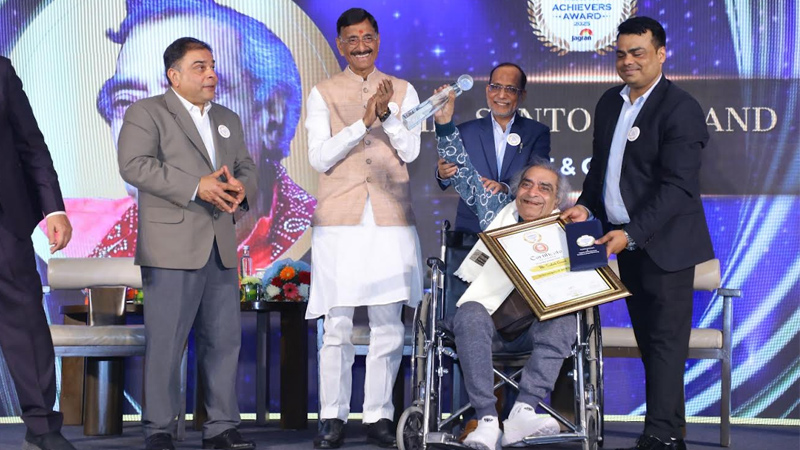
NEW DELHI: Hamdard Laboratories gathered a cross-section of India’s achievers in New Delhi on Friday, handing out the Hakeem Abdul Hameed Excellence Awards to figures who have left their mark across healthcare, education, sport, public service and the arts.
The ceremony, attended by minister of state for defence Sanjay Seth and senior officials from the ministry of Ayush, celebrated individuals whose work blends professional success with a sense of public purpose. It was as much a roll call of achievement as it was a reminder that influence is not measured only in profits or podiums, but in people reached and lives improved.
Among the headline awardees was Alakh Pandey, founder and chief executive of PhysicsWallah, recognised for turning affordable digital learning into a mass movement. On the sporting front, Arjuna Awardee and kabaddi player Sakshi Puniya was honoured for her contribution to the game and for pushing women’s participation onto bigger stages.
The cultural spotlight fell on veteran lyricist and poet Santosh Anand, whose songs have echoed across generations of Hindi cinema. At 97, Anand accepted the honour with characteristic humility, reflecting on a life shaped by perseverance and hope.
Healthcare honours spanned both modern and traditional systems. Manoj N. Nesari was recognised for strengthening Ayurveda’s place in national and global health frameworks. Padma shri Mohammed Abdul Waheed was honoured for his research-backed work in Unani medicine, while padma shri Mohsin Wali received recognition for his long-standing contribution to patient-centred care.
Education and social development also featured prominently. Padma shri Zahir Ishaq Kazi was honoured for decades of work in education, while former Meghalaya superintendent of Police T. C. Chacko was recognised for public service. Goonj founder Anshu Gupta received an award for his dignity-centred rural development initiatives, and the Hunar Shakti Foundation was honoured for empowering women and young girls through skill development.
The Lifetime Achievement Award went to former IAS officer Shailaja Chandra for her long career in public healthcare and governance, particularly in the traditional systems under Ayush.
Speaking at the event, Hamdard chairman Abdul Majeed said the awards were a tribute to those who combine excellence with empathy. “These awardees reflect Hakeem Sahib’s belief that healthcare, education and public service must ultimately serve humanity,” he said.
Minister Seth struck a forward-looking note, saying India’s young population gives the country a unique opportunity to become a global destination for learning, health and wellness by 2047.
The ceremony also featured the trailer launch of Unani Ki Kahaani, an upcoming documentary starring actor Jim Sarbh, set to premiere on Discovery on 11 February.
Instituted in memory of Unani scholar and educationist Hakeem Abdul Hameed, the awards have grown into a national platform that celebrates those building a more inclusive and resilient India. For one evening at least, the spotlight was not just on success, but on service with substance.