Brands
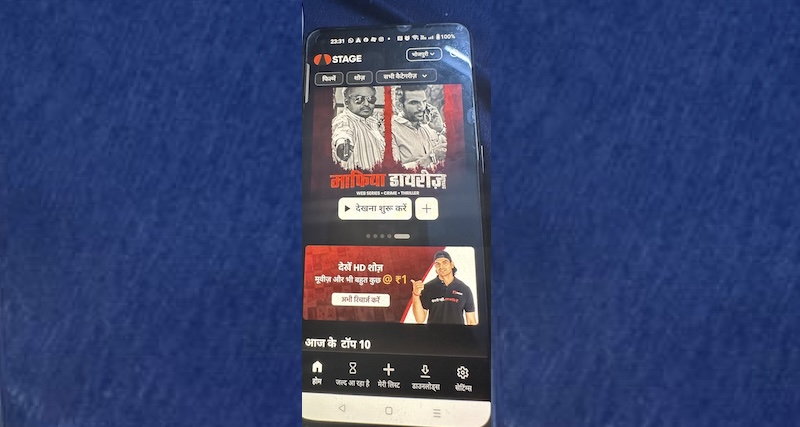
WittyFeed launches social infotainment platform ‘CatchUp’


MUMBAI: WittyFeed has announced the launch of “CatchUp”, a social infotainment platform that will give users the opportunity to stay on top of trends online via an audio-visual format.
The company believes that new platforms will emerge by innovating on format and monetisation methods for publishers. Following the same reason, WittyFeed also decided to consolidate its India business in the new platform.
An essential offering of CatchUp is that the content is served to the user in nuggets of 3 sec to 3 minutes, making the platform a first-of-its-kind in India.
CatchUp co-founder and CEO Vinay Singhal said, “While building nine successful global digital media brands including WittyFeed over last four years, we realised that users’ content consumption behaviour has shifted majorly. Mobile devices allow users to consume content at their comfort and keep up with what’s happening around them. My time has become the new prime time.”

He added that with so much clutter that exists on new age UGC platforms, there is a space that exists for PGC-led UGC platform that delivers personalised content experiences while also allowing the user to express themselves. “We are looking forward to solving these inefficiencies with our new platform- CatchUp.”
The content on CatchUp is curated from across various publishers in different categories such as Bollywood, Politics, Sports, Lifestyle, Health & Fitness, and Social Media etc. CatchUp delivers a unique personalised experience for users (backed by proprietary algorithms) to kill FOMO and keep up with the latest and happening things on the Internet in the form of updates throughout the day. Some of the interesting channels on CatchUp are ‘Social Media Today’, ‘Politics Today’, ‘FoodMate’, ‘Sports Today’, ‘Adbhut India’, ‘ Bhasad’, ‘InnerVoice’, ‘KuVichar’, ‘Science and Tech’, etc.



Brands
Workday unveils Sana, a new AI tool for businesses
New conversational interface, 300+ skills and deep integrations aim to turn AI from sidekick to operator
CALIFORNIA: Workday has fired a fresh salvo in the enterprise AI race, rolling out “Sana”, a system it touts as “superintelligence for work”, designed not merely to assist, but to act. The pitch is blunt: stop dabbling with disconnected copilots and start letting AI run the plumbing of business.
Unveiled globally on March 20, Sana arrives as a three-part stack, Sana for Workday, a conversational interface; a self-service agent with more than 300 skills; and Sana Enterprise, which plugs into tools from Gmail and Outlook to Salesforce and Slack. The aim is to collapse the sprawl of enterprise software into a single AI-led workflow engine.
At its core, Sana promises four things: find, act, build and automate. Employees can query internal data, execute tasks such as updating records or contracts, generate dashboards, and trigger multi-step workflows, all within the same interface. The twist is where it sits, inside Workday’s existing systems, inheriting their permissions, compliance rules and audit trails.
“AI only works in the enterprise when it’s connected to trusted, deterministic systems,” said Aneel Bhusri, co-founder and chief executive. “Sana is what brings it all together… a powerful way for people to search, reason and orchestrate work across the enterprise.”
The critique of current AI deployments is familiar, flashy pilots, little real impact. Workday’s answer is to embed intelligence where decisions are made and actions executed. Gerrit Kazmaier, president, product and technology, framed it as a shift from suggestion to execution: “AI agents take action using trusted context, not just provide suggestions… a single experience where AI is embedded directly in the flow of work.”
Early adopters suggest traction. Berner claims 90 per cent adoption within 40 days, scrapping 400 ChatGPT licences. Cheffelo calls Sana its “AI backbone”, while Telavox says the conversation has shifted from automating tasks to reimagining entire processes.
Analysts, too, see a broader play. Josh Bersin described the integration as “a major milestone”, arguing it could reshape both customer and employee experience by making AI-native workflows the default.
Sana is being bundled via Workday’s Flex Credits, no separate licence, no added paywall, a move that lowers friction and speeds adoption. Meanwhile, Sana Enterprise extends the system beyond Workday, allowing users to search documents, schedule meetings or track project tickets across multiple platforms in one conversation.
The bet is clear: whoever controls the workflow, controls the future of enterprise software. With Sana, Workday is trying to move AI from a helpful assistant to an invisible operator. If it works, the software menus may vanish, and with them, the way work itself is done.