MAM
Wavemaker elevates Ajay Gupte as CEO Wavemaker South Asia


MUMBAI: Wavemaker announced the appointment of Ajay Gupte as chief executive officer for Wavemaker, South Asia. Gupte who is currently COO of Wavemaker India, takes over from Kartik Sharma who steps down to pursue other opportunities in the industry. He will continue to be based out of Wavemaker Gurugram and will report into Prasanth Kumar, CEO – GroupM South Asia and Gordon Domlija, President Wavemaker Asia-Pacific and China CEO.
GroupM South Asia CEO Prasanth Kumar said, “I would like to take this opportunity to thank Kartik for his contribution over the years and wish him all the very best.”
He added, “At GroupM we always believe in building on the hard work and passion of our people and it gives me great pleasure to see Ajay take over as the new CEO of Wavemaker South Asia. He comes with vast experience working in multiple markets and categories. He is a well-rounded professional, and I see him bring in distinctive and increasing value for our clients and the overall ecosystem. I am confident that he will continue to grow Wavemaker as an agency of the future.”

Wavemaker President Asia-Pacific and China CEO Gordon Domlija added, “India is a hugely important market for Wavemaker, and we’ve got a very successful team here. I’ve gotten to know Ajay as a strong client and team leader, and I’m convinced he is the right choice to help Wavemaker to future sucesss and, ultimately, to keep looking for better ways to unlock growth for our clients, our agency and our people.”
Gupte said, “I am humbled and very excited to take over the role of the CEO of Wavemaker South Asia. It is an exciting time for the Indian market as the Indian advertising industry is also having a global impact, and I see lots of opportunities for growth.”





Brands
Kingfisher signs three-year IPL partnership
Packaged water brand signs on as ‘good times partner’ for 2026–28 cycle
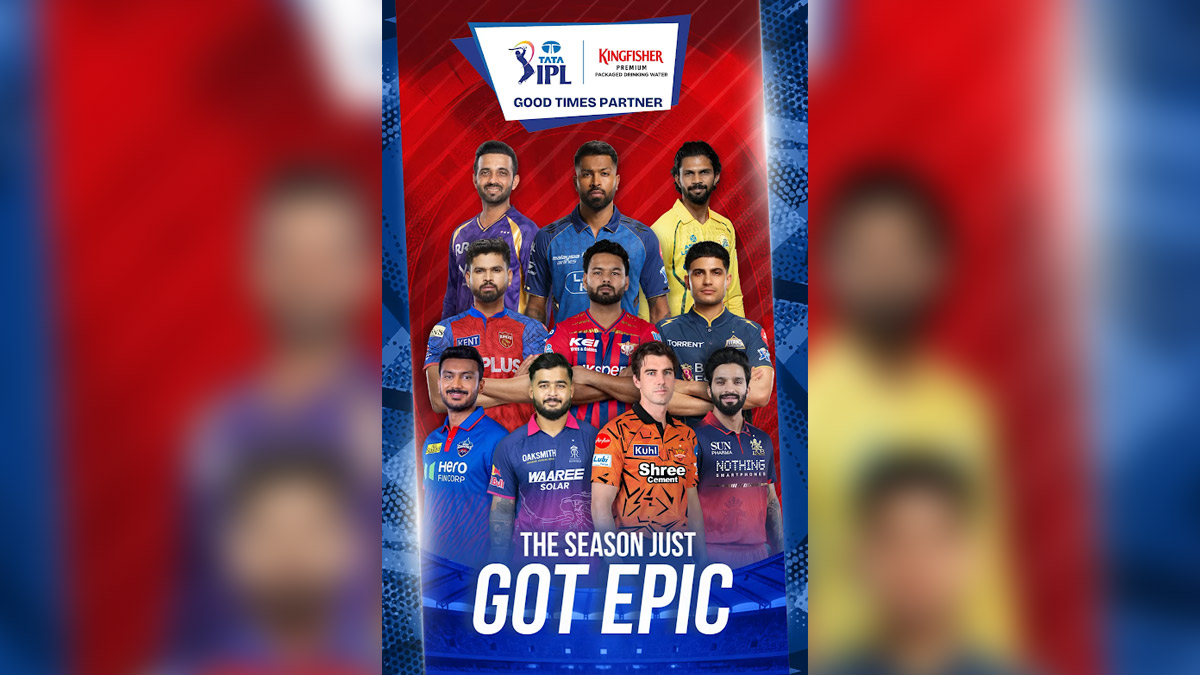
MUMBAI: Kingfisher Premium Packaged Drinking Water is betting big on cricket’s biggest stage, sealing a three-year partnership with the Board of Control for Cricket in India to sharpen fan engagement at the TATA Indian Premier League.
The brand, owned by United Breweries, will serve as the official “good times partner” for the men’s IPL from 2026 to 2028, extending a relationship that began with the Women’s Premier League. The move signals a broader push to embed itself deeper into live sport, with a focus on immersive, consumer-led experiences rather than conventional sponsorship visibility.
At the heart of the tie-up is a suite of fan-first activations spanning broadcast, stadiums and digital channels. These include the “Kingfisher Bird Cam”, offering a branded spider-cam perspective during live matches, and the “Good Times Zone”, an in-stadium entertainment hub during play-offs aimed at amplifying match-day buzz. The brand will also back IPL fan parks, elevate public screening experiences and run digital contests tied to key moments through the season.
Vikram Bahl, chief marketing officer, United Breweries, said cricket in India “is more than a sport, it is a shared cultural moment”, adding that the IPL brings that energy alive at scale. “For Kingfisher Premium Packaged Drinking Water, being present at the heart of these moments, in partnership with the BCCI, is a natural extension of what we stand for. Through this association, we aim to enrich how fans experience the game… making every match more immersive, social and memorable,” Bahl said.
Devajit Saikia, honorary secretary, BCCI, said the IPL “has always been at the forefront of redefining sports entertainment and fan engagement”. He added that the collaboration would fuse cricket fandom with “innovative fan experiences that extend beyond the stadium”, helping create memorable moments for audiences nationwide.
For United Breweries, part of the HEINEKEN group, the play is clear: move from passive branding to active participation in the fan journey—on screens, in stands and across social spaces. With millions tuning in and turning up each season, the IPL remains the country’s most potent marketing theatre. The question now is whether “good times” can translate into lasting brand recall in a market where visibility is easy, but engagement is hard-won.








