AD Agencies
R Scape: Understanding the rural consumer

MUMBAI: Last year the broadcast and advertising industries woke up to the rural television audience with Broadcast Audience Research Council India’s rural inclusive data. Now, as several industry experts have been cited as saying that as the rural market has become extremely important for advertisers as it commands almost half of the total television viewership. Not to mention that with improved internet services and infrastructure in these areas, the need to understand how consumers behave differently in these pockets has become extremely important. Marketers have come to understand that a single brand communication may not work in both urban and rural markets.
With this understanding comes the awareness of how limited our knowledge is of the evolved rural consumers, and how badly marketers need to develop tools to address the change in the landscape.
Keeping that in mind, IIM-Ahmedabad, MaRS Monitoring and Research Systems, Decision Point and the Geometry Global I Encompass Network have done an extensive study of consumer behavior in the rural markets to help marketers come up with new strategies to address new challenges in rural marketing.

Called the R Scape, the study dashboard is able to generate category-level adoption, purchase and consumption-related insights based on inputs such as age, gender and region/ state.
R Scape covers 6,000 rural consumers with near equal split of married men, married women, young men, young women across eight states, which represent all regions across India and over 20 popular categories including deodorant, shampoo, hair oil, lipstick, toothpaste, talcum powder, shaving cream, after-shave lotion, cooking oil, toilet soap, fairness cream, detergent, utensil cleaner, floor cleaner, biscuit, tomato sauce, butter, jam, breakfast cereal, branded aata, shoe, denim, candy, seed, pesticide, banking, life insurance and mutual fund.
As per the study, the rural consumer segmentation needs to be a function of adherence to village norms and urban centricity, which has created strong differentiation among rural married women.
Moreover, rural consumers tend to exhibit lack of brand fidelity attitudinally as well as behaviorally. The biggest divide when it comes to urban and rural consumption is the reason for consumption itself. Hence, the same brand positioning or advertising does not work across both markets. Add to that that rural markets are not homogenous, therefore, reasons to buy and consume categories are often starkly different for consumers from different regions.






AD Agencies
Publicis Brazil’s creative chief Mauro Ramalho lands the jury chair at Abby Awards 2026
Mauro Ramalho brings 25 years of global advertising firepower to the new creative commerce, use of data and B2B category at Goafest
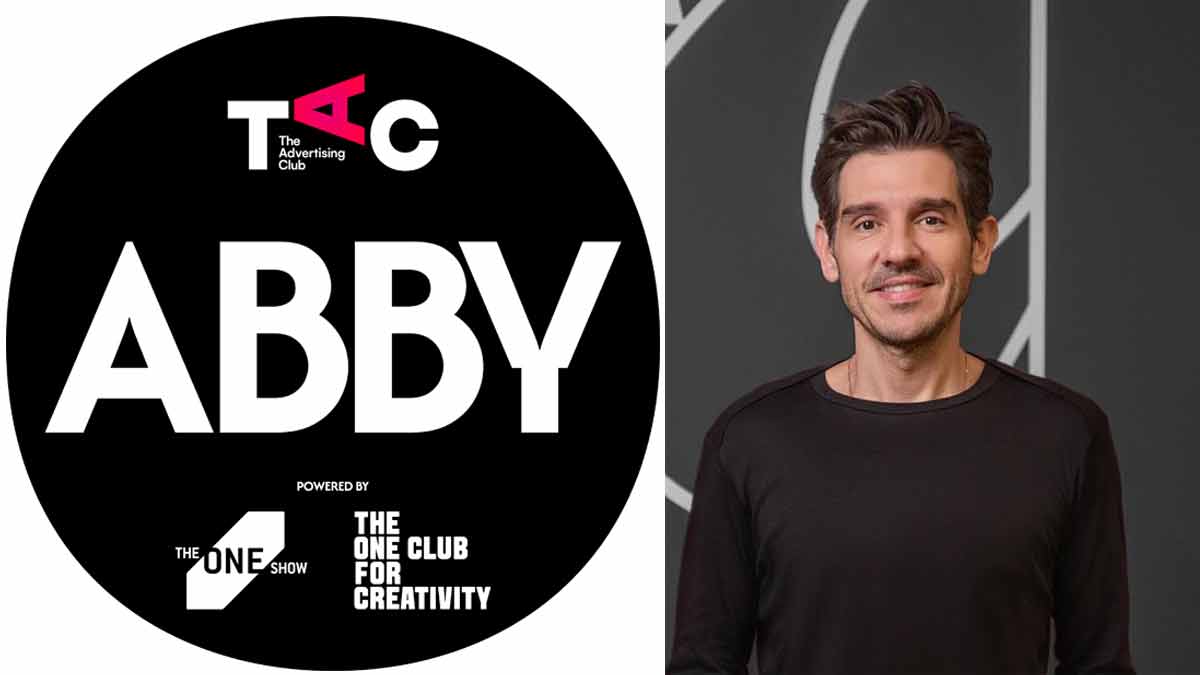
GOA: The Abby Awards 2026, powered by The One Club and The One Show, has appointed Mauro Ramalho, chief creative officer of Publicis Brazil, as jury chair for its newly launched creative commerce, use of data and B2B category. The announcement, made on 18 March, signals the awards’ intent to bring serious international muscle to a category that sits squarely at the intersection of creativity and commercial performance.
Ramalho is not a name that needs much introduction in global advertising circles. Over 25 years spanning three countries, he has worked at some of the industry’s most creatively restless addresses. At AKQA in San Francisco, he worked across McDonald’s, Nike, Fox, Target, Kraft Foods and GAP, and helped lead “The Lost Ring” for McDonald’s, one of the first alternate reality campaigns and among the most awarded projects of its era. He later moved to Organic in Toronto, bridging the Detroit and Toronto offices on Dodge, Jeep and Chrysler, before spending over a decade building CUBOCC into one of Brazil’s most iconic and innovative independent agencies, which subsequently joined the IPG network.
A stint at FCB followed, where Ramalho led integrated work bridging online and offline, before he joined R/GA São Paulo as vice-president and executive creative director, stitching together the São Paulo office with New York, London, Portland and California on global clients including Verizon, Google, Meta, Samsung, American Express and Heineken. He now heads Publicis Brazil as its chief creative officer.
His trophy cabinet includes Clios, Effies, TikTok awards and MMA Smarties, and he has served on juries at the Andys, TikTok and the Lisbon Awards.
The Abby Awards 2026 is scheduled to take place at Goafest 2026 on 20, 21 and 22 May in Goa.
For Indian advertising, landing a jury chair of Ramalho’s calibre for a category built around data-driven creativity and commerce is a statement of ambition. Goafest just raised its own bar.