MAM
Only Vimal

Vimal – the name stands out in the annals of Indian advertising as a brand well developed and projected. The credit naturally goes to Mudra, which developed and nurtured the brand when branding as a concept was still in its infancy in India.
Vimal today features amongst its peers in The Economic Times Brand Equity 100 Survey of India’s most trusted brands published on 14 August 2002. In fact, the brand ranked first in the ‘Clothes Call’ – Apparel Ranking section.
Each Vimal ad exemplified the brand’s core promise and ensured that the creative ideation and execution gave it an ‘out-of-the-ordinary’ and ‘icon-ish’ look. One must remember that Reliance decided to adopt different marketing and creative strategies in a time plagued by difficult market conditions. The entire burst of creative excellence was continued over a 15-year period by a team of young creative brains headed by AG Krishnamurthy.

Krishnamurthy attributes the stunning output of work to a ‘nothing-is-impossible’ attitude as defined by Dhirubhai Ambani and an intrinsic motivation to justify the faith and trust that Ambani had reposed in the team.
Vimal sarees :
Vimal began its existence as a saree brand nearly 25 years ago with its memorable tag-line: ‘A woman expresses herself in many languages, Vimal is one of them’. Since then, Vimal has gloriously celebrated the multi-faceted beauty of Indian women. The concept of ‘multi-facetedness’ was the bridge between the product and the consumers. The creative team aspired to improve the earlier benchmarks and pushed the brand further up the creative ladder. Needless to say, Vimal sarees grew to become India’s largest selling fashion fabric.
In the early 1980s, the ad campaign also spawned a series of parallel visual identities that were aimed at addressing the fragmented Indian consumer markets. Filmstars like Sridevi and Jaya Prada figured amongst the early brand endorsers. In the mid 1980s, the ‘Sweet Memories Dress Material’ campaign, celebrated as the ‘Eyes’ campaign, ensured that fabric photography acquired magical quality with its ‘touch-n-feel’ sensuousness.
A distinct element was the fact that uncommon sizes were used like a ‘breath of fresh air’ in those ‘prim-n-propah’ days. Towards the late 1980s, Vimal stepped out of the ‘tight mid and close-up product shots’ which were so characteristic of advertising in those days. India’s culture and heritage provided idyllic settings and backdrops for the shoots.
A first for newspaper advertising was the 16-column Vimal ad featuring several ‘colourfully draped’ women released in 1991. The early 1990s also witnessed an attempt to remain at the cutting edge of advertising by exploring the genre of experimental photography. After a long break, Gautami, a South Indian film star, made her presence felt in the Starlite Collection. Post 1993, Vimal sarees and dress materials were slowly phased out as the company focused on exports of suit fabric. Saree advertising gently and gracefully made its exit. The last few campaigns echo the beauty of its glorious past!
Vimal Suitings :
In 1980, Vimal Suitings made its mark in an intensely competitive scenario marked by venerable longstanding brands. The only advantage Vimal Suitings had was its product superiority premise. The first campaigns carried inserts of the machinery and this path breaking, highly unusual feature. The fact that a textile brand was pioneering the trend of being sold as a consumer durable drew flak from the advertising bigwigs. However, the sincerity of the brand’s courage of conviction won the say.
There were six phases in the campaign;
# the first established the superiority backed by technology endorsements (Deepak Parasher, Kanwaljit and inserts of the Reliance plants);
# the second had achievers endorsing the brand’s caliber (Param Vishisht Seva medal recipient Lt. General JS Arora, world amateur and world open billiards champion Michael Ferreira and editor-publisher RK Karanjia endorsing the premium wool range); the third ensured that the brand achieved enough momentum to dictate fashion (Kabir Bedi campaign where Vimal donned the mantle of dispensing tips on personality grooming);
# the fourth firmly established the brand as the ‘style guru’ (Deepak Malhotra ushering in the slow movement towards heightened aesthetics rather than harping on the calibre);
# the fifth used celebrity cricketers (Ravi Shastri and Allan Border) for the first time ever;
# the brand continued its passion for fashion in the sixth phase (fashion gurus such as Rohit Bal). The partnership of fashion designers, fashion shows and Vimal played its part in paving the way for the current haute couture and pr?t wave.
In the mid 1990s, the brand continued to keep style in the foreground, even through all its product launches in speciality fabrics like angora, mohair and cashmere; innovative products ahead of their times. The late 1990s had models like Milind Soman advocating the ‘looks of a winner’.
Certainly not surprising to know that Vimal moved into the top slot as the fashion leader in just six years.
Harmony:
In 1986, Harmony furnishing fabrics was born when Reliance installed their first home textiles manufacturing unit. The advertising for the premium and upmarket Harmony collection was sporadic; not as profuse as that of the sarees and suitings. From its initial positioning as ‘premium furnishing fabric’, the ad campaign moved into the ‘interior fashion textiles’ and later as ‘textile art for interiors’! The vintage flair and exuberance was clearly visible in the 1988 creative that shows a rather unusual and dramatic visual of a furnishing fabric flowing out of a champagne bottle. The brand was relaunched in 1994 with a whole new identity and spectacular photographs. The Heritage series campaign was the first for the country to depict the traditional Indian textile art (Bandhani, Jamavar) forms.
The change of positioning from a mere utilitarian furnishing fabric to an aspirational ‘art’ form led to the highly popular annual Harmony event. The Harmony show hosts the largest exhibition of Indian art and is a regular feature of the art-lover’s annual calendar!
The eventful 22 years of ‘Only Vimal’ touched many hearts and souls through its oft-repeated (but seldom practiced) belief of ‘I-have-to-be-the-best-at-any-cost’!


Brands
Emami names Dhruv Aggarwal as chief growth officer
Former Bain partner steps in as FMCG firm sharpens growth playbook
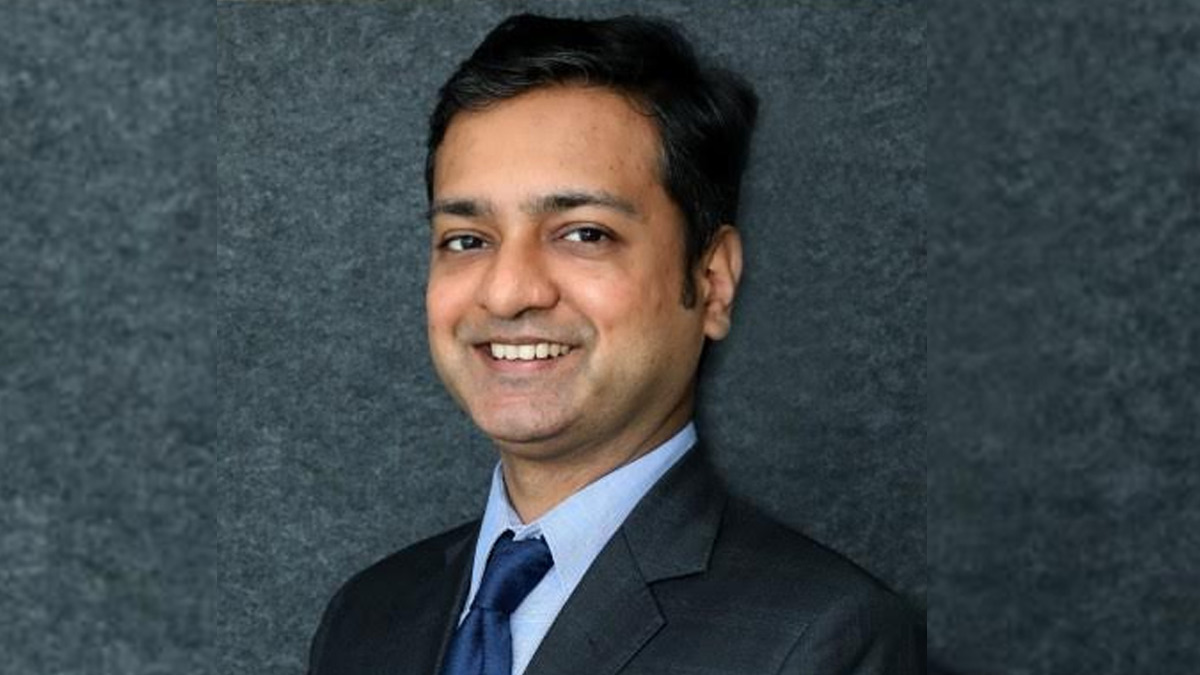
MUMBAI: Emami Limited has appointed Dhruv Aggarwal as its chief growth officer, effective 25 March 2026, following the resignation of Giriraj Bagri.
Aggarwal joins the FMCG major from Bain & Company, where he most recently served as partner. With over two decades of experience across consulting and strategy, he brings a global perspective shaped by work across India, the US, the UK and Germany.
During his tenure at Bain, Aggarwal advised consumer, retail and media companies on large-scale transformations, business turnarounds and growth strategies. He was also closely involved with India’s startup ecosystem, guiding early-stage ventures on scaling and digital expansion, while supporting private equity and venture capital firms on investment decisions.
His earlier stints include a brief role at Barclays Capital and operational experience at Jindal Power, giving him a mix of financial and industry exposure.
Academically, Aggarwal holds an MBA from Indian Institute of Management Bangalore and has also been associated with University of Illinois Urbana-Champaign as a PhD candidate and teaching assistant.
The appointment comes at a time when Emami Limited is looking to sharpen its growth strategy in a competitive consumer market. With a seasoned strategist now at the helm of growth, the company appears set to double down on transformation and expansion in the months ahead.








