MAM
InMobi makes two senior appointments

MUMBAI: As part of its strategy to aggressively tap the mobile advertising space in India, Bangalore-based mobile advertising network InMobi has embarked upon its expansion plans. For this, the firm has appointed Sandeep Deshpande as the country general manager India and Vishal Nongbet as business head of brands.
InMobi has also opened up offices at New Delhi and Mumbai.
In his new role at InMobi Deshpande will be responsible for InMobi‘s business operations and growth in India.

InMobi is banking high on the opportunities available in the Indian market. With an increased penetration of smartphones across age groups and social strata, the mobile ad impressions too are witnessing an upsurge and the advertiser community is accepting this innovation. With the current mobile advertising market in India touching $25 million, it is expected to hit $60-80 million by 2014.
Deshpande has over two decades of experience in launching and growing new businesses. Prior to joining InMobi, he spent nearly a decade in the Internet industry, working for organisations like Yahoo, Alibaba.com and Rediff.com. He was instrumental in launching and growing Yahoo! search marketing, its small business and local search during his stint as general manager.
Deshpande also played a role in setting up Alibaba’s fully owned subsidiary in India during 2010-11 and building the Alibaba brand among SMEs in the local market.
Nongbet brings 13 years of varied experience in lifestyle and youth product marketing, largely in the fields of consumer goods and media and entertainment. A graduate from the Indian Institute of Management Ahmedabad, he started his career with Pepsi, followed by Times Music. He then moved to Kodak where he was instrumental in growing their digital businesses into a $30 million business after which he served as head of marketing and alliances at Mumbai Mantra, the filmproduction and distribution start-up of the Mahindra group. He then took on the role of marketing head at SMSGupshup, the mobile marketing start-up.
InMobi founder and CEO Naveen Tewari said, “With their unique blend of experience in technology, expertise in e-commerce and brand marketing capabilities, we are confident that both Sandeep and Vishal will play an important role in identifying new business opportunities and further expanding our operations in India.”
Deshpande said, “I do hope that my experience in setting up new business and in online marketing will help me take InMobi to new heights.”

Digital
Galgotias apologises after AI summit robot sparks backlash, blames ‘ill-informed’ representative
University says no intent to misrepresent innovation
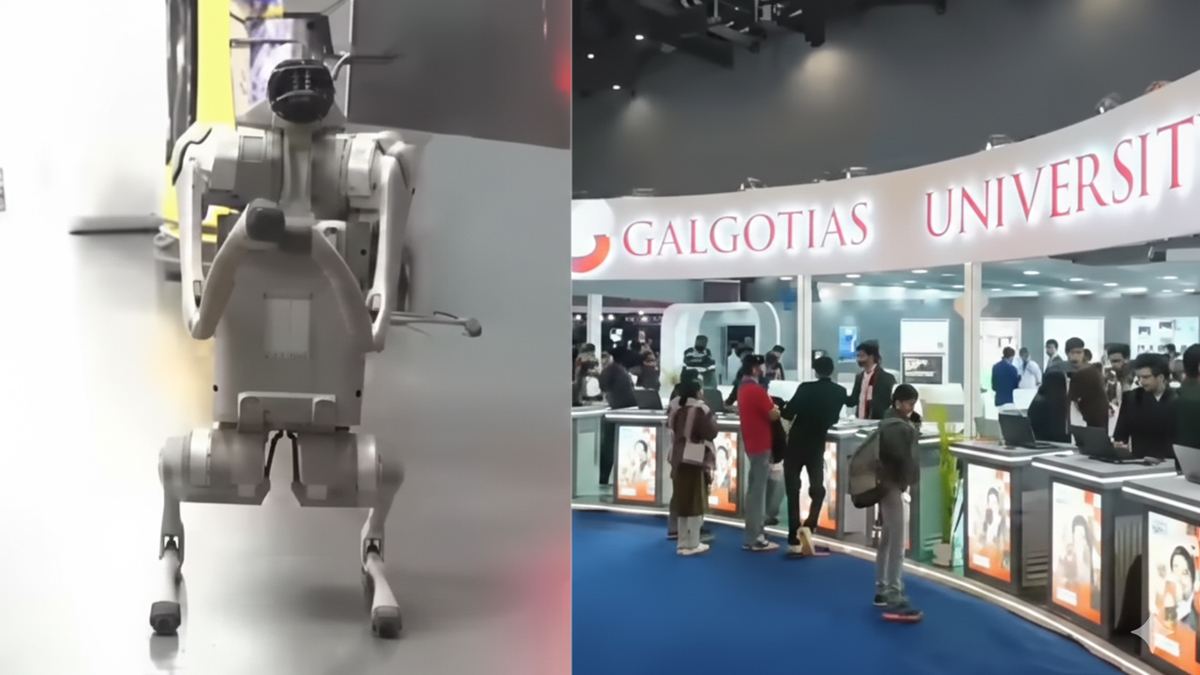
NEW DELHI: Galgotias University has issued a formal apology after a controversy over a robotic dog displayed at the India AI Impact Summit led to scrutiny, backlash and the university’s exit from the venue.
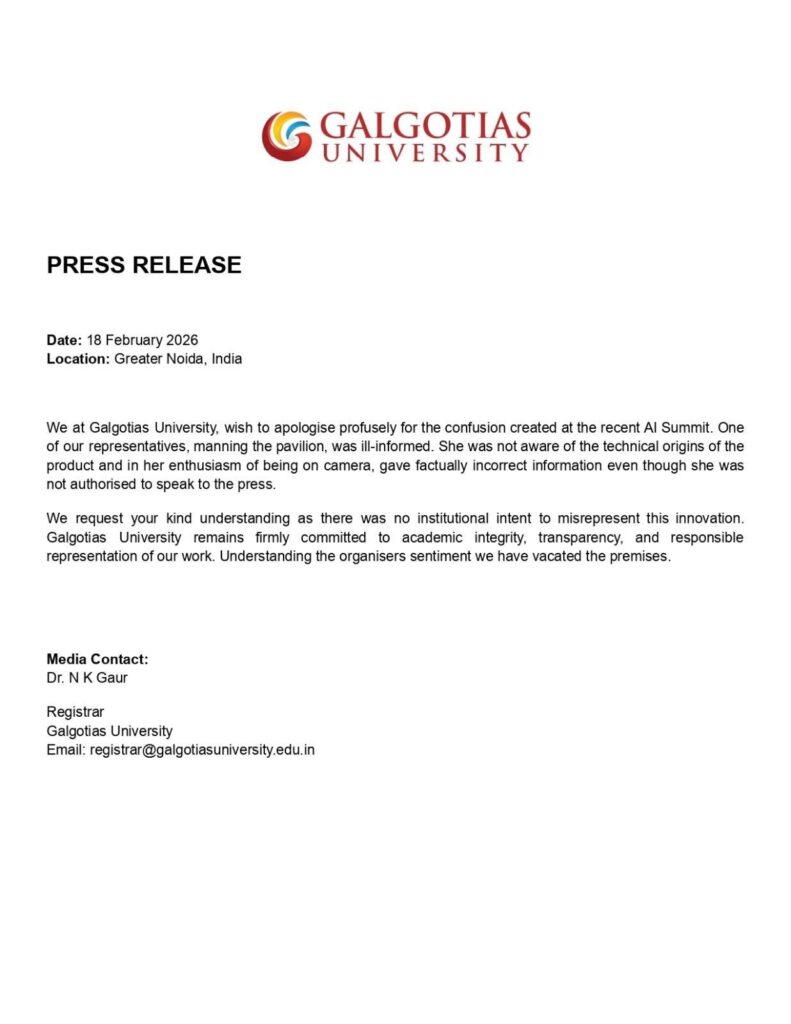
In a statement released on Tuesday, the university said it “apologises profusely for the confusion created” at the summit, attributing the episode to an “ill-informed” representative manning its pavilion. The individual, it said, was unaware of the product’s technical origins and was not authorised to speak to the media.
The controversy erupted after online users identified the robotic dog as the Unitree Go2, a commercially available model made by Unitree Robotics, contradicting claims made during the event about its development.
Galgotias said there was “no institutional intent to misrepresent this innovation” and reiterated its commitment to academic integrity and transparency. It added that it had vacated the stall in line with organisers’ sentiments.
Events at the summit venue, Bharat Mandapam, took a dramatic turn as electricity to the Galgotias pavilion was cut, followed by barricades being installed around the stall. A video circulated by PTI showed workers at the site saying they were acting on instructions from their supervisor.
Summit organisers have yet to issue a detailed public explanation outlining the sequence of decisions that led to the stall’s shutdown, even as the incident fuels wider debate around claims, verification and accountability at high-profile technology showcases.